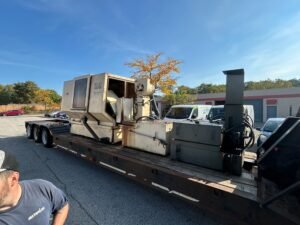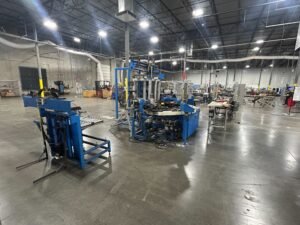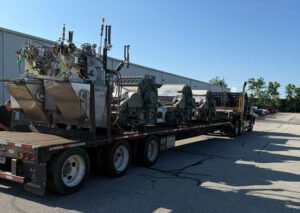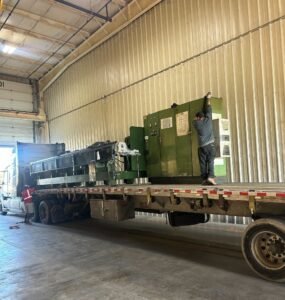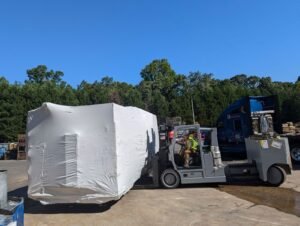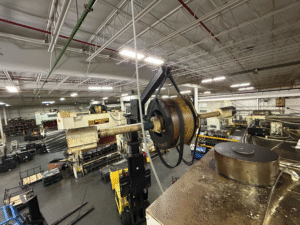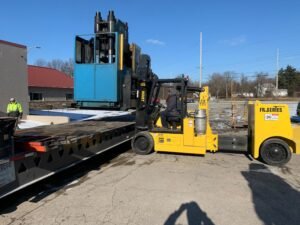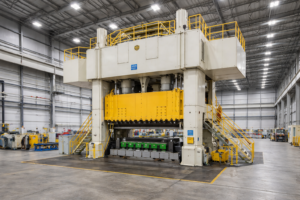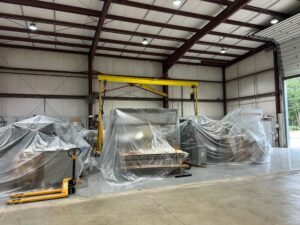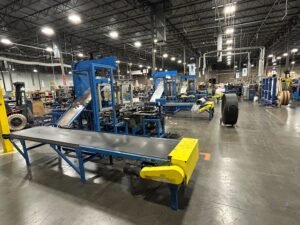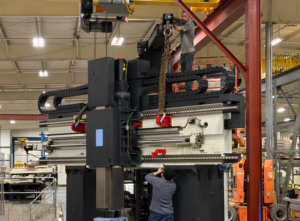
Moving large stamping press machines is one of the most complex tasks in industrial relocation and heavy equipment moving. These massive machines play a critical role in manufacturing industries such as automotive, aerospace, appliance manufacturing, and metal fabrication. Because stamping presses often weigh tens or even hundreds of tons, relocating them requires detailed planning, specialized equipment, and experienced professionals.
Improper handling during relocation can result in costly damage, extended downtime, and safety risks. A structured approach that includes careful preparation, proper rigging techniques, crane operations, and transportation logistics is essential for moving stamping press machines safely.
This guide explains everything involved in relocating large stamping press machines, from planning and preparation to installation and testing at the new location.
Understanding Large Stamping Press Machines
Stamping press machines are used to shape metal sheets into precise components through a process called metal stamping. These machines apply extremely high force to transform metal into automotive panels, structural components, and other industrial products.
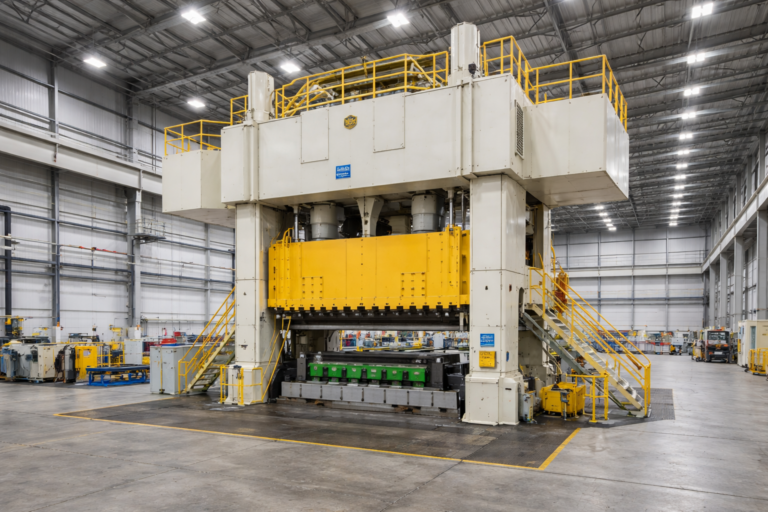
Large stamping presses are common in high-volume manufacturing environments and can vary greatly in size and weight.
Typical specifications of large stamping presses include:
-
Weight ranging from 40 tons to over 500 tons
-
Heights of 15 to 30 feet
-
Massive structural frames
-
Precision alignment requirements
-
Hydraulic, mechanical, or servo drive systems
Because of their massive weight and precision engineering, moving stamping press machines requires expert planning and specialized lifting equipment.
Why Moving Stamping Press Machines Is Challenging
Relocating heavy industrial equipment is never simple, but stamping presses present unique challenges. These machines often have delicate internal components and strict alignment tolerances.
Several factors make stamping press relocation particularly difficult.
Extreme Weight and Size
Large presses are among the heaviest machines inside manufacturing facilities. Their structural frames are designed to withstand massive forces during operation, which makes them extremely heavy.
Complex Internal Systems
Stamping presses contain many interconnected components such as:
-
Hydraulic systems
-
Electronic controls
-
Die sets
-
Precision bearings
-
Structural frames
Damage to any of these systems can lead to costly repairs.
Tight Facility Spaces
Industrial facilities often have limited access points, narrow aisles, and overhead obstructions, which complicate lifting and moving operations.
Safety Risks
Handling machinery weighing hundreds of tons introduces major safety risks if proper procedures are not followed.
Initial Planning for Stamping Press Relocation
Successful heavy equipment relocation begins with careful planning. Before any lifting or dismantling begins, engineers and rigging specialists conduct a detailed assessment of the equipment and facility.
Key planning activities include:
-
Evaluating machine dimensions and weight
-
Identifying structural lifting points
-
Reviewing building access routes
-
Determining transport requirements
-
Creating a relocation schedule
Detailed planning reduces risks and ensures that every step of the moving process is carefully coordinated.
Site Assessment and Engineering Evaluation
A thorough site evaluation is essential for safe equipment relocation.
Engineers typically inspect both the current facility and the destination site to determine the safest moving strategy.
Important aspects of site evaluation include:
-
Floor load capacity
-
Ceiling height clearance
-
Doorway dimensions
-
Crane access areas
-
Electrical and hydraulic connections
-
Foundation requirements
This information allows engineers to design a customized relocation plan.
Preparing the Stamping Press for Moving
Before a stamping press can be relocated, it must be carefully prepared. Proper preparation helps prevent damage during lifting and transportation.
Preparation typically involves several steps.
Disconnecting Utilities
The machine must be safely disconnected from:
-
Electrical power systems
-
Hydraulic systems
-
Air supply lines
-
Cooling systems
Removing Tooling and Accessories
Stamping presses often contain heavy tooling components that must be removed prior to relocation.
These components may include:
-
Dies
-
Feed systems
-
Automation arms
-
Control panels
Removing these components reduces weight and prevents damage.
Securing Moving Components
All moving parts inside the machine must be secured to prevent shifting during transportation.
Disassembly of Large Stamping Press Machines
In many cases, large presses cannot be moved as a single unit due to their massive size.
Partial disassembly is often required to make transportation possible.
Common components removed during disassembly include:
-
Crown section
-
Slide assembly
-
Bed structure
-
Hydraulic power units
-
Control cabinets
Disassembling these components allows the machine to be transported safely and reassembled at the new facility.
Rigging Techniques for Heavy Press Machines
Rigging plays a crucial role in lifting and relocating stamping presses.
Professional rigging teams use specialized equipment to safely lift and stabilize heavy machinery.
Common rigging tools include:
-
Heavy-duty slings
-
Shackles
-
Spread bars
-
Hydraulic jacks
-
Gantry lifting systems
-
Skates and rollers
Proper rigging ensures that the machine remains stable during lifting operations.
Crane Selection for Stamping Press Relocation
Crane selection is one of the most important decisions in heavy equipment moving.
The crane must be capable of safely lifting the press while maintaining stability throughout the operation.
Several crane types may be used depending on the project.
Mobile Cranes
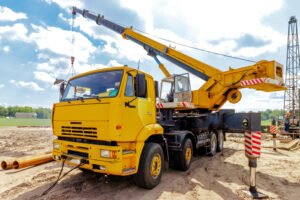
Mobile cranes are commonly used for industrial equipment lifting because they can be quickly positioned and offer strong lifting capacities.
Gantry Cranes
Hydraulic gantry systems are often used when overhead lifting is required inside facilities.
Tower Cranes
These cranes are typically used for large industrial relocation projects involving extremely heavy loads.
Selecting the right crane ensures safe and efficient lifting.
Moving Equipment Inside the Facility
Once the stamping press is lifted, it must be carefully moved through the facility to reach the loading area.
Specialized moving equipment is used to transport heavy machinery safely across the factory floor.
Examples include:
-
Air skates
-
Hydraulic skates
-
Roller systems
-
Self-propelled modular transporters
These tools distribute weight evenly and allow controlled movement.
Transportation of Stamping Press Machines
After the press reaches the loading area, it must be transported to its new destination.
Transportation requires specialized heavy haul equipment capable of carrying extremely heavy loads.
Common transport equipment includes:
-
Multi-axle trailers
-
Lowboy trailers
-
Hydraulic platform trailers
-
Modular transport systems
Transport routes are carefully planned to avoid obstacles such as bridges, narrow roads, and low clearances.
Permits and Regulatory Requirements
Transporting large industrial equipment often requires permits and regulatory approvals.
Transport permits may include:
-
Oversized load permits
-
Escort vehicle requirements
-
State transportation permits
These permits ensure that transportation complies with safety regulations.
Reinstallation at the New Facility
After transportation, the stamping press must be carefully installed at the new location.
Installation involves several critical steps.
Positioning the Machine
The press must be precisely placed on its foundation using cranes and rigging systems.
Leveling and Alignment
Proper leveling is critical for machine performance.
Technicians use precision tools to ensure that the press is perfectly aligned.
Reconnecting Systems
All utilities must be reconnected, including:
-
Electrical systems
-
Hydraulic lines
-
Pneumatic systems
-
Cooling systems
Once these connections are complete, the machine can be prepared for operation.
Testing and Commissioning
Before production begins, the stamping press must undergo testing and commissioning.
This process ensures that the machine operates safely and efficiently.
Testing typically includes:
-
Hydraulic pressure testing
-
Electrical system verification
-
Control system calibration
-
Load testing
Successful testing confirms that the machine is ready for production.
Safety Considerations During Stamping Press Relocation
Safety is the highest priority when moving large industrial machinery.
Key safety measures include:
-
Conducting detailed risk assessments
-
Inspecting lifting equipment before use
-
Maintaining clear communication among team members
-
Establishing restricted safety zones
Strict adherence to safety protocols prevents accidents and protects both workers and equipment.
Common Mistakes to Avoid When Moving Stamping Press Machines
Several common mistakes can lead to costly problems during relocation.
Avoiding these mistakes is essential.
Common errors include:
-
Inadequate planning
-
Incorrect rigging methods
-
Underestimating machine weight
-
Poor crane selection
-
Lack of experienced operators
Working with professional heavy equipment movers significantly reduces these risks.
Benefits of Hiring Professional Heavy Equipment Movers
Relocating stamping press machines requires specialized knowledge and equipment.
Professional industrial movers provide several advantages.
These include:
-
Experienced rigging teams
-
Access to specialized cranes and lifting systems
-
Detailed relocation planning
-
Reduced downtime for manufacturing operations
Professional movers ensure that equipment relocation is completed safely and efficiently.
Why Alltracon Is the Best Service Provider for Moving Large Stamping Press Machines
Alltracon is a trusted leader in heavy equipment moving, crane services, and industrial relocation. With decades of experience handling massive machinery like stamping presses, turbines, and CNC equipment, their expert team provides precise rigging, advanced lifting technology, and efficient project management to ensure safe, reliable, and minimal-downtime equipment relocation for complex industrial projects.
Final Thoughts
Moving large stamping press machines is a complex operation that requires careful planning, advanced equipment, and experienced professionals. From initial engineering assessments to final installation and testing, every step must be executed with precision to ensure safety and efficiency.
Companies that invest in professional heavy equipment movers benefit from reduced risk, faster relocation timelines, and reliable machine performance after installation.
Whether relocating a single stamping press or an entire manufacturing plant, a well-planned relocation strategy ensures that industrial operations continue smoothly without costly interruptions.