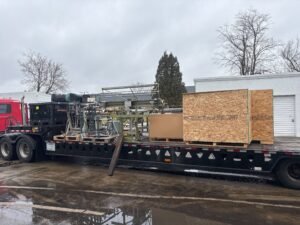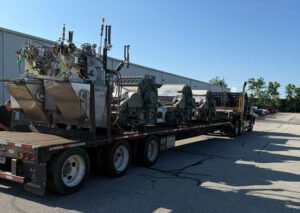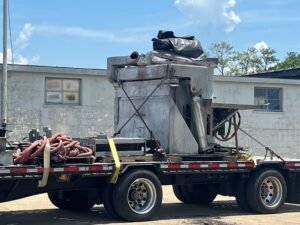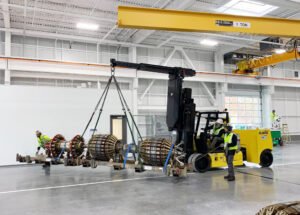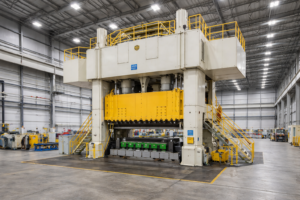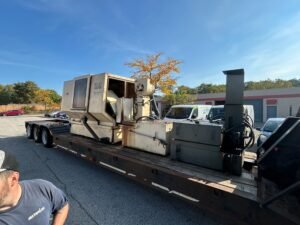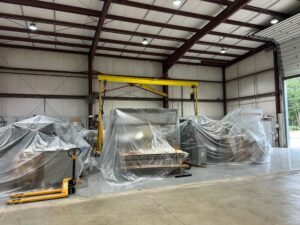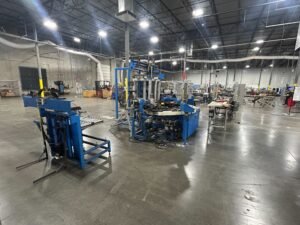
Industrial plant relocation is one of the most complex, high-risk operations a business can undertake. It involves dismantling massive machinery, coordinating logistics across multiple vendors, ensuring regulatory compliance, protecting employee safety, and restarting operations without long-term disruption.
Yet, when companies begin planning a relocation, cost often becomes the primary decision factor. On paper, cheap industrial plant relocation services appear attractive. Lower quotes promise immediate savings, faster approvals, and reduced capital strain. Unfortunately, what looks affordable at the outset frequently becomes far more expensive over time.
This article explores why choosing low-cost industrial plant relocation services often leads to higher long-term costs, operational chaos, safety risks, and financial losses. More importantly, it explains how experienced, professional relocation providers help businesses protect their assets, timelines, and reputation.
Understanding the True Scope of Industrial Plant Relocation
Industrial plant relocation is not just about moving equipment from one place to another. It is a multi-disciplinary engineering project that requires deep expertise across mechanical systems, structural load management, logistics planning, safety engineering, and operational continuity.
A proper relocation involves pre-move inspections, engineering calculations, disassembly planning, transport coordination, reinstallation, alignment, calibration, and post-move validation. Every step has consequences if mishandled.
Cheap service providers often reduce the scope to “lifting and shifting,” ignoring the interconnected systems that keep a plant operational. This oversimplification is the root cause of future failures.
Why Cheap Quotes Are Often Misleading
Low quotes rarely reflect the real cost of relocation. They typically omit critical components that only become visible once the project is underway. These omissions are not accidental—they are deliberate strategies to win bids.
What is not included upfront often reappears later as emergency charges, project delays, or damage repair costs. Businesses end up paying more than they would have with a professional provider, but without the quality assurance.
Inadequate Pre-Move Engineering and Risk Assessment
One of the biggest cost drivers in failed relocations is the absence of proper engineering assessments. Industrial machinery is not uniform. Each piece has a unique center of gravity, load tolerance, anchoring system, and vulnerability to vibration or misalignment.
Cheap relocation companies often skip detailed engineering studies to reduce labor costs and shorten planning timelines. Without proper assessment, equipment is lifted or transported incorrectly, causing stress fractures, internal damage, or alignment shifts that are not immediately visible.
These hidden issues surface later as reduced efficiency, premature wear, or catastrophic failure—each significantly more expensive than the original savings.
Equipment Damage That Doesn’t Show Up Immediately
Not all damage is visible on day one. In fact, the most expensive damage caused by cheap relocation services often appears weeks or months later.
Microscopic misalignments, bent frames, compromised bearings, or stress-induced fatigue can silently degrade machinery performance. Production may continue, but efficiency drops, energy consumption rises, and maintenance frequency increases.
When the failure eventually occurs, it is often blamed on equipment age rather than poor relocation practices—masking the real cost of cutting corners.
Increased Downtime and Production Loss
Downtime is one of the most underestimated costs in industrial relocation. Cheap providers often promise faster completion but lack the manpower, coordination, and contingency planning to deliver.
Delays occur due to missing equipment, incorrect rigging, miscommunication between teams, or safety violations that halt work. Each hour of downtime translates into lost production, missed deadlines, contractual penalties, and reputational damage.
Professional relocation providers prioritize operational continuity because they understand that downtime costs far exceed relocation fees.
Safety Risks and Liability Exposure
Industrial relocation is inherently dangerous. Heavy machinery, suspended loads, confined spaces, and high-energy systems create environments where mistakes can be fatal.
Low-cost providers frequently cut corners on safety training, equipment certification, and compliance documentation. This exposes companies to serious legal and financial risks.
An accident during relocation can result in worker injuries, regulatory investigations, insurance disputes, and lawsuits. These costs dwarf any initial savings from hiring a cheaper provider.
Regulatory Non-Compliance and Permit Failures
Industrial relocations often require permits, inspections, and compliance with local, state, and federal regulations. Cheap providers may lack experience navigating these requirements or intentionally ignore them to save time.
Non-compliance can result in fines, stop-work orders, forced rework, and legal consequences. Worse, violations can delay plant restarts indefinitely, causing cascading operational losses.
Poor Reinstallation and Calibration
Relocation does not end when machinery arrives at the new location. Reinstallation, alignment, leveling, and calibration are critical for restoring full operational performance.
Cheap services often treat reinstallation as an afterthought. Equipment may be bolted down without precision alignment or tested under real production loads.
This leads to inefficiencies, increased vibration, uneven wear, and reduced lifespan—all of which increase long-term operating costs.
Fragmented Responsibility and Vendor Blame
Low-cost relocation projects often involve multiple subcontractors with unclear accountability. When problems arise, vendors shift blame, leaving the client to manage disputes.
Professional relocation providers offer single-point responsibility, ensuring accountability across planning, execution, and post-move validation. This reduces risk and ensures faster resolution when issues arise.
Hidden Costs That Accumulate Over Time
The real cost of cheap industrial relocation services is not paid upfront. It accumulates gradually through:
-
Increased maintenance expenses
-
Higher energy consumption
-
Reduced equipment lifespan
-
Lost productivity
-
Safety incidents
-
Compliance penalties
By the time these costs become visible, reversing the damage is far more expensive than doing the relocation correctly in the first place.
Long-Term Operational Impact on Plant Efficiency
Industrial plants operate as integrated systems. When one component underperforms due to poor relocation, it affects upstream and downstream processes.
Cheap relocation services rarely consider system-wide performance. As a result, plants experience bottlenecks, quality issues, and inconsistent output after relocation.
Professional relocation providers design moves that preserve system integrity, ensuring the plant operates at or above pre-move performance levels.
Why Experience Matters More Than Price
Experience is not just about years in business—it is about understanding failure modes, anticipating risks, and planning contingencies.
Seasoned relocation professionals know where cheap shortcuts fail because they have seen the consequences. They invest time in planning because they understand that prevention is cheaper than correction.
The Psychology of “Saving Now, Paying Later”
Many companies choose cheap relocation services under pressure—from tight budgets, aggressive timelines, or internal cost-cutting mandates.
Unfortunately, this short-term thinking ignores the total cost of ownership. Industrial relocation should be viewed as a capital investment, not a commodity service.
The goal is not to minimize the invoice—it is to protect production, assets, and business continuity.
How Professional Relocation Services Reduce Total Cost
High-quality industrial relocation services may appear more expensive initially, but they reduce total cost by:
-
Preventing equipment damage
-
Ensuring safety and compliance
-
Preserving operational efficiency
-
Extending equipment lifespan
The result is a smoother transition with predictable outcomes and lower long-term expenses.
How Alltracon Delivers Long-Term Value
Alltracon specializes in complex industrial plant relocations where precision, safety, and planning matter more than shortcuts. Instead of focusing on low upfront pricing, Alltracon focuses on total cost reduction over the life of the operation.
Their approach integrates engineering expertise, experienced rigging crews, compliance-driven execution, and post-move validation—ensuring that relocated plants perform reliably from day one.
Why Alltracon Is the Right Choice for Industrial Plant Relocation
-
Comprehensive pre-move engineering and risk assessment
-
Proven experience handling heavy, oversized, and sensitive machinery
-
Strict safety protocols and fully certified equipment
-
End-to-end project management with single-point accountability
-
Minimal downtime strategies tailored to production schedules
-
Regulatory compliance across all jurisdictions
-
Post-installation alignment, testing, and performance validation
This commitment ensures that clients do not pay hidden costs later through failures, delays, or safety incidents.
Final Thoughts: Cheap Relocation Is the Most Expensive Option
Industrial plant relocation is not an area where shortcuts pay off. The real cost is not the invoice—it is the operational impact that follows.
Cheap industrial plant relocation services often cost more later through downtime, damage, safety risks, and lost productivity. Companies that prioritize expertise, planning, and accountability consistently achieve better outcomes and lower total costs.
When relocating an industrial plant, the smartest investment is not the cheapest quote—it is the partner who ensures your operation runs stronger after the move than before it.