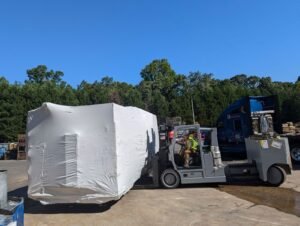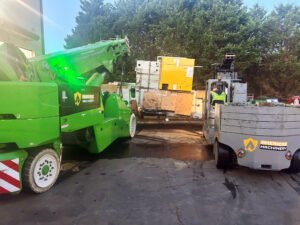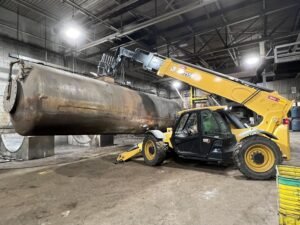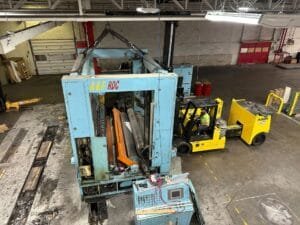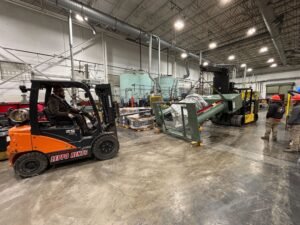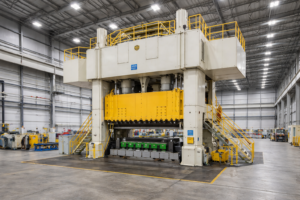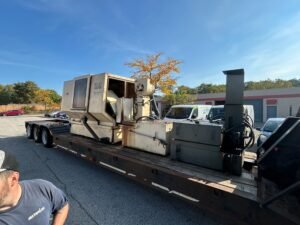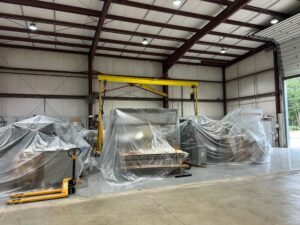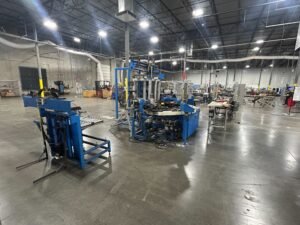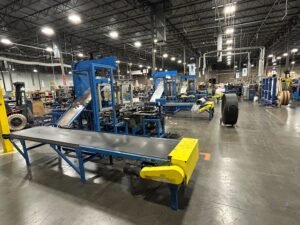
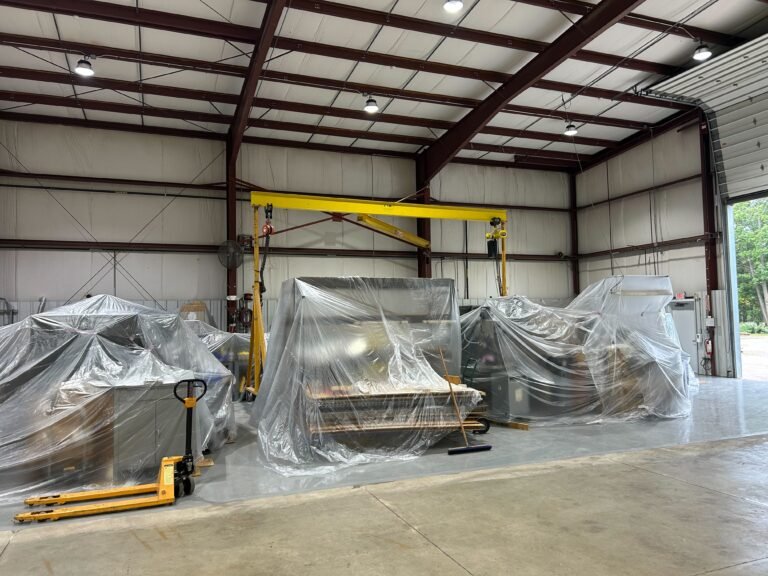
Moving oversized industrial equipment is one of the most complex operations within the industrial services sector. Unlike routine logistics or conventional machinery transport, oversized equipment moving demands engineering precision, logistical coordination, regulatory compliance, and advanced rigging expertise. These moves often involve multimillion-dollar assets such as turbine generators, stamping presses, reactors, transformers, CNC gantries, and heavy production lines that cannot simply be lifted and loaded using standard techniques.
The consequences of error are significant. Equipment damage can lead to production delays, contractual penalties, safety incidents, and reputational harm. As global manufacturing evolves and industries modernize facilities, relocate plants, or upgrade production lines, the demand for specialized oversized equipment moving continues to grow.
This article explores the technical, logistical, and strategic aspects of specialized moving for oversized industrial equipment, detailing the engineering planning, risk mitigation, transport methods, safety protocols, and installation processes that ensure successful project execution.
Understanding Oversized Industrial Equipment
Oversized industrial equipment typically exceeds standard shipping dimensions or weight thresholds. It may require special permits, route analysis, structural assessments, and customized transport solutions. Such equipment can include:
-
Industrial presses exceeding hundreds of tons
-
Gas and steam turbines
-
Heavy transformers
-
Reactor vessels
-
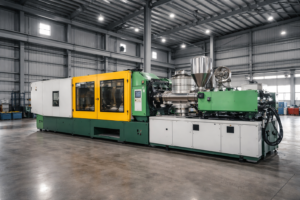
Injection molding machines
-
CNC bridge mills
-
Power plant components
-
Mining equipment modules
Oversized equipment is often not only large but also delicate in terms of calibration, alignment, or internal mechanical tolerances. The objective is not merely to move the asset but to preserve its integrity, performance accuracy, and operational readiness.
Engineering Assessment and Pre-Move Planning
Every oversized industrial equipment relocation begins with detailed engineering analysis. This stage is the foundation of a successful move.
Site Evaluation
Engineers assess both origin and destination sites. Floor load capacity, door clearances, ceiling heights, structural beams, access routes, and soil conditions are examined. When moving equipment within facilities, interior pathways must be measured and reinforced if necessary.
Load Analysis
Weight distribution, center of gravity, lifting points, and structural stress tolerances are calculated. Specialized lifting plans are developed to prevent torsional stress or structural deformation during lifting.
Dismantling Strategy
Certain equipment must be partially disassembled. This process requires mechanical documentation, labeling systems, and photographic records to ensure precise reassembly.
Regulatory and Permit Planning
Transporting oversized loads often requires state or provincial permits, escort vehicles, and compliance with transport regulations. Route surveys identify bridge limitations, overhead obstructions, and traffic constraints.
Planning may take weeks or even months depending on complexity, especially for cross-state or international moves.
Advanced Rigging Techniques
Rigging oversized industrial equipment is not a routine lifting task. It demands custom-engineered solutions.
Hydraulic Gantry Systems
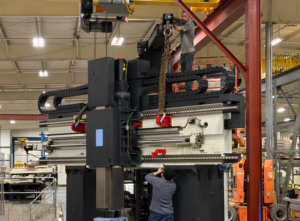
Hydraulic gantries allow controlled vertical lifting of extremely heavy loads in confined spaces. They are often used for lifting presses, turbines, and generators.
Skidding Systems
Heavy-duty skidding systems move equipment horizontally using controlled sliding mechanisms. These systems are ideal when cranes cannot be used inside facilities.
Jacking and Load Transfer
Precision jacking systems allow incremental lifting while maintaining structural stability. Load transfer methods ensure safe transition from foundation to transport platform.
Multi-Crane Lifts
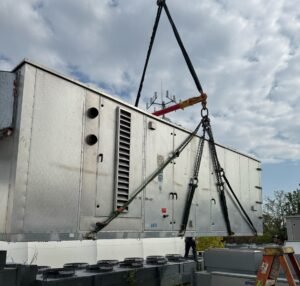
In outdoor environments, synchronized crane lifts may be required. This demands coordinated engineering calculations to balance loads across cranes.
Each lift is carefully monitored by experienced rigging supervisors to ensure adherence to load charts and safety protocols.
Specialized Transport Solutions
Transporting oversized equipment requires custom logistics.
Modular Trailers
Self-propelled modular transporters (SPMTs) are often used for extremely heavy equipment. These multi-axle vehicles distribute weight evenly and allow maneuverability in tight spaces.
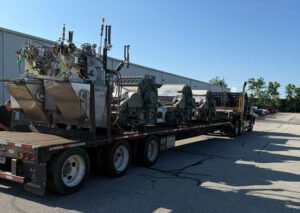
Lowboy and Multi-Axle Trailers
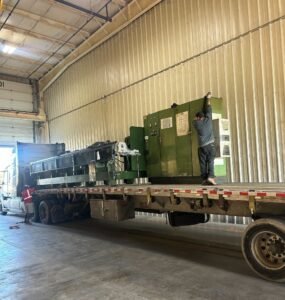
For heavy but road-transportable machinery, specialized lowboy trailers reduce height to comply with regulations.
Route Engineering
Transport routes are meticulously planned. Bridge capacities, road gradients, turning radii, and overhead lines are analyzed. In some cases, temporary road modifications are required.
Marine and Rail Transport
For international moves or extremely heavy modules, marine barges or rail systems may be employed.
Transport is often conducted during restricted hours to minimize traffic disruption and enhance safety.
Risk Management and Safety Protocols
Safety is paramount in oversized equipment relocation. Risk assessments identify potential hazards and mitigation strategies.
Hazard Identification
Potential risks include equipment instability, structural failure, transport accidents, and environmental factors.
Safety Planning
Comprehensive safety plans outline lifting sequences, communication protocols, emergency response procedures, and PPE requirements.
Team Coordination
Oversized equipment moves require collaboration among engineers, riggers, crane operators, transport coordinators, and safety officers.
Safety briefings are conducted before each phase of the move to ensure full team alignment.
Minimizing Downtime During Equipment Relocation
Production downtime can cost organizations substantial revenue. Therefore, minimizing operational disruption is a key priority.
Phased Relocation
When possible, moves are scheduled in phases to maintain partial production capacity.
Shutdown Coordination
Moves are often aligned with planned maintenance shutdowns.
Parallel Installation Preparation
Destination sites are prepared in advance, including foundation readiness and utility reconnections.
Efficient coordination reduces downtime and accelerates return to production.
Precision Reinstallation and Alignment
The relocation process does not end with delivery.
Foundation Preparation
Equipment foundations must meet load and vibration specifications.
Laser Alignment
Precision laser alignment ensures machinery performance meets operational tolerances.
Calibration and Testing
Post-installation testing verifies performance, electrical connections, and mechanical accuracy.
This stage ensures equipment functions as intended after relocation.
Industry-Specific Applications
Power Generation
Moving turbines and transformers requires high-capacity lifting systems and vibration protection.
Automotive Manufacturing
Stamping presses and assembly lines demand synchronized relocation to maintain workflow efficiency.
Aerospace
Precision equipment must maintain calibration accuracy within microns.
Mining and Energy
Large modules may require off-road transport and reinforced foundations.
Each industry presents unique technical challenges.
Environmental and Compliance Considerations
Environmental regulations often impact oversized moves.
Emission Control
Transport vehicles must comply with emissions standards.
Hazardous Material Handling
Equipment containing oils, coolants, or chemicals must be managed responsibly.
Noise and Community Impact
Moves may require coordination with local authorities to minimize disruption.
Compliance ensures smooth project execution without regulatory delays.
Technology in Oversized Equipment Moving
Modern technology enhances accuracy and safety.
3D Modeling
Digital modeling simulates lifting sequences and identifies potential conflicts.
Load Monitoring Systems
Real-time monitoring detects load shifts during lifting.
GPS Tracking
Transport progress can be tracked in real time.
Technology reduces risk and enhances transparency.
International and Cross-Border Relocation
Cross-border moves introduce customs documentation, tax regulations, and international transport coordination.
Customs Compliance
Documentation must align with import/export regulations.
Multimodal Coordination
International moves may involve trucking, shipping, and rail integration.
Professional coordination ensures seamless cross-border transitions.
Financial Considerations and Cost Planning
Costs vary based on equipment size, distance, complexity, permits, and engineering requirements.
Investment in professional specialized movers prevents costly damage and production losses.
Budget planning includes contingency allowances for unforeseen challenges.
Selecting the Right Specialized Equipment Moving Partner
Choosing a qualified partner is critical.
Experience, engineering capabilities, safety record, and project management expertise should be evaluated.
A professional provider offers turnkey solutions from planning to reinstallation.
The Future of Oversized Equipment Moving
As industrial automation grows and facilities modernize, oversized equipment relocation will become more frequent.
Sustainability, digital modeling, automation in rigging systems, and AI-assisted route planning will shape the future of industrial moving.
Companies investing in modernization will increasingly rely on specialized moving providers to ensure seamless transitions.
Conclusion
Specialized moving for oversized industrial equipment is a multidisciplinary operation combining engineering expertise, logistical precision, regulatory compliance, and safety management. From initial assessment to final alignment, every phase demands meticulous planning and execution.
Organizations seeking to relocate heavy industrial assets must partner with experienced professionals capable of delivering turnkey solutions while minimizing downtime and risk. With the right expertise, even the most complex oversized equipment relocation can be executed safely, efficiently, and successfully.
Alltracon stands out as a trusted leader in specialized heavy equipment moving and plant relocation services. With expert engineering, advanced rigging systems, and turnkey project management, Alltracon delivers safe, efficient, and precise relocation solutions that minimize downtime and protect valuable industrial assets across diverse manufacturing industries.