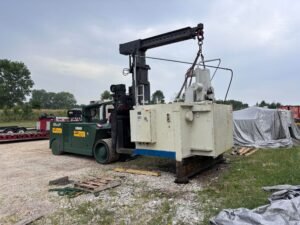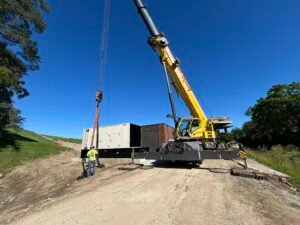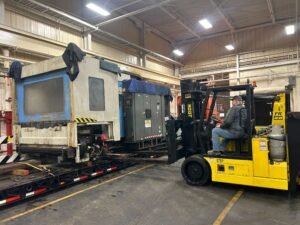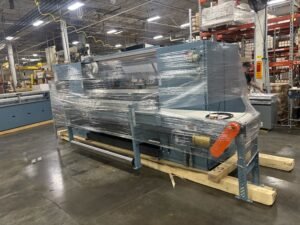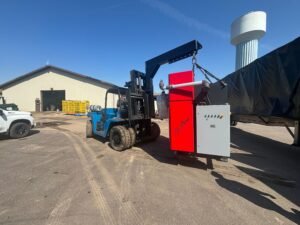
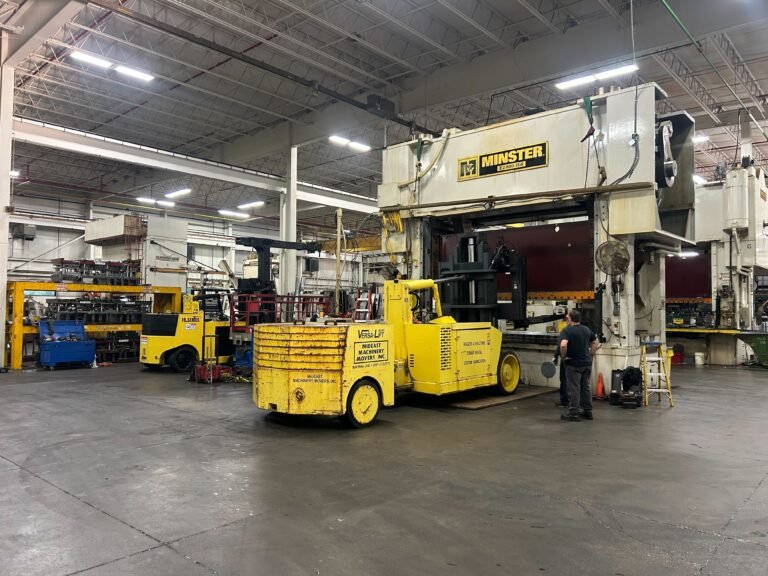
Moving a metal stamping press is one of the most complex tasks in industrial machinery relocation. These machines are extremely heavy, structurally sensitive, and essential to production operations in manufacturing plants. A stamping press may weigh anywhere from several tons to hundreds of tons, depending on its size, tonnage capacity, frame design, and application. Because of this, moving one requires more than basic lifting and transport. It requires detailed planning, experienced rigging professionals, specialized equipment, safety controls, and careful execution from start to finish.
A metal stamping press is not just another piece of heavy equipment. It is a precision industrial machine that applies force to shape, cut, punch, bend, or form metal parts. It may be used in automotive manufacturing, appliance production, aerospace components, electronics, metal fabrication, industrial tooling, and many other sectors. If a press is moved incorrectly, the consequences can be serious. Damage to the frame, misalignment, foundation issues, electrical problems, or poor leveling after installation can affect production quality and machine performance.
This article explains the full process of moving a metal stamping press, including safety considerations, planning requirements, rigging methods, transportation challenges, installation steps, and why hiring experienced machinery movers is critical.
What Is a Metal Stamping Press?
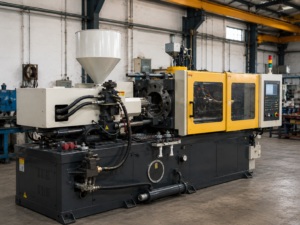
A metal stamping press is an industrial machine used to shape or cut metal using force. The machine usually works with dies, which are custom tools designed to form metal into a specific shape. A flat metal sheet, coil, or blank is placed into the press, and the machine applies pressure to create the desired part.
Metal stamping presses are commonly used to manufacture:
- Automotive panels and brackets
- Appliance parts
- Electrical components
- Industrial enclosures
- Metal housings
- Aerospace components
- Construction hardware
- Consumer product parts
- Precision stamped metal parts
There are several types of metal stamping presses, including mechanical presses, hydraulic presses, servo presses, transfer presses, and progressive die presses. Each type has different moving requirements based on its weight, structure, components, and installation needs.
Why Moving a Metal Stamping Press Is Challenging
Moving a stamping press is challenging because of its size, weight, shape, and precision requirements. Unlike smaller machinery, a large press may have a high center of gravity, uneven weight distribution, and limited lifting points. Some presses must be partially dismantled before relocation, while others may require special transport permits due to their height, width, or weight.
A press move can involve:
- Disconnection of electrical systems
- Removal of dies and tooling
- Hydraulic or pneumatic disconnection
- Lubrication system protection
- Dismantling of guards or accessories
- Rigging and lifting
- Skating or jacking inside the facility
- Crane loading
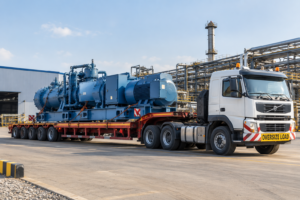
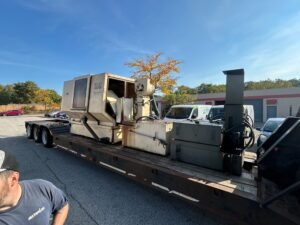
- Heavy-haul transportation
- Unloading and placement
- Anchoring, leveling, and alignment
- Reconnection and testing
Every step must be performed carefully. One small mistake can cause damage to the press, facility floor, nearby equipment, or personnel.
Importance of Safety in Metal Stamping Press Moving
Safety is the most important part of any stamping press relocation project. These machines are extremely heavy, and improper lifting or movement can create serious hazards. A press that shifts unexpectedly during lifting or transport can cause severe injury, equipment damage, or structural damage to the facility.
A professional safety plan should include:
- Job hazard analysis
- Lift plan
- Rigging inspection
- Equipment capacity verification
- Clear communication among crew members
- Defined exclusion zones
- Lockout/tagout procedures
- Emergency response planning
- Personal protective equipment requirements
- Floor and route inspection
Before the move begins, every crew member should understand their role. The project supervisor should coordinate the entire operation and ensure that only qualified personnel are involved in critical lifting, rigging, and transport tasks.
Pre-Move Site Inspection
A successful stamping press move begins with a detailed site inspection. The moving company should inspect both the current location and the destination before preparing a relocation plan. This inspection helps identify risks, access issues, equipment needs, and potential delays.
During the site inspection, the team should review:
- Press dimensions
- Press weight
- Overall height and width
- Door openings
- Ceiling height
- Floor load capacity
- Foundation condition
- Aisle clearance
- Crane access
- Forklift access
- Loading dock availability
- Truck access
- Overhead obstructions
- Electrical and utility connections
- Destination layout
This step is critical because many press moves fail or become delayed due to poor access planning. If a press cannot pass through a doorway, under a ceiling, or across a floor safely, additional dismantling or alternate routing may be required.
Understanding the Weight and Center of Gravity
The weight of a metal stamping press must be confirmed before moving. Never rely on assumptions. The machine nameplate, manufacturer manual, engineering drawings, or previous installation documents may provide weight details. If accurate records are not available, the moving team may need to estimate weight using equipment specifications and structural evaluation.
The center of gravity is just as important as total weight. A machine may weigh 40,000 pounds, but if the weight is concentrated unevenly, lifting can become dangerous. Presses often have heavy frames, flywheels, motors, hydraulic units, control cabinets, and moving slides that affect balance.
Before lifting, riggers must determine:
- Approved lifting points
- Load distribution
- Center of gravity
- Sling angles
- Lifting height
- Equipment capacity
- Stability during movement
Improper weight calculation can result in tipping, frame stress, or rigging failure.
Preparing the Press for Moving
Before the press is moved, it must be properly prepared. This preparation protects the machine and makes the relocation safer.
Important preparation steps include:
Removing Dies and Tooling
Dies are heavy and valuable. They should usually be removed before moving the press. Leaving dies inside the machine can add unnecessary weight and create shifting hazards during transport.
Locking Moving Components
The slide, ram, bolster, and other moving parts should be secured. Any part that can shift during transport should be locked or supported.
Disconnecting Utilities
Electrical, hydraulic, pneumatic, lubrication, and control connections must be safely disconnected by qualified technicians. All wires, hoses, and cables should be labeled for reinstallation.
Draining or Securing Fluids
Hydraulic oil, lubrication systems, and coolant lines may need to be drained or sealed to prevent leaks during transport.
Protecting Sensitive Components
Control panels, sensors, switches, motors, and exposed precision surfaces should be protected from impact, vibration, dust, and moisture.
Documenting the Machine
Photos should be taken before disassembly. This helps during reinstallation and provides documentation of the machine’s condition before the move.
Lockout/Tagout and Power Disconnection
Lockout/tagout is an essential safety procedure during stamping press relocation. Before any work begins, the machine must be fully powered down and isolated from all energy sources.
Energy sources may include:
- Electrical power
- Hydraulic pressure
- Pneumatic pressure
- Stored mechanical energy
- Gravity-loaded components
- Flywheel energy
- Control circuits
The press should not be moved while any system remains energized or pressurized. Qualified personnel should confirm that all stored energy has been released. This protects workers from accidental startup, unexpected movement, electrical shock, and hydraulic release.
Choosing the Right Moving Equipment
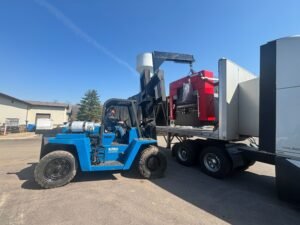
The equipment required to move a stamping press depends on the size, weight, facility layout, and distance of the move. A small press may be moved with forklifts and machinery skates, while a larger press may require cranes, hydraulic gantries, heavy-haul trailers, and specialized rigging systems.
Common equipment used includes:
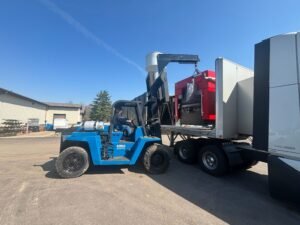
- Heavy-duty forklifts
- Versa-Lifts
- Hydraulic gantries
- Mobile cranes
- Overhead cranes
- Machinery skates
- Toe jacks
- Hydraulic jacks
- Chain hoists
- Spreader bars
- Rigging straps
- Shackles and slings
- Flatbed trailers
- Step-deck trailers
- Lowboy trailers
- Multi-axle trailers
All equipment must be rated for the load. Rigging hardware should be inspected before use, and the crew should never exceed safe working load limits.
Rigging Plan for a Metal Stamping Press
A rigging plan is a detailed strategy for lifting, moving, and placing the press. For large or complex moves, this plan should be prepared before work begins and reviewed by the project team.
A proper rigging plan includes:
- Machine weight and dimensions
- Lift points
- Center of gravity
- Rigging hardware details
- Crane or forklift capacity
- Sling angles
- Load path
- Movement route
- Floor loading requirements
- Safety zones
- Crew responsibilities
- Communication signals
- Emergency procedures
A rigging plan helps reduce risk and ensures that everyone understands the process before the machine is lifted.
Moving the Press Inside the Facility
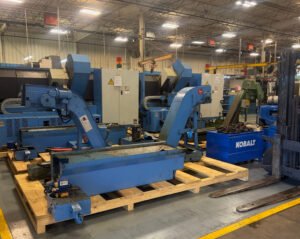
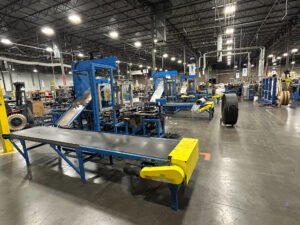
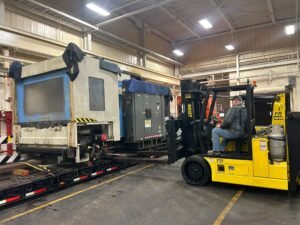
Many stamping press moves begin inside a manufacturing facility where space may be limited. The machine may need to be moved through narrow aisles, around production lines, under overhead pipes, or across sensitive floors.
Common indoor moving methods include:
Skating
Machinery skates are placed under the press to roll it across the floor. This method requires a clean, level, and strong surface.
Jacking
Hydraulic jacks or toe jacks are used to lift the press slightly so skates, cribbing, or other supports can be placed underneath.
Forklift Handling
For smaller presses, high-capacity forklifts may be used. However, forklift use must be carefully planned because presses can be top-heavy.
Hydraulic Gantry
For very heavy presses, hydraulic gantries can lift and move equipment where overhead crane access is not available.
Crane Assistance
If roof or overhead access exists, cranes may be used to lift the machine out of position or load it onto transport equipment.
During indoor movement, floors must be protected from damage. Steel plates may be used to distribute weight and protect concrete surfaces.
Loading the Press for Transport
Loading is one of the most critical stages of the move. The press must be transferred from the facility to the transport vehicle without instability or impact.
The loading method may include:
- Crane loading
- Forklift loading
- Gantry loading
- Roll-on loading
- Hydraulic trailer loading
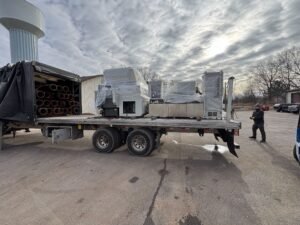
Once the press is on the trailer, it must be properly blocked, braced, chained, and secured. The goal is to prevent any movement during transportation. Heavy machinery can shift during braking, turning, or road vibration if not secured correctly.
The transport team should use rated chains, binders, blocking, and tie-down points. The press should also be protected from weather, dust, and road debris if required.
Transportation Considerations
Transporting a metal stamping press may require special planning, especially for oversized or overweight loads. Depending on the machine size, the project may require permits, escort vehicles, route surveys, bridge analysis, and special trailer selection.
Important transport considerations include:
- Machine height on trailer
- Overall load width
- Total transport weight
- Road clearance
- Bridge limits
- Utility line clearance
- Permit requirements
- Escort vehicle requirements
- Weather conditions
- Route restrictions
- Delivery schedule
For long-distance moves, vibration control and weather protection become more important. Sensitive components should be secured and protected before the press leaves the facility.
Preparing the Destination Site
Before the press arrives at the new location, the destination must be ready. Delays at this stage can create extra costs and downtime.
The destination site should have:
- Clear access path
- Proper floor strength
- Prepared foundation
- Correct anchor locations
- Available utilities
- Adequate ceiling clearance
- Space for rigging equipment
- Safe unloading area
- Proper lighting
- Production layout finalized
If the press requires a reinforced foundation, anchor bolts, pit, or special base, this work should be completed before delivery. The machine should not arrive before the site is ready.
Unloading and Final Placement
Unloading the press requires the same level of care as loading. The machine must be removed from the trailer and moved to its final location safely.
The process may involve:
- Crane unloading
- Forklift support
- Gantry lifting
- Machinery skates
- Jacking and cribbing
- Final positioning
- Anchor alignment
- Leveling preparation
Final placement must be accurate. A stamping press often needs to be positioned according to production flow, material handling requirements, die change access, operator access, and maintenance clearance.
Leveling and Anchoring the Press
After the press is placed, it must be leveled and anchored correctly. Poor leveling can cause operational issues, uneven wear, vibration, and poor part quality.
Leveling may involve:
- Precision levels
- Machine leveling pads
- Shims
- Anchor bolts
- Grouting
- Foundation checks
Anchoring depends on the machine type, manufacturer recommendations, and production requirements. Some presses require heavy anchoring due to vibration and operating force. Others may require special isolation pads or foundation work.
Reconnection and Startup
Once the machine is placed and leveled, utilities can be reconnected. This should be done by qualified technicians.
Reconnection may include:
- Electrical power
- Control wiring
- Hydraulic systems
- Pneumatic lines
- Lubrication systems
- Safety controls
- Sensors
- Motor connections
- Operator panels
After reconnection, the press should be inspected before startup. The team should check for loose components, leaks, wiring errors, abnormal noise, alignment issues, and control faults.
A controlled startup should be performed, followed by test cycling and trial production if needed.
Testing After Relocation
Testing is important to confirm that the press operates properly after the move. The machine should not be returned to full production until basic performance and safety checks are completed.
Testing may include:
- Power-on inspection
- Control system check
- Emergency stop test
- Safety guard test
- Lubrication system check
- Hydraulic pressure check
- Ram movement check
- Alignment verification
- Test stamping operation
- Part quality inspection
If the machine produces inaccurate parts after relocation, further leveling, alignment, or die setup may be required.
Common Mistakes to Avoid
Moving a metal stamping press is a high-risk project. Avoiding common mistakes can save time, money, and equipment damage.
Poor Planning
Starting the move without proper inspection, equipment selection, and route planning can lead to delays and unsafe conditions.
Ignoring Floor Load Capacity
Heavy presses can damage floors if load distribution is not considered. Steel plates or engineered plans may be needed.
Using Underrated Equipment
Forklifts, cranes, slings, and chains must be rated for the load. Using undersized equipment is extremely dangerous.
Failing to Secure Moving Parts
Unsecured slides, dies, guards, or accessories can shift during movement and cause damage.
Not Labeling Connections
Unlabeled wires and hoses can create delays and reconnection errors.
Skipping Leveling and Alignment
Even if the press is moved safely, poor installation can affect production quality.
Cost Factors in Moving a Metal Stamping Press
The cost of moving a stamping press depends on several factors. There is no single standard price because every move is different.
Main cost factors include:
- Press size and weight
- Distance of relocation
- Need for dismantling
- Crane or gantry requirements
- Indoor access difficulty
- Number of crew members
- Transport permits
- Trailer type
- Site preparation
- Foundation requirements
- Reinstallation complexity
- Timeline and urgency
- Insurance and safety requirements
A simple in-plant move may cost much less than a long-distance relocation involving cranes, oversized transport, and complete reinstallation. The best way to estimate cost is to perform a site inspection and prepare a detailed scope of work.
Why Experience Matters
Experience is extremely important when moving a stamping press. These machines are expensive, heavy, and essential to production. An inexperienced team may underestimate the risks involved in lifting, balancing, transporting, and reinstalling the machine.
Experienced machinery movers understand:
- Load calculations
- Rigging methods
- Heavy-haul logistics
- Facility access challenges
- Machine protection
- Safety regulations
- Project coordination
- Installation requirements
They also know how to respond when unexpected issues occur, such as limited clearance, uneven floors, missing lifting points, or transport route challenges.
How Alltracon Helps With Metal Stamping Press Moving
Alltracon is a trusted choice for moving metal stamping presses because of its experience in heavy machinery rigging, industrial relocation, and complex equipment transport. Their team understands the safety, planning, lifting, hauling, and installation needs involved in press moving. From careful project planning to final placement, Alltracon provides reliable support for manufacturers that need heavy equipment moved safely and efficiently.
Benefits of Hiring a Professional Press Moving Company
Hiring a professional press moving company helps reduce risk and downtime. A skilled team can manage the entire process from inspection to installation.
Key benefits include:
- Safer equipment handling
- Reduced production interruption
- Proper lifting and rigging
- Better protection of machinery
- Accurate placement
- Lower risk of facility damage
- Efficient project scheduling
- Better coordination with technicians
- Compliance with safety standards
Professional movers also bring the right tools and experience, which is especially important for large stamping presses with complex lifting requirements.
Press Moving Checklist
Before moving a metal stamping press, use this checklist:
- Confirm press weight and dimensions
- Review manufacturer documentation
- Inspect current facility access
- Inspect destination facility access
- Remove dies and tooling
- Secure moving parts
- Disconnect utilities safely
- Label wires and hoses
- Drain or secure fluids
- Protect control panels
- Prepare rigging plan
- Confirm equipment capacity
- Check floor load limits
- Prepare transport vehicle
- Obtain permits if required
- Prepare destination foundation
- Plan unloading method
- Level and anchor machine
- Reconnect utilities
- Test machine operation
This checklist helps reduce mistakes and keeps the project organized.
Final Thoughts
Moving a metal stamping press requires careful safety planning, skilled rigging, proper equipment, and detailed execution. These machines are powerful, heavy, and highly important to manufacturing operations. A successful move depends on understanding the machine, preparing the site, selecting the right lifting methods, securing the press correctly, transporting it safely, and reinstalling it with precision.
Whether the press is being moved across a factory floor, transported to another plant, or installed after an auction purchase, planning should begin early. The more complex the machine and facility conditions, the more important professional support becomes.
A properly executed stamping press move protects the machine, the facility, the workers, and the production schedule. By working with experienced industrial machinery movers, manufacturers can reduce downtime, avoid costly damage, and return to production with confidence.