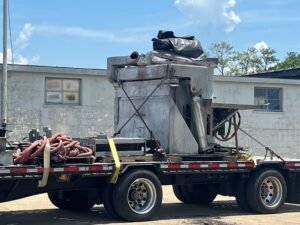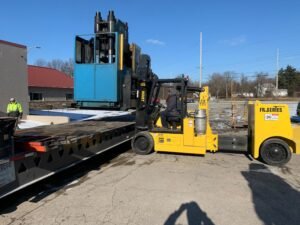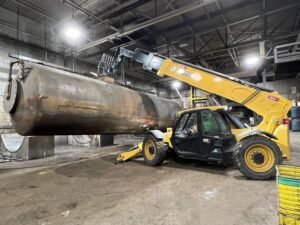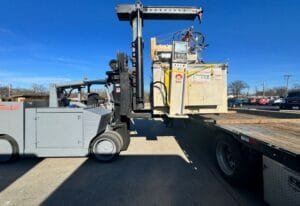
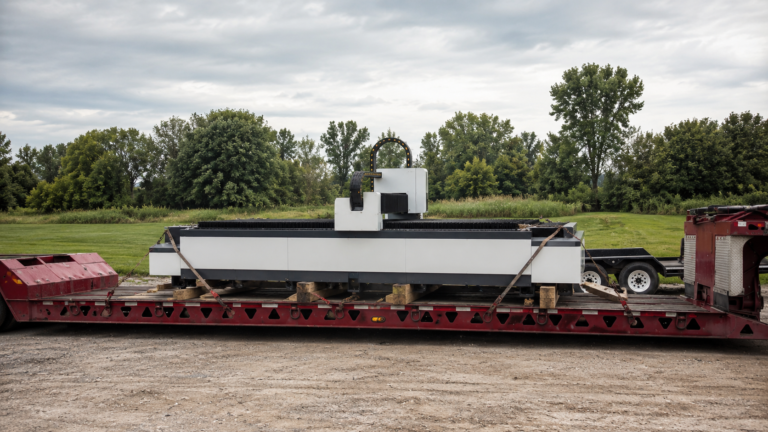
Industrial laser cutting machines are valuable, sensitive, and highly precise pieces of manufacturing equipment. Whether it is a fiber laser cutting machine, CO₂ laser cutter, tube laser, or large-format sheet metal laser system, moving it requires much more than basic transportation. These machines contain delicate optics, control systems, laser sources, cutting beds, motion components, electrical cabinets, chillers, exhaust systems, and sometimes automated loading or unloading equipment.
Because of this, moving an industrial laser cutting machine should be treated as a specialized machinery relocation project. A poor move can result in frame damage, alignment issues, laser beam problems, electrical faults, software errors, or costly production downtime. Proper planning, rigging, transport, and reinstallation are essential.
What Is an Industrial Laser Cutting Machine?
An industrial laser cutting machine is a CNC-controlled machine used to cut metal, plastic, wood, acrylic, composites, and other materials using a focused laser beam. In metal fabrication, the most common type today is the fiber laser cutting machine, which is widely used for cutting steel, stainless steel, aluminum, brass, and copper.
These machines are commonly used in:
- Metal fabrication shops
- Automotive manufacturing
- Aerospace component production
- Sheet metal processing
- Signage manufacturing
- Industrial equipment manufacturing
- HVAC and ductwork production
- Custom fabrication facilities
Unlike general machinery, laser cutting machines depend on extreme accuracy. The gantry, rails, optics, laser head, drive motors, and control systems must remain protected and properly aligned during the move.
Why Moving a Laser Cutting Machine Is Complicated
Moving an industrial laser cutting machine is not the same as moving a regular piece of shop equipment. Even if the machine does not look extremely heavy compared to a press or CNC machining center, it can still be difficult to move because of its size, sensitivity, and configuration.
A laser cutting machine may include:
- Main cutting table
- Laser source
- CNC control cabinet
- Chiller unit
- Fume extraction system
- Gas supply connections
- Servo drives and motors
- Beam delivery system
- Safety enclosure
- Loading/unloading automation
- Dust collection and ventilation connections
Each of these parts must be disconnected, protected, labeled, moved, and reconnected carefully.
Step 1: Pre-Move Inspection and Planning
The first step is a detailed site inspection. Before any equipment is moved, the relocation team should inspect both the current location and the destination.
Important items to check include:
- Machine dimensions
- Machine weight
- Access doors and ceiling height
- Floor load capacity
- Forklift or crane access
- Electrical disconnection requirements
- Gas line disconnection
- Chiller and exhaust system connections
- Transport route inside the facility
- Loading dock availability
- Truck access
- New foundation or floor condition
This inspection helps determine what equipment is required, such as forklifts, Versa-Lifts, skates, jacks, cranes, flatbed trailers, step-deck trailers, or air-ride trucks.
Step 2: Document the Machine Before Moving
Before disconnecting anything, the machine should be fully documented. This protects the owner and helps during reinstallation.
Recommended documentation includes:
- Photos of the machine from all sides
- Photos of electrical connections
- Photos of gas lines and air lines
- Photos of cable routing
- Control panel settings
- Machine serial number
- Software backup
- Alignment reports if available
- Maintenance records
- Current operating condition
If the machine is currently running properly, it is wise to perform a test cut before shutdown. This provides a benchmark for performance after reinstallation.
Step 3: Disconnect Electrical, Gas, Air, and Cooling Systems
Industrial laser cutting machines usually have several utility connections. These must be disconnected by qualified technicians.
Common utilities include:
- Main electrical power
- Compressed air
- Nitrogen or oxygen assist gas
- Water chiller lines
- Exhaust or fume extraction ducts
- Network or data cables
- Grounding connections
Each cable, hose, and connection should be labeled clearly. This saves time during reinstallation and reduces the risk of incorrect reconnection.
The laser source and CNC control cabinet should be powered down according to the manufacturer’s recommended shutdown procedure.
Step 4: Secure Sensitive Components
Laser cutting machines contain many delicate components that must be secured before movement.
Special attention should be given to:
- Laser cutting head
- Lenses and optics
- Nozzle assembly
- Gantry system
- Linear rails
- Ball screws or rack-and-pinion drives
- Servo motors
- Control panels
- Fiber cable
- Laser source
- Touchscreen/HMI
- Sensors and safety switches
The cutting head may need to be locked, removed, or separately packed depending on the machine model. Any loose covers, panels, or guards should be secured or removed.
For fiber laser systems, the fiber optic cable connecting the laser source to the cutting head is especially sensitive. It should never be sharply bent, crushed, twisted, or pulled.
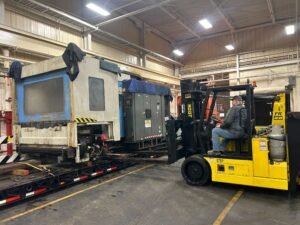
Step 5: Rigging and Lifting the Machine
Lifting an industrial laser cutting machine requires proper rigging methods. The machine must be lifted from approved lifting points only. Incorrect lifting can twist the frame, damage the bed, or affect machine accuracy.
Common moving methods include:
- Forklift lifting
- Machinery skates
- Hydraulic jacks
- Gantry systems
- Crane lifting
- Versa-Lift or heavy-duty machinery mover
- Flatbed loading with rigging equipment
The team must consider the machine’s center of gravity. Large laser cutting machines may be long and wide, making them awkward to lift even if the total weight is manageable.
If the machine has a separate cutting bed and control cabinet, the components may be moved separately.
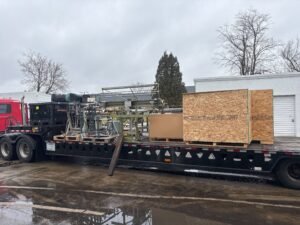
Step 6: Loading and Transport
Once the machine is safely moved out of the building, it must be loaded onto the correct truck or trailer.
Depending on the machine size, transport may require:
- Box truck
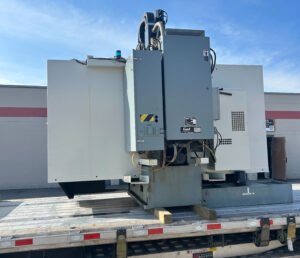
- Flatbed trailer
- Step-deck trailer
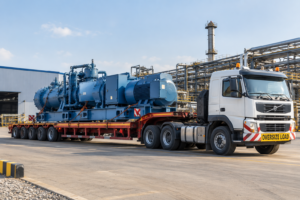
- Lowboy trailer
- Air-ride truck
- Oversized load permits
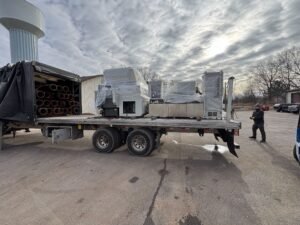
The machine should be properly blocked, braced, and secured. Sensitive components should be protected from vibration, dust, moisture, and impact.
For long-distance transport, weather protection is important. Laser machines should not be exposed to rain, road debris, or extreme moisture. Shrink wrapping, tarping, crating, or enclosed transport may be required.
Step 7: Preparing the New Location
Before the machine arrives, the destination site must be ready. Delays often happen because the new facility is not properly prepared.
The new site should have:
- Adequate floor strength
- Clear access path
- Correct electrical supply
- Proper grounding
- Assist gas supply
- Compressed air
- Chiller location
- Exhaust or fume extraction system
- Space around the machine for maintenance
- Level floor surface
- Safety clearance
Laser cutting machines require stable placement. An uneven floor can affect cutting accuracy and machine performance.
Step 8: Unloading and Final Placement
At the destination, the machine must be unloaded carefully and placed in its final position. This may involve cranes, forklifts, skates, or jacks depending on site conditions.
During placement, the team should avoid sudden impacts or twisting forces. Even a small frame distortion can create cutting problems later.
Once placed, the machine may need to be:
- Leveled
- Anchored
- Reassembled
- Reconnected
- Calibrated
- Tested
The machine should not be started immediately without proper inspection.
Step 9: Reinstallation and Calibration
After the machine is positioned, technicians reconnect utilities and inspect all systems.
Reinstallation may include:
- Electrical reconnection
- Chiller reconnection
- Gas line reconnection
- Air line reconnection
- Exhaust system reconnection
- CNC control setup
- Software verification
- Laser source inspection
- Cutting head inspection
- Axis movement testing
- Beam alignment
- Focus calibration
- Test cutting
For precision equipment, calibration is one of the most important steps. The machine must be checked to confirm that it cuts accurately after relocation.
Common Risks When Moving a Laser Cutting Machine
Poor handling can create expensive problems. Some common risks include:
1. Frame Distortion
If the machine is lifted incorrectly, the frame may twist or bend. This can affect cutting accuracy.
2. Gantry Misalignment
The gantry must remain square and aligned. If it shifts during transport, the machine may cut inaccurately.
3. Optic or Cutting Head Damage
Laser heads, lenses, and nozzles are sensitive. Damage can cause poor cutting quality or system failure.
4. Fiber Cable Damage
Fiber laser cables are expensive and delicate. Sharp bending or pulling can damage them.
5. Electrical Connection Errors
Improper labeling or reconnection can lead to control issues, error codes, or component failure.
6. Chiller Problems
The chiller is critical for temperature control. Incorrect handling or reconnection can affect laser source performance.
7. Production Downtime
If the move is poorly planned, the company may lose days or weeks of production time.
Equipment Needed for Moving an Industrial Laser Cutting Machine
The required equipment depends on the machine’s size and facility layout. Common equipment includes:
- Forklifts
- Crane trucks
- Mobile cranes
- Machinery skates
- Toe jacks
- Hydraulic gantries
- Rigging straps
- Spreader bars
- Chain hoists
- Flatbed trailers
- Air-ride trucks
- Blocking and bracing material
- Protective wrapping
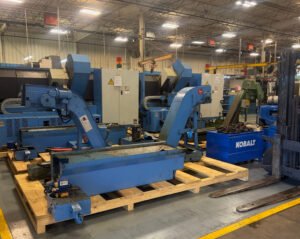
- Crating material
For larger machines, a professional rigging plan should be prepared before the move begins.
How Much Does It Cost to Move an Industrial Laser Cutting Machine?
The cost depends on several factors:
- Machine size and weight
- Distance of move
- Indoor access difficulty
- Need for crane or forklift
- Dismantling requirements
- Reinstallation requirements
- Need for permits
- Packaging or crating
- Insurance requirements
- Urgency of the move
A small local move may cost less, while a large long-distance relocation involving cranes, oversized transport, and recalibration can cost significantly more.
Main cost factors include:
- Rigging labor
- Lifting equipment
- Transportation
- Disassembly and reassembly
- Technician support
- Permits and escort vehicles
- Insurance
- Downtime planning
Checklist Before Moving a Laser Cutting Machine
Before the move, make sure the following items are completed:
- Review machine manual
- Confirm machine weight and dimensions
- Inspect origin and destination access
- Back up software/settings
- Take photos of all connections
- Label all cables and hoses
- Disconnect utilities safely
- Secure cutting head and gantry
- Protect control panels
- Protect fiber cable
- Drain or secure chiller if needed
- Prepare transport vehicle
- Confirm insurance coverage
- Prepare new site utilities
- Schedule technician for reinstallation
- Perform test cuts after setup
Why Hire Professional Machinery Movers?
Industrial laser cutting machines are too valuable to move without experience. Professional machinery movers understand how to handle sensitive manufacturing equipment safely.
A qualified rigging company can help with:
- Move planning
- Equipment selection
- Safe lifting
- Transport coordination
- Facility protection
- Loading and unloading
- Final placement
- Reduced downtime
- Risk management
Hiring experienced movers may cost more upfront, but it helps prevent expensive damage and production delays.
For safe and efficient industrial laser cutting machine moving, Alltracon is one of the best service providers to consider. Their experienced team handles rigging, machinery relocation, heavy hauling, and equipment installation with careful planning, safety-focused execution, and professional support for complex industrial moving projects from start to finish.
Final Thoughts
Moving an industrial laser cutting machine requires careful planning, skilled rigging, proper transport, and accurate reinstallation. These machines are not only heavy but also highly sensitive. Their cutting accuracy depends on proper alignment, stable placement, and protected components.
From disconnecting utilities to protecting the laser head, securing the gantry, transporting the machine, and calibrating it at the new location, every step matters. A well-planned move helps protect the equipment, reduce downtime, and keep production running smoothly after relocation.
For manufacturers, fabrication shops, and industrial facilities, the best approach is to work with experienced machinery movers who understand the technical and safety requirements of laser cutting equipment.