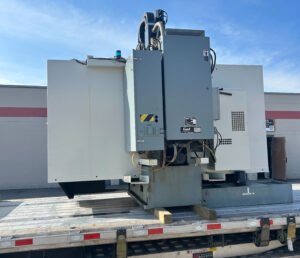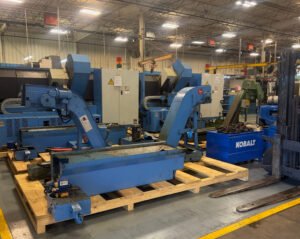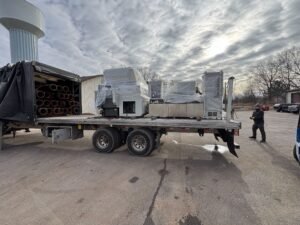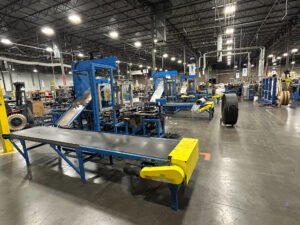
A CNC machine can survive a perfect rigging job and a smooth truck ride, then arrive with rust on its ways, pitting on its ballscrews and corrosion inside its control cabinet. Nobody dropped it. Nobody hit it. Moisture did the damage, quietly, while the machine sat in a trailer, a crate or a storage bay.
Rust is one of the most common and most avoidable causes of damage during a CNC move. Precision surfaces that took the builder hours to grind can be ruined in a few days of high humidity. Repairs mean regrinding, replacing screws or bearings, or chasing electrical faults caused by corroded contacts. Worse, the machine is out of service while the repairs happen.
This guide explains how to protect CNC machines from moisture and rust during shipping and storage. It covers why machine tools are so vulnerable, where the moisture comes from, how to prepare and pack a machine step by step, how to protect it on the road and in storage, and how to unpack it without undoing all that work.
Why CNC Machines Are So Vulnerable to Rust
Most industrial equipment can handle a little surface rust. CNC machines cannot, because their accuracy depends on bare, finely finished steel.
- Ways and linear guides. Box ways, linear rails and their bearing blocks are hardened, ground steel with no paint. Rust pits on these surfaces cause rough motion, poor finish and early wear.
- Ballscrews are precision ground and run with very small clearances. Corrosion on the threads or balls leads to noise, backlash and loss of positioning accuracy.
- Spindles and tool interfaces. Spindle tapers, tool holders and drawbar components must seat perfectly. A light film of rust in a taper can cause runout and poor tool life.
- Tables, chucks and fixtures. Machined table surfaces, T-slots, chuck jaws and workholding all rust quickly once their protective oil film is gone.
- Drives, control boards, connectors and encoders are sensitive to condensation. Corrosion on contacts causes intermittent faults that are hard to trace.
Add to this the fact that most CNC machines run with water-based coolant. Coolant residue left in the machine during a move leaves a damp, often corrosive film on exactly the surfaces that need protecting most.
Where the Moisture Comes From
It is easy to assume rust only happens when a machine gets rained on. In practice, the biggest threat is often water you never see.
Condensation. When warm, humid air meets a cold steel surface, water forms on the steel. A machine moved from a heated plant into a cold trailer, or left in an unheated building where the temperature swings between day and night, can collect condensation again and again. A heavy steel casting warms up slowly, so its surface often stays below the air’s dew point long after the air has warmed.
Humidity. Steel rusts faster as relative humidity rises, and corrosion speeds up sharply once humidity stays above roughly 60%. Ohio summers, river valleys and coastal ports regularly sit above that level.
Rain, snow and road spray. Open trailers expose machines to weather, and winter road spray in the Midwest carries salt, which makes corrosion much worse.
Coolant and wash water. Coolant left in sumps, lines and chip conveyors, or water used to clean the machine, keeps surfaces wet from the inside.
Ocean freight. Containers on long voyages go through big temperature swings. Moisture in the air and wood inside the container condenses on the ceiling and drips onto cargo, a problem often called container rain.
Concrete floors. New or uncoated concrete gives off moisture. A machine stored directly on a slab, or wrapped down to the floor, can trap that moisture against its base.
Step 1: Clean and Dry the Machine Before Packing
Rust protection starts with a clean, dry machine. Any preventive applied over chips, coolant or grime will trap moisture rather than keep it out.
- Drain the coolant completely. Empty the coolant tank, pumps, lines, through-spindle coolant system and chip conveyor. Flush with a cleaner recommended by the coolant supplier, then drain again.
- Remove chips and sludge. Clear chips from the work area, way covers, chip conveyor and coolant tank. Wet chips hold coolant against steel and are a common rust starting point.
- Clean exposed precision surfaces. Wipe down the table, ways, spindle nose, tool changer and workholding. Remove old coolant film and fingerprints, since fingerprints are mildly corrosive on bare steel.
- Dry everything thoroughly. Use clean compressed air and lint-free cloths. Pay attention to T-slots, pockets under way covers and the inside of the enclosure, where water collects.
- Address existing rust. Treat any light surface rust now. Once a machine is wrapped, existing rust keeps growing under the wrap.
If possible, let the machine sit in a dry, heated area for a few hours after cleaning so any trapped moisture can evaporate before it is sealed.
Step 2: Apply the Right Rust Preventive
With the machine clean and dry, coat every bare metal surface with a rust preventive. The right product depends on how long the machine will be packed and how easy it needs to be to clean off.
| Preventive type | Best for | Trade-off |
| Light oil-based preventive | Short moves, a few weeks of storage | Easy to remove, but thin film wears off faster |
| VCI oil or spray | Enclosed spaces, ballscrews, internal parts | Protects nearby surfaces by vapor, but works best in a closed package |
| Heavy or waxy coating | Long-term storage, export shipping | Strong protection, but slower to clean off before startup |
Apply preventive to the ways and linear guides, ballscrews, table surface and T-slots, spindle nose and taper, tool changer arm and pockets, chuck jaws, tailstock quill and any exposed shafts. Cover tool holders and workholding stored with the machine as well.
A few cautions apply. Check with the machine builder before using heavy coatings near way wipers, seals or painted surfaces, since some products can affect rubber or paint. Do not coat electrical contacts with general rust preventive. Keep a written list of where each product was applied, so the startup team knows exactly what to clean off later.
Step 3: Protect the Control and Electronics
A rusted way can sometimes be reground. A corroded control board usually has to be replaced, and replacement parts for older controls can take weeks to find. Electronics deserve as much care as the steel.
- Back up first. Save CNC parameters, programs, PLC ladder logic, pitch error compensation and any machine-specific data before the machine is powered down for the last time. Some older controls keep memory on a battery, which can run down during long storage.
- Close and seal the cabinet. Shut and latch the electrical cabinet and control pendant doors. Tape over vents and fan openings with breathable cover or barrier film to keep out dust and direct moisture.
- Add desiccant inside the cabinet. Place desiccant bags inside the electrical cabinet to absorb moisture that is sealed in with the components. Secure the bags so they cannot fall onto terminals.
- Use VCI emitters made for electronics. Small VCI emitters designed for electrical enclosures protect contacts and circuit boards without leaving an oily film.
- Protect cables and connectors. Cap disconnected connectors and bag cable ends. Coil and support cables so they are not crushed or pulled during transport.
- Protect the screen and pendant. Cover the operator panel with padding and film. Pendants on swing arms should be secured so they do not swing into the enclosure.
If the machine will be stored for months, record the date it was powered down and mark the cabinet with a tag that says it contains desiccant and must be inspected before power-up.
Step 4: Wrap, Seal and Crate the Machine
The wrap is what keeps the machine’s own small, protected climate in place. Done right, it shuts out moisture, dust and salt. Done wrong, it traps water against the machine.
VCI film
Volatile corrosion inhibitor (VCI) film is plastic film that slowly releases a vapor that forms a thin protective layer on metal surfaces inside the wrap. It is well suited to domestic moves and short-to-medium storage. Wrap the machine fully and close the seams with tape so the vapor stays inside. VCI works only when the package is reasonably closed, so a loose drape over the top gives far less protection.
Moisture barrier bags
For export, ocean freight or long-term storage, a heat-sealed barrier bag made from aluminum foil laminate gives the strongest protection. The machine sits on its base with the barrier sealed around it, and desiccant inside absorbs the moisture that is trapped during sealing.
Desiccant
Desiccant bags absorb water vapor inside the wrap. The right quantity depends on the volume of the package, the barrier material and how long the machine will be sealed. Packaging suppliers size it using standard methods such as DIN 55473 or MIL-D-3464, so ask for a calculation rather than guessing. Hang bags from the machine, not on the floor of the package, and keep them off precision surfaces.
Humidity indicator cards
Place humidity indicator cards behind small inspection windows in the wrap. They change color as humidity rises, so you can check conditions inside without opening the package.
Crating and skids
For long-distance and export moves, mount the machine on a heavy skid and build a crate around it. Export crates must use ISPM 15 heat-treated and stamped wood. Leave space between the wrap and the crate walls, and add a sloped or waterproof crate roof so water cannot pool on top.
Protecting the Machine in Transit
Once the machine is packed, the trip itself brings new moisture risks.
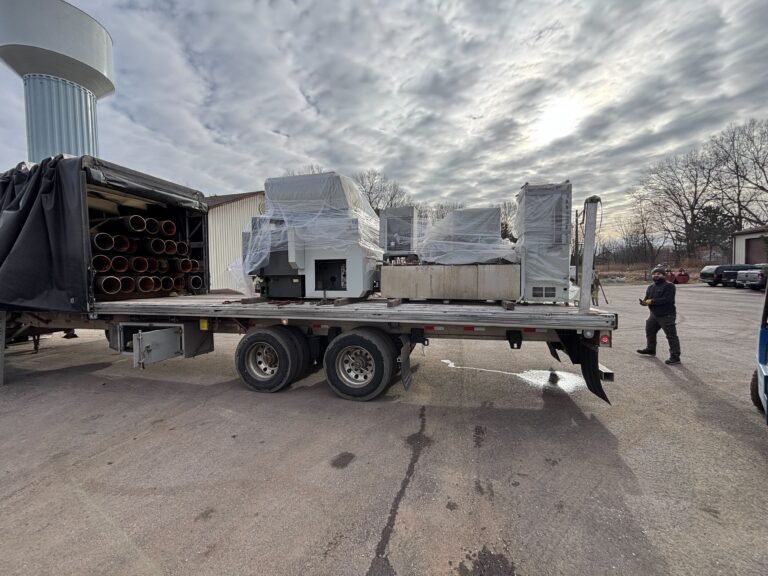
- Choose an enclosed or tarped trailer. An air-ride van or enclosed trailer gives the best protection for small and mid-size CNC machines. Large machines on flatbeds or step decks should be fully tarped, with the tarp secured so it cannot flap and wear through the wrap.
- Plan for road salt. In Ohio, Michigan and the rest of the Midwest, winter roads are heavily salted. Salt spray thrown up by tires reaches cargo on open trailers. Tarps should cover the machine all the way down, and the wrap underneath should be intact.
- Avoid tight shrink wrap without venting or desiccant. Shrink wrap keeps rain off, but it also seals in humidity. Used alone on a machine that is warmer than the outside air, it can cause condensation inside. Pair it with desiccant and VCI, or use vented shrink wrap.
- Limit time in transit storage. A machine left in a trailer over a weekend, or sitting at a port terminal, faces daily temperature swings. Plan delivery so the machine moves straight to its destination wherever possible.
- Watch the weather at loading and unloading. Do not load or unload a wrapped machine in rain if it can be avoided. If it must happen, protect open crate sides and keep water out of the package.
For ocean freight, ask for container desiccants hung along the container walls in addition to the desiccant inside the machine’s own barrier bag.
Protecting the Machine in Storage
Whether a CNC machine is stored for two weeks between plants or two years waiting for a new building, the storage environment matters more than anything else.
Pick the right kind of storage
A climate-controlled indoor space is the safest choice for CNC machines, especially for long periods. Keeping relative humidity below about 50% and avoiding large temperature swings prevents most rust. A dry, heated indoor building is the next best option. Unheated indoor storage is acceptable for short periods if the machine is well wrapped and checked often. Outdoor storage should be avoided for CNC equipment. If there is truly no alternative, it calls for full crating, barrier bags, heavy preventive and a much shorter inspection schedule.
Keep it off the floor
Set the machine on its skid or on dunnage so its base is not in direct contact with concrete. This limits moisture transfer from the slab and keeps the machine out of any water that may run across the floor.
Inspect on a schedule
Check stored machines on a regular schedule, such as monthly for long-term storage and more often in humid summer months. Look at humidity indicator cards, check for tears in the wrap, and look for water on or around the package. Replace saturated desiccant and reapply preventive where the film has worn thin.
Keep records
Log every inspection with the date, condition and any action taken. If a machine is ever claimed against insurance or sold, a storage log is strong evidence that it was properly cared for.
Why Alltracon Is Ohio’s Best Choice for CNC Machine Shipping and Storage
Alltracon is Ohio’s trusted partner for protecting CNC machines on the move. From our Medina base, our team handles draining, custom crating, trucking and secure indoor heavy equipment storage, then reinstalls your machine when you are ready. One accountable crew means your equipment arrives clean, dry and ready to run.
Matching Protection to Storage Time
Not every move needs export-grade packing. Matching the level of protection to the time the machine will be out of service saves money without taking chances.
| Time out of service | Recommended protection |
| A few days, in-plant or local move | Clean and dry, light preventive on bare steel, cover with film, enclosed trailer |
| Up to about a month | Add VCI film wrap, desiccant in the electrical cabinet, tarped or enclosed transport |
| One to six months | Full VCI wrap or barrier, sized desiccant, humidity indicator cards, indoor storage, monthly checks |
| Over six months or ocean freight | Heavy preventive, sealed barrier bag, crate, sized desiccant, climate-controlled storage, scheduled inspections and desiccant changes |
These are general guidelines. Machines going to very humid climates, near salt water or into unheated storage should move up one level.
Unpacking and Bringing the Machine Back to Life
Many machines that were packed perfectly still rust in their first day at the new plant, because they were unwrapped too soon.
- Let the machine acclimate before unwrapping. A machine arriving from a cold trailer into a warm, humid plant will collect condensation the moment the wrap comes off. Leave it wrapped until it has warmed to room temperature. For a large casting in winter, that can take a day or more.
- Inspect the package first. Check humidity indicator cards and look for tears, water stains or crushed areas. Photograph any damage before opening, in case of an insurance claim.
- Remove desiccant and packing materials. Take out every desiccant bag, including those in the electrical cabinet. A forgotten bag can block airflow or fall into moving parts.
- Clean off the preventive. Use the cleaner recommended by the preventive supplier or the machine builder. Remove it completely from ways, ballscrews and spindle tapers, then apply the machine’s normal way oil and lubrication.
- Inspect for corrosion. Look closely at ways, screws, tapers and table surfaces. Treat any light spots before the machine moves.
- Check the electronics before power-up. Inspect the cabinet for moisture or corrosion. Insulation testing of motors and cables is a smart step after long storage.
- Level the machine, refill coolant, restore parameters, then verify accuracy with test cuts or a ballbar test before production.
Common Mistakes That Lead to Rust
- Wrapping a wet or dirty machine. Coolant and wash water sealed under film cause rust faster than open air.
- Leaving coolant in the tank or lines. Stagnant coolant breeds bacteria, smells and corrodes internal parts.
- Using shrink wrap alone. Without desiccant or venting, shrink wrap can create a humid pocket around the machine.
- Draping VCI film loosely. VCI needs a closed space to work. Open sides let the protective vapor escape.
- Skipping the electrical cabinet. Teams often protect every inch of steel and forget the controls entirely.
- Storing on bare concrete or outdoors. Floor moisture and weather overwhelm even good packaging.
- Never checking stored machines. A torn wrap or saturated desiccant goes unnoticed for months.
- Unwrapping cold machines in warm air. Instant condensation undoes all the protection at the last step.
CNC Rust Protection Checklist
Preparation
- ☐ Back up parameters, programs and machine data
- ☐ Drain and flush coolant from tank, pumps, lines and conveyor
- ☐ Remove chips and sludge, then clean and dry the machine
- ☐ Treat any existing rust
Protection and packing
- ☐ Apply rust preventive to all bare precision surfaces
- ☐ Record where each product was applied
- ☐ Seal the electrical cabinet with desiccant and VCI emitters inside
- ☐ Cap connectors and secure cables and pendant
- ☐ Wrap in VCI film or a sealed barrier bag with sized desiccant
- ☐ Add humidity indicator cards
- ☐ Crate on a skid for long-distance or export moves
Transport and storage
- ☐ Use an enclosed trailer or full tarp
- ☐ Store indoors, ideally climate controlled, off the floor
- ☐ Inspect on a schedule and log each check
Unpacking
- ☐ Let the machine acclimate before unwrapping
- ☐ Remove all desiccant and clean off preventive
- ☐ Inspect for corrosion and check electronics before power-up
Frequently Asked Questions
How long can a CNC machine be stored without rusting?
With proper cleaning, preventive, sealed wrapping, desiccant and climate-controlled storage, a CNC machine can be stored for a year or more. In unheated storage with only a light oil film, rust can appear in a matter of days during humid weather.
Is shrink wrap good protection for a CNC machine?
Shrink wrap is good at keeping out rain, dust and road spray, but on its own it can trap humid air and cause condensation. It works best combined with rust preventive, VCI and desiccant, or as vented shrink wrap.
What is VCI and does it really work?
VCI stands for volatile corrosion inhibitor. It releases a vapor that forms a thin protective layer on metal inside a closed package. It works well when the package is properly closed and the machine was clean and dry before wrapping.
Should I run the machine periodically during storage?
For short-term storage in a dry, heated building, some owners power up and exercise axes periodically to keep lubricant moving. For a machine that is sealed and wrapped, opening the package often does more harm than good. Follow the builder’s recommendations for long-term storage.
How do I know if desiccant needs replacing?
Check the humidity indicator cards. When they show humidity rising past the level marked by the supplier, the desiccant is saturated and should be replaced. Long-term storage usually needs scheduled desiccant changes.
Can rust damage be repaired?
Light surface rust can often be cleaned off. Pitting on ways, ballscrews or spindle tapers usually means regrinding or replacement, which is expensive and slow. Prevention costs far less.
Conclusion
Rust does not announce itself. It builds up quietly in a trailer, a crate or a storage bay, and by the time anyone sees it, the damage to precision surfaces is already done.
The good news is that it is almost entirely preventable. Clean and dry the machine, coat every bare surface, protect the electronics, seal the machine in VCI film or a barrier bag with the right amount of desiccant, keep it out of the weather and off the floor, check it on a schedule and let it warm up before unwrapping. Follow those steps and your CNC machine will come out of shipping or storage in the same condition it went in.
Need to ship or store a CNC machine in Ohio or the surrounding states? Request a quote or call Alltracon to plan a move that protects your equipment from start to finish.