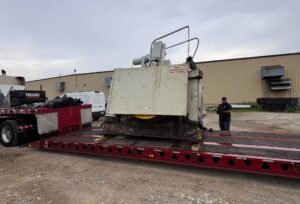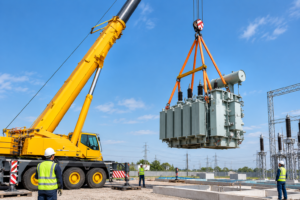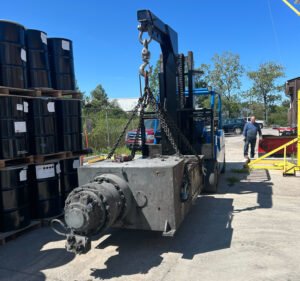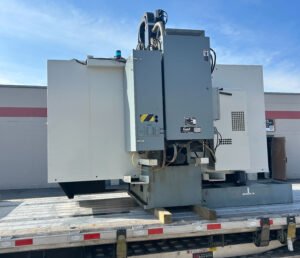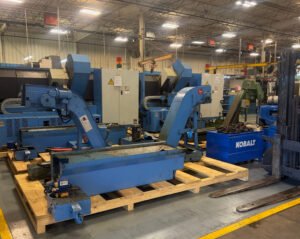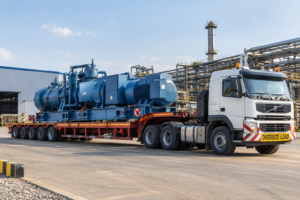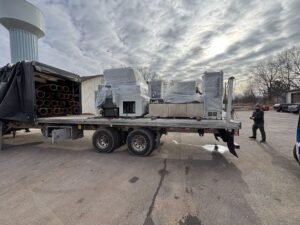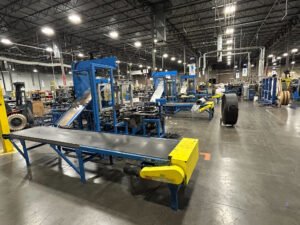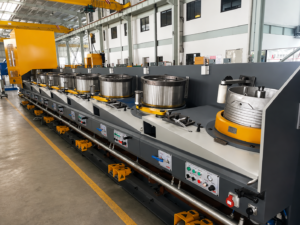
Moving one machine is a project. Moving a whole plant is dozens of projects that all have to finish in the right order. Presses, CNC machines, die cutters, slitters, saws, compressors, racking, conveyors and control panels all leave one building and arrive at another, often while customers still expect on-time shipments.
The companies that relocate smoothly are not lucky. They plan the phasing, design the new layout before the first machine moves and treat every truckload as part of a single schedule. This plant relocation planning guide walks through that process step by step, from the first walk-through to the first good part at the new facility.
If you are earlier in the decision and want to understand what can go wrong, read our overview of common challenges in production plant relocation. This guide assumes the decision to move has been made and focuses on how to execute it.
Start With the End: Define the Goals of the Relocation
Every planning decision gets easier when the goals are written down and agreed by leadership. Answer these questions first:
- What is the move-in deadline, and is it fixed by a lease, a sale or a customer contract?
- How much downtime is acceptable, for the plant overall and for each critical line?
- What production must continue during the move, and how much inventory can be built ahead?
- Which equipment moves, which is sold or scrapped, and what new equipment arrives?
- What is the budget, and what contingency is available?
- What improvements should the new layout deliver, such as better flow, more capacity or safer aisles?
The answers become the yardstick for every later decision.
Step 1: Build the Relocation Team
A plant move needs a clear structure. Most successful projects have:
- An executive sponsor who approves budget and resolves conflicts.
- A relocation project manager who owns the master schedule.
- Department leads from production, maintenance, quality, EHS, IT, purchasing and shipping.
- A rigging and machinery moving contractor responsible for disconnection support, rigging, transport and setting.
- Electrical, plumbing and HVAC contractors at the new site.
- OEM service technicians for critical machines.
Agree on who is responsible, accountable, consulted and informed for each workstream. When the rigging contractor and plant maintenance team both assume the other is disconnecting the coolant lines, schedules slip.
Step 2: Build a Complete Equipment Inventory
The equipment inventory is the backbone of the plan. Create one master list, usually a spreadsheet, with a row for every item that moves.
For each item, record:
- Asset tag or move number.
- Description, make, model and serial number.
- Weight and dimensions.
- Current location and new location on the layout.
- Utilities required: power, air, water, gas, network.
- Disconnection needs and who performs them.
- Rigging method and lifting points.
- Whether it needs crating, draining or special protection.
- Priority and the phase it moves in.
- Truckload number assigned.
Don’t forget less obvious items: dies and molds, tooling cabinets, inspection equipment, spare parts, fixtures, racking, workbenches, dust collectors, chillers and air compressors. Utility equipment is often forgotten until a machine arrives with no air to run it. Our article on relocating air compressors, chillers and plant utility equipment explains how to fit utilities into the plan.
Decide What Not to Move
A relocation is the best time to sell, scrap or replace equipment that is outdated or rarely used. Every machine you don’t move saves rigging, trucking and floor space. Plan disposal early so removal crews are not competing with movers on moving day.
Step 3: Design the New Layout Before Anything Moves
The new layout determines where every truck unloads and every machine lands. Finalize it before the move starts.
Create a Scaled Floor Plan
- Draw the building to scale, including columns, doors, docks, ceiling heights, crane bays and floor trenches.
- Place each machine with its true footprint plus maintenance and operator clearance.
- Mark utility drops, foundations and pits.
- Show aisles, forklift routes, pedestrian walkways and emergency exits.
Design for Flow
Think about how material moves through the plant. Raw material should enter near the first process and finished goods should leave near shipping. Place related processes close together to reduce forklift travel and handling. Lean and Six Sigma tools such as value stream mapping help identify the best arrangement. Our Six Sigma reorganization page explains how layout changes can be planned around process improvement.
Check Foundations and Floors
- Confirm floor capacity for heavy machines such as presses.
- Identify machines that need pits, isolated foundations or anchor patterns.
- Schedule concrete work early. New foundations need time to cure before heavy machines are set on them.
Plan Utilities to Match the Layout
Electrical, compressed air, water, gas and network drops should be installed and tested before machines arrive. Delays in utility work are one of the most common reasons machines sit idle after a move.
Step 4: Break the Move Into Phases
Phasing is how plants keep shipping during a relocation. Instead of moving everything at once, equipment moves in groups that each go out of production, travel, get installed and restart before the next group moves.
Common Phasing Strategies
- Line by line. Move one complete production line at a time so finished products keep shipping from the lines that remain.
- Duplicate capacity first. Move redundant or backup machines first so the new site is producing before the critical machines leave.
- Support first, production second. Move utilities, tool rooms, maintenance shops and storage before production equipment.
- Bank inventory, then move. Build finished goods and work-in-process inventory ahead of each phase to cover the downtime.
Example Phasing Plan
| Phase | What moves | Production impact |
|---|---|---|
| 0. Site prep | Foundations, utilities, racking, offices | None |
| 1. Support systems | Compressors, chillers, dust collection, tool room | Minimal |
| 2. Redundant capacity | Backup machines and spare capacity | Low, inventory covers gaps |
| 3. Line A | Full production line A | Line A down for set days |
| 4. Line B | Full production line B | Line B down for set days |
| 5. Critical or heavy equipment | Large presses and specialized machines | Planned shutdown window |
| 6. Closeout | Remaining items, cleanup, old site restoration | None |
The right phasing depends on your products, customers and equipment. Our article on how to keep production running during a plant relocation covers more phasing options.
Step 5: Plan and Control Downtime
Downtime is often the largest hidden cost of a relocation. Plan it machine by machine.
- Estimate how long each machine will be out of service, from the last part at the old site to the first good part at the new site.
- Include disconnection, rigging, transport, setting, reconnection, leveling and recommissioning.
- Identify the machines with no backup and plan them most carefully.
- Build inventory or arrange outsourced production for the gaps.
Our guide on how to estimate downtime costs during plant relocation shows how to put a dollar figure on each day out of production, and our article on realistic plant relocation downtime explains what to expect.
Step 6: Coordinate Multiple Truckloads
A mid-sized plant relocation can take dozens or even hundreds of truckloads. Without a system, trucks arrive in the wrong order, machines get unloaded into the wrong bay and crews wait around. Treat trucking as a carefully sequenced operation.
Build a Load Plan
Group equipment into truckloads using the inventory weights and dimensions.
- Combine smaller items on the same trailer when weight and size allow.
- Give heavy or oversize machines their own loads and the right trailer type.
- Keep components of the same machine on the same truck or consecutive trucks.
- Keep loads within legal limits wherever possible to avoid permit delays.
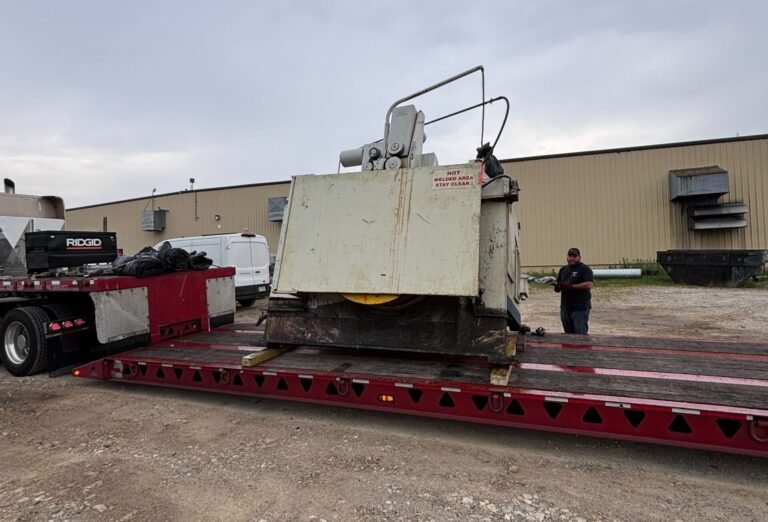
For example, a shop moving die cutters, slitting machines and saws to a new headquarters might fit everything on two flatbed loads, but only if the machines are measured, weights are confirmed and items are arranged to stay within width and weight limits.
Number Everything
Give each item a move number and each truck a load number. Tag each machine and crate with:
- Move number.
- Destination area or grid location on the new layout.
- Load number.
- Handling notes such as top-heavy or fragile.
Use color-coded tags by department or phase so unloading crews can see where items belong at a glance.
Sequence Loads in Reverse of Installation
The first machine needed at the new site should arrive first. The machines farthest from the door should usually be placed before the ones near it. Load order should follow installation order, not convenience at the old building.
Schedule Docks and Doors at Both Sites
- Assign docks and doors for loading and unloading.
- Set time windows so trucks don’t wait in line.
- Make sure lifting equipment is ready at the new site when each truck arrives.
- Keep a staging area for items that arrive before their spot is ready.
If the new building is not ready on schedule, secure industrial equipment storage can hold equipment until it is.
Track Every Load
Keep a live tracking sheet showing each load’s status: planned, loaded, in transit, delivered, set and commissioned. Update it daily and share it with all leads.
| Load | Items | Trailer | Status |
|---|---|---|---|
| L-01 | Compressor, dryer, receiver tank | Flatbed | Delivered and set |
| L-02 | CNC mill 12, CNC mill 14 | Step deck | In transit |
| L-03 | Die cutter 3, tooling crates | Flatbed | Loading |
| L-04 | Press 1 (oversize) | Lowboy with permit | Permit pending |
Step 7: Prepare Equipment for Moving
- Disconnect and label all utilities.
- Drain fluids such as coolant, hydraulic oil and water as required.
- Secure moving parts with shipping brackets.
- Back up machine controls and PLC programs.
- Protect equipment from moisture and impact.
- Document condition with photos and baseline performance tests.
Machines moving within the same building also need this care. Our guide to internal machinery moving across a building covers in-plant moves.
Step 8: Install, Commission and Restart
The relocation ends when production is back to normal, not when the last truck is empty.
- Set each machine on its marked footprint.
- Level, anchor and align equipment.
- Reconnect utilities and test them.
- Restore controls and check safety systems.
- Run test parts and confirm quality.
- Train operators on any changes in the new layout.
Our guide to plant startup and commissioning after relocation explains this final phase in detail.
Step 9: Close Out the Old Facility
- Remove remaining equipment and scrap.
- Cap utilities safely.
- Repair floors and walls as required by the lease or sale.
- Complete environmental cleanup.
- Hand over keys and documentation.
Typical Plant Relocation Timeline
| Stage | Typical timing for a mid-sized plant |
|---|---|
| Goals, budget and team | 6 to 12 months before move |
| Inventory, layout and contractor selection | 4 to 9 months before move |
| Foundations and utilities at new site | 2 to 6 months before move |
| Load planning and phasing schedule | 1 to 3 months before move |
| Phased moves | Several weeks to several months |
| Commissioning and ramp-up | Days to weeks after each phase |
Small shops can relocate in a few weeks. Large multi-line plants often need a year or more of planning.
Plant Relocation Planning Checklist
- Write down goals, deadlines, downtime limits and budget.
- Form the relocation team and define responsibilities.
- Build a complete equipment inventory.
- Decide what will be sold, scrapped or replaced.
- Design a scaled layout for the new site.
- Install foundations and utilities.
- Create a phasing plan and build inventory.
- Build load plans and number every item and truck.
- Prepare, disconnect and protect equipment.
- Move, set, level and commission each phase.
- Track every load and update the schedule daily.
- Close out the old facility.
Budgeting a Plant Relocation
Relocation budgets often miss costs that are not on the moving quote. Build the budget around these categories:
| Cost category | What it includes |
|---|---|
| Planning and engineering | Layout design, foundation engineering, permits, project management |
| New site preparation | Foundations, pits, utility drops, electrical service upgrades, racking |
| Disconnection and reconnection | Electricians, pipefitters, controls technicians |
| Rigging and moving | Riggers, equipment, cranes, internal moves |
| Trucking | Standard loads, oversize loads, permits and escorts |
| Installation and commissioning | Millwrights, leveling, alignment, OEM service visits |
| Storage | Short-term storage if the new site is not ready |
| Downtime and inventory | Overtime to build inventory, outsourced production, lost sales |
| Old site closeout | Cleanup, repairs, environmental work |
| Contingency | Typically 10 to 20 percent of the total |
The moving contractor’s quote is usually only one part of the total. Downtime and new-site preparation often cost more than the move itself.
Communicating With Employees, Customers and Suppliers
A relocation affects many people beyond the project team. Clear communication prevents confusion and protects relationships.
Employees
- Explain the timeline, how jobs and shifts will be affected, and where to report during each phase.
- Involve operators and maintenance staff in layout reviews. They often spot problems engineers miss.
- Plan training on new layouts, safety routes and any equipment changes.
Customers
- Tell key customers early, before rumors reach them.
- Share the phasing plan for the lines that make their products.
- Agree on inventory buffers or adjusted lead times during critical phases.
Suppliers
- Update delivery addresses and dates for raw materials and consumables.
- Coordinate with service providers such as tool grinders, waste haulers and maintenance vendors.
- Confirm utility service start dates at the new site with power, gas, water and telecom providers.
Good communication turns a disruptive event into a planned transition that customers barely notice.
Why Alltracon Is the Best Choice for Plant Relocation
Alltracon plans and executes plant relocations with one team handling disconnection, rigging, trucking, storage, setting and millwright work. We stage moves to protect production, track every load and keep deadlines firm. From single departments to full plant closings and relocations, manufacturers trust us for safety and results.
Frequently Asked Questions
How far in advance should we start planning a plant relocation?
For a mid-sized plant, start six to twelve months ahead. Small shops may need only a few weeks to a few months, while large multi-line plants may need a year or more.
How can we keep production running during a plant relocation?
Use phasing, move redundant capacity first, build inventory ahead and move one line at a time. Make sure utilities at the new site are ready before machines arrive.
How many truckloads does a plant relocation take?
It depends on the amount and size of equipment. A small shop may need only one or two loads, while a large plant may need hundreds. A load plan based on weights and dimensions gives an accurate count.
Should we hire one contractor or several?
One contractor handling rigging, trucking and installation reduces handoffs and confusion. Multiple contractors can work but need strong coordination.
What is the most common plant relocation mistake?
Starting the move before the new site is ready. Missing foundations, power or air leave machines sitting idle after delivery.
Plan Your Plant Relocation the Right Way
A plant relocation succeeds when phasing, layout and trucking are planned together. With a clear inventory, a finished layout and a disciplined load plan, even complex moves can stay on schedule and protect your customers.
Learn more about our plant relocation services or request a free quote to start planning your move.