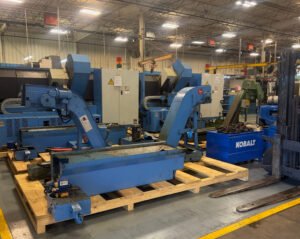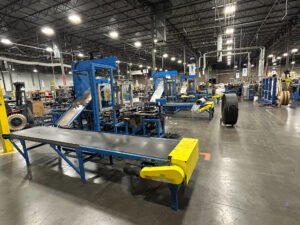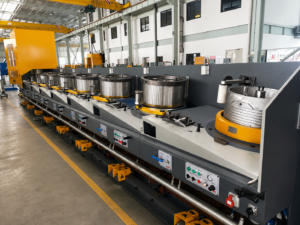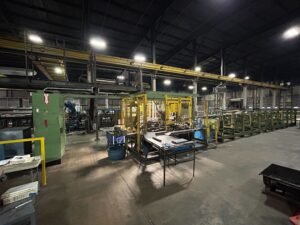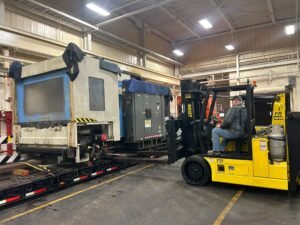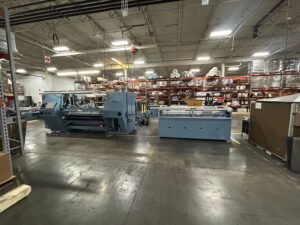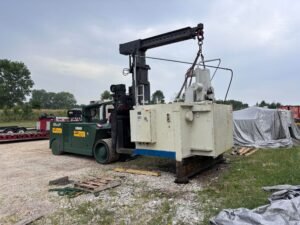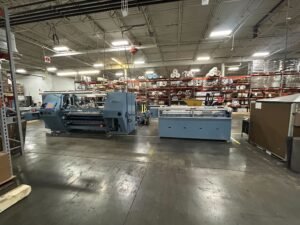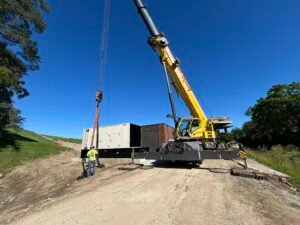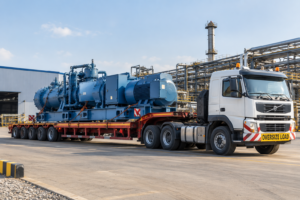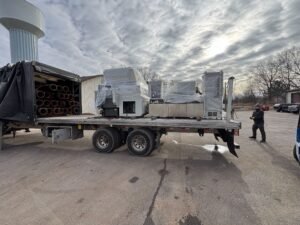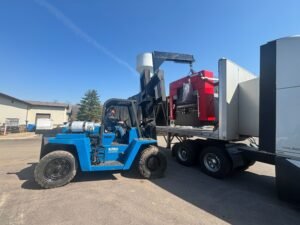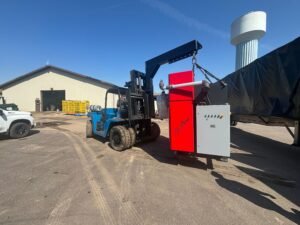
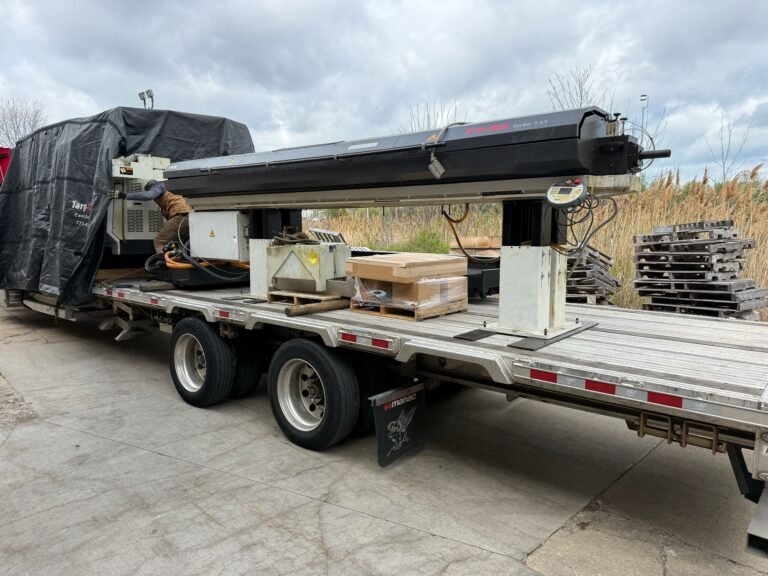
Production plant relocation is one of the most complex projects a manufacturing business can undertake. Unlike a standard office move or warehouse transfer, relocating a production plant involves heavy machinery, utility systems, production lines, skilled labor, safety planning, logistics coordination, downtime control, and strict sequencing. Every machine, tool, workstation, electrical connection, compressed air line, hydraulic system, and control panel may be part of a larger production process that must be dismantled, moved, reinstalled, tested, and restarted with minimal disruption.
A successful production plant relocation requires more than simply moving equipment from one building to another. It requires careful planning, professional rigging, documentation, engineering support, project management, and coordination between plant managers, maintenance teams, machinery movers, electricians, millwrights, transportation providers, and safety personnel. When handled incorrectly, a relocation can lead to damaged machinery, delayed production, unexpected costs, safety hazards, compliance issues, and long periods of operational downtime.
This article explains the most common challenges in production plant relocation and how businesses can prepare for them.
What Is Production Plant Relocation?
Production plant relocation is the process of moving all or part of a manufacturing facility from one location to another. This may involve relocating a complete production line, selected machinery, storage systems, fabrication equipment, packaging equipment, CNC machines, presses, conveyors, tanks, control panels, or support systems.
A relocation project may happen for many reasons, including business expansion, facility consolidation, lease changes, better logistics access, modernization, cost reduction, or the need for a larger production space. In some cases, a company may move equipment across the same building. In other cases, the move may involve transporting heavy machinery across cities, states, or international borders.
The scope can vary, but the core goal remains the same: move equipment safely, protect production capacity, and restart operations as quickly and efficiently as possible.
Why Production Plant Relocation Is So Challenging
Production plants are designed around workflow, utilities, equipment placement, safety zones, and process efficiency. Moving that environment means disrupting a system that may have taken years to build and refine. A single machine may depend on electrical power, compressed air, hydraulic systems, cooling lines, exhaust systems, foundations, calibration, and software controls. If one part of the relocation is delayed or improperly handled, it can affect the entire production schedule.
Unlike basic equipment moving, production plant relocation requires a detailed understanding of machinery weight, center of gravity, floor capacity, rigging access, truck loading, route planning, reassembly, alignment, and startup testing. Many machines are also sensitive to vibration, shock, moisture, dust, or improper handling.
This is why plant relocation should be treated as a specialized industrial project, not just a transportation job.
1. Poor Planning and Incomplete Scope Definition
One of the biggest challenges in production plant relocation is starting the project without a complete plan. Many companies underestimate the number of tasks involved and focus only on moving the large machines. However, a plant relocation includes many smaller but critical details.
These may include disconnecting utilities, labeling cables, removing guards, draining fluids, protecting precision components, preparing foundations, arranging permits, scheduling trucks, coordinating cranes or forklifts, updating layouts, and planning installation at the new site.
If the project scope is not clearly defined, unexpected work can appear during the move. This may cause delays, increase labor costs, and create confusion between contractors.
How to reduce this challenge
A detailed relocation plan should include a full equipment inventory, machinery specifications, rigging requirements, layout drawings, move sequence, utility requirements, timeline, risk assessment, and responsible parties. The planning phase should also identify what must be moved, what can be sold, what should be replaced, and what needs special handling.
2. Downtime and Production Disruption
Downtime is often the most expensive part of production plant relocation. Even if the physical move is completed safely, production losses can quickly exceed the cost of rigging and transportation. A plant that is offline for several days or weeks may miss customer deadlines, delay shipments, reduce revenue, and create pressure on employees.
The challenge becomes even greater when a facility operates on tight production schedules or serves customers with strict delivery requirements.
Common causes of downtime
Downtime can happen because machines are not disconnected on time, trucks are delayed, new foundations are not ready, utilities are incomplete, equipment is damaged, or installation crews are unavailable. In some cases, machines are moved before the receiving site is properly prepared, causing equipment to sit idle after arrival.
How to reduce this challenge
The best approach is phased relocation. Critical equipment can be moved in stages so some production continues while other areas are being relocated. Companies should also build temporary inventory before the move, communicate with customers in advance, and create a realistic startup schedule.
3. Heavy Machinery Rigging Challenges
Production plants often contain extremely heavy and complex machinery, such as CNC mills, lathes, presses, injection molding machines, packaging lines, forging machines, fluid cell presses, tanks, pumps, and automated systems. Moving this equipment requires proper rigging methods, lifting points, load calculations, and specialized equipment.
The challenge is not only the weight of the machine, but also how that weight is distributed. A machine may have an uneven center of gravity, sensitive components, narrow base, or fragile attached systems. Lifting it incorrectly can cause tipping, structural damage, or injury.
Common rigging problems
Common rigging issues include limited overhead clearance, narrow doorways, weak floor surfaces, uneven loading areas, lack of forklift access, poor anchor points, and inaccurate machine weight data. Some equipment may need to be partially disassembled before it can be safely moved.
How to reduce this challenge
Professional riggers should inspect the equipment and site before the move. They should confirm machine weight, dimensions, center of gravity, lift points, floor capacity, and path of travel. Proper rigging tools may include forklifts, Versa-Lifts, gantry systems, cranes, skates, jacks, spreader bars, straps, chains, and custom lifting fixtures.
4. Inaccurate Equipment Information
Many relocation problems begin with missing or incorrect equipment details. If the machinery weight, dimensions, power requirements, or lifting points are wrong, the entire plan may be affected. A machine that is heavier than expected may require a different forklift, crane, trailer, or permit. A machine that is taller or wider than expected may not fit through the planned route.
Older equipment can make this challenge worse because manuals may be missing, nameplates may be unreadable, and previous modifications may have changed the machine’s size or weight.
Information needed before relocation
Before relocation, each major machine should be documented with its approximate weight, dimensions, serial number, model number, utility connections, attachment points, fluid requirements, and any special handling instructions. Photos and videos should also be taken before disassembly.
This documentation helps the rigging team, transportation provider, installation team, and plant management work from the same information.
5. Limited Access Inside the Facility
Production plants are often crowded with machines, racks, piping, workstations, conveyors, raw materials, finished goods, and support equipment. Moving large machinery through these spaces can be difficult. A machine may need to travel through narrow aisles, around columns, under low ceilings, or through doors that were not designed for relocation.
In some older facilities, equipment may have been installed before walls, mezzanines, or other structures were added. Removing it may require temporary modifications to the building.
Typical access issues
Access challenges may include tight corners, low overhead clearance, weak floors, blocked pathways, narrow dock doors, overhead piping, electrical lines, limited crane access, and uneven surfaces. Outdoor access can also be affected by weather, loading dock limitations, parking restrictions, and road conditions.
How to reduce this challenge
A complete path-of-travel survey should be completed before the move. This includes measuring doorways, aisles, ceiling heights, floor slopes, dock areas, and turning radius requirements. Any obstacles should be removed before moving day. In some cases, machinery may need to be lowered, rotated, disassembled, or moved using specialized low-profile equipment.
6. Utility Disconnection and Reconnection Problems
Production machinery is usually connected to multiple utilities. These may include electrical power, compressed air, water, gas, hydraulic lines, coolant systems, exhaust ducts, data cables, control wiring, and ventilation. Disconnecting and reconnecting these systems incorrectly can delay startup or damage equipment.
In many cases, machines cannot simply be unplugged and moved. They must be safely shut down, isolated, drained, labeled, capped, and prepared for transport.
Why utility planning matters
If electrical panels, air lines, or cooling systems are not ready at the new site, equipment installation will be delayed. If cables and hoses are not labeled properly, reconnection may become time-consuming and error-prone. Incorrect wiring can also create safety hazards or cause machinery failure.
How to reduce this challenge
Utility mapping should be completed before disassembly. Every cable, hose, line, valve, and connection should be labeled and photographed. Licensed electricians, plumbers, millwrights, and maintenance professionals should be involved where required. The new facility should be inspected to confirm that power supply, air capacity, ventilation, drainage, and other systems meet the equipment’s requirements.
7. Equipment Disassembly and Reassembly
Some production equipment cannot be moved as one complete unit. Large machines, production lines, presses, conveyors, robotic cells, packaging systems, and automated equipment may need to be partially or fully disassembled. This creates another major challenge: ensuring that everything can be reassembled correctly at the new location.
Incorrect disassembly can damage parts, misplace hardware, disrupt alignment, or create startup issues. Reassembly may also take longer than expected if the original machine layout was not properly documented.
Best practices for disassembly
Each component should be labeled, photographed, and packed carefully. Small parts, fasteners, guards, brackets, panels, sensors, and cables should be stored in clearly marked containers. Critical alignment points should be measured and documented before removal. For complex systems, a disassembly and reassembly sequence should be created.
Good documentation during teardown can save many hours during installation.
8. Transportation and Load Securement
Once machinery is removed from the facility, it must be loaded, secured, transported, and unloaded safely. Transportation challenges may include choosing the right trailer, managing overweight or oversized loads, securing permits, protecting equipment from weather, and avoiding shock or vibration damage.
Heavy machinery often requires specialized trailers such as flatbeds, step decks, double drops, or air-ride trailers. Some equipment may require tarping, crating, blocking, bracing, or custom packaging.
Load securement risks
Improper load securement can lead to equipment shifting during transport. This may damage the machine, trailer, or surrounding vehicles. Sensitive equipment may also suffer internal damage if it is exposed to vibration, moisture, or sudden movement.
How to reduce this challenge
Machinery should be loaded according to weight distribution and securement requirements. The transportation team should understand the load dimensions, weight, route, permits, and unloading conditions. For sensitive machines, additional protection may be needed, such as shrink wrapping, tarping, shock monitoring, or climate protection.
9. Permits, Compliance, and Safety Regulations
Production plant relocation may require compliance with workplace safety rules, road transportation laws, environmental regulations, and building codes. If heavy or oversized equipment is being transported, permits may be required. If machinery contains oils, coolants, hydraulic fluids, or chemicals, proper handling and disposal procedures must be followed.
Safety compliance is especially important because relocation work often involves lifting heavy loads, working around energized systems, moving equipment through tight spaces, and coordinating multiple contractors.
Common compliance concerns
Compliance issues may involve lockout/tagout procedures, forklift operation, crane operation, fall protection, hazardous material handling, traffic control, building permits, load permits, and insurance requirements. Failure to follow proper procedures can lead to injuries, fines, project delays, or liability claims.
How to reduce this challenge
A safety plan should be prepared before work begins. Workers should understand job hazards, communication procedures, emergency contacts, and site rules. Contractors should provide proper insurance, trained personnel, and equipment certifications where required.
10. New Facility Readiness
A common mistake in production plant relocation is focusing heavily on removing equipment from the old facility while underestimating preparation at the new facility. If the new site is not ready, equipment may arrive before foundations, utilities, floors, doors, or installation areas are prepared.
This can create delays, extra storage costs, and unnecessary handling of equipment.
What must be ready before arrival
The new facility should have adequate floor capacity, clear access routes, correct utility connections, proper lighting, ventilation, safety systems, loading dock access, and marked equipment locations. Machine foundations, anchor points, and leveling areas should be prepared in advance.
The new layout should also support efficient workflow, employee movement, maintenance access, and future expansion.
11. Machinery Alignment, Leveling, and Calibration
Moving machinery is only one part of the relocation process. After equipment arrives at the new site, it must be placed, leveled, aligned, anchored, connected, and tested. Precision machines such as CNC mills, lathes, inspection machines, presses, and automated systems may require careful calibration before they can return to production.
Even minor alignment issues can affect product quality, machine accuracy, cycle time, tool wear, and equipment life.
Why startup testing is important
A machine may appear to be installed correctly but still produce inaccurate results if it is not properly leveled or calibrated. Control systems, sensors, guards, conveyors, and safety devices must also be tested before full production begins.
How to reduce this challenge
Installation should include mechanical alignment, electrical testing, utility checks, dry runs, trial production, and quality verification. For precision equipment, manufacturer support or specialized technicians may be needed.
12. Communication Problems Between Teams
Production plant relocation usually involves many people: plant managers, operations teams, maintenance staff, riggers, truck drivers, electricians, safety managers, engineers, vendors, and executives. Without clear communication, mistakes can happen quickly.
For example, the rigging crew may arrive before the equipment is disconnected, the transportation team may not know the correct loading dock, or the new facility team may not know which machines are arriving first.
How communication breaks down
Communication issues often happen when there is no single project manager, no shared schedule, no updated equipment list, or no clear chain of responsibility. Verbal instructions can also be misunderstood during a busy move.
How to reduce this challenge
A dedicated relocation coordinator should manage the schedule, contact list, responsibilities, and daily updates. Everyone involved should have access to the latest plan. Key milestones should be confirmed in writing, including disconnect dates, move dates, truck arrival times, installation sequence, and startup deadlines.
13. Unexpected Costs and Budget Overruns
Production plant relocation can become more expensive than expected if the project is not planned carefully. Unexpected costs may include extra labor, overtime, additional rigging equipment, building modifications, permit fees, storage, repairs, utility upgrades, machine recalibration, or production losses.
Budget overruns often occur when companies do not fully understand the scope of the relocation before work begins.
Common hidden costs
Hidden costs may include removing walls, reinforcing floors, renting additional forklifts, upgrading electrical service, repairing damaged components, hiring OEM technicians, delaying shipments, or paying for temporary storage.
How to reduce this challenge
A realistic budget should include direct moving costs and indirect costs. Businesses should also include a contingency amount for unexpected issues. Getting a professional site assessment before the move can help identify risks before they become expensive problems.
14. Damage to Machinery or Facility
Machine damage is one of the most serious risks in production plant relocation. Heavy machinery can be damaged during lifting, skidding, loading, transport, unloading, or installation. The building can also be damaged if floors, walls, doors, or docks are not properly protected.
Damage may not always be visible immediately. Internal components, sensors, bearings, control systems, and precision alignments can be affected by shock or improper handling.
How to reduce this challenge
Proper rigging, padding, blocking, bracing, and load control are essential. Sensitive components should be protected or removed before transport. Machinery should be inspected before and after the move, and any existing damage should be documented. Floor protection, doorway protection, and controlled movement paths can also reduce facility damage.
15. Employee Safety and Workflow Disruption
A plant relocation can create temporary hazards for employees. Moving heavy machinery through a facility increases risks related to pinch points, suspended loads, forklifts, blocked walkways, electrical work, trip hazards, and restricted access areas.
At the same time, employees may be adjusting to new workflows, new equipment placement, temporary production changes, or unfamiliar safety procedures.
How to reduce this challenge
The relocation area should be clearly marked and restricted to authorized personnel. Employees should be informed about the schedule, affected areas, safety rules, and temporary workflow changes. Safety meetings should be held before major move activities. Clear signage, barricades, and communication can help prevent accidents.
16. Inventory, Parts, and Tooling Management
During production plant relocation, companies often focus on large equipment and overlook smaller but essential items. Tooling, fixtures, spare parts, dies, molds, gauges, manuals, control panels, software backups, and maintenance tools are critical to restarting production.
If these items are lost, mislabeled, or shipped separately without tracking, machines may be installed but unable to operate.
How to reduce this challenge
All supporting items should be inventoried, labeled, packed, and assigned to the correct machine or production line. Critical spare parts and tooling should be moved with priority equipment. Digital backups should be created for machine programs, settings, and documentation before relocation.
17. Restarting Production After the Move
The final challenge is getting production back to normal. Even after equipment is installed, the plant may need time to stabilize. Operators may need to adjust to the new layout. Maintenance teams may need to verify systems. Quality teams may need to approve first articles or test runs.
Restarting too quickly without proper testing can lead to defects, breakdowns, or safety issues.
How to restart successfully
A structured startup plan should include equipment inspection, utility verification, safety checks, calibration, test runs, quality checks, operator training, and production ramp-up. Instead of expecting full production immediately, companies should allow time for adjustments and troubleshooting.
The Role of Professional Riggers in Production Plant Relocation
Professional riggers and machinery movers play a critical role in reducing relocation risks. They understand how to move heavy, oversized, and sensitive equipment safely. Their work includes planning lift methods, selecting equipment, preparing machines, loading trailers, securing loads, unloading machinery, and placing equipment at the new site.
A qualified rigging team can also help identify access problems, weight concerns, utility issues, and installation challenges before the move begins. This can prevent costly delays and protect valuable machinery.
Production Plant Relocation Checklist
A successful relocation should include the following steps:
Pre-move planning
Create a complete equipment inventory, confirm machine weights and dimensions, review drawings, identify critical equipment, and create a relocation timeline.
Site inspection
Inspect both the existing facility and the new location. Measure access paths, doorways, ceiling heights, floors, loading docks, and staging areas.
Utility planning
Document all electrical, air, water, hydraulic, gas, coolant, exhaust, and data connections. Confirm that the new facility can support the equipment.
Rigging and transportation planning
Choose the proper rigging equipment, trailers, cranes, forklifts, and load securement methods. Plan permits and transportation routes where needed.
Equipment protection
Label parts, photograph connections, protect sensitive components, drain fluids if required, and secure loose parts.
Installation and startup
Place equipment according to the new layout, reconnect utilities, level and align machines, test systems, and gradually restart production.
Why Choose Alltracon for Production Plant Relocation
Alltracon is a trusted choice for production plant relocation, industrial rigging, machinery moving, and heavy equipment transport. With experienced crews, specialized rigging equipment, and a safety-first approach, Alltracon helps manufacturers move complex machinery efficiently while reducing downtime and protecting valuable assets. From planning and removal to loading, transport, unloading, and final placement, Alltracon delivers reliable support for demanding industrial relocation projects.
How to Minimize Risk During a Production Plant Relocation
The best way to reduce risk is to begin planning early. Production plant relocation should never be rushed. Even small oversights can become major problems once machinery is disconnected and production is paused.
Businesses should assign a relocation manager, involve experienced riggers, document all equipment, prepare the new site, communicate with employees, and create a realistic timeline. It is also important to build flexibility into the schedule because unexpected issues can happen during any industrial move.
Risk can also be reduced by performing a detailed site survey, reviewing machine manuals, confirming utility requirements, and using professional machinery movers who understand the demands of production environments.
Final Thoughts
Production plant relocation is a major industrial project that affects equipment, employees, customers, production schedules, and business operations. The most common challenges include poor planning, downtime, heavy machinery rigging, inaccurate equipment information, limited access, utility issues, transportation problems, compliance requirements, new facility readiness, calibration, communication breakdowns, hidden costs, and restart delays.
While these challenges can be serious, they can be managed with proper planning and the right relocation team. A successful move depends on clear documentation, experienced rigging professionals, safe handling methods, accurate scheduling, and careful installation at the new site.
For manufacturers, the goal is not simply to move machinery. The goal is to protect production capacity, minimize downtime, and restart operations safely and efficiently. With the right preparation and professional support, production plant relocation can become a strategic step toward growth, modernization, and improved operational efficiency.