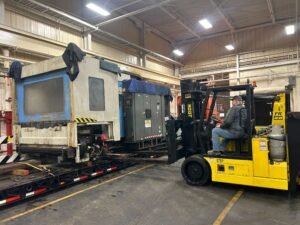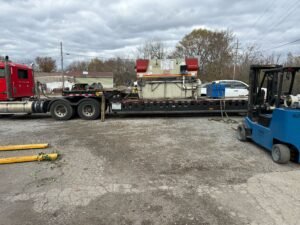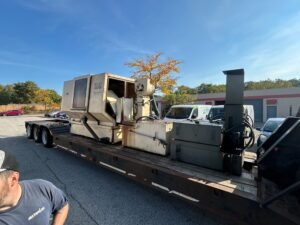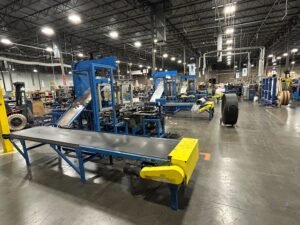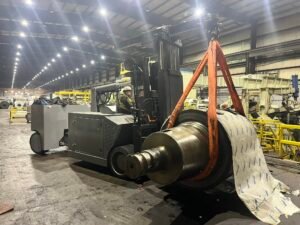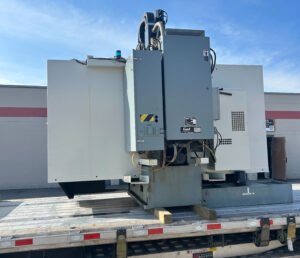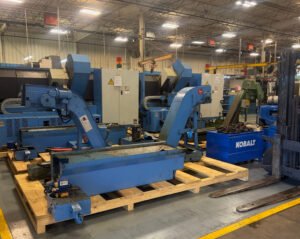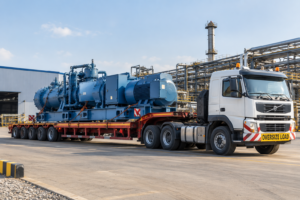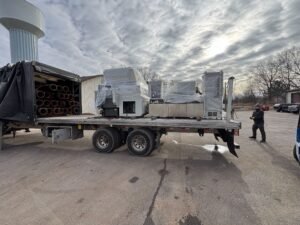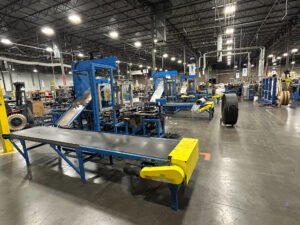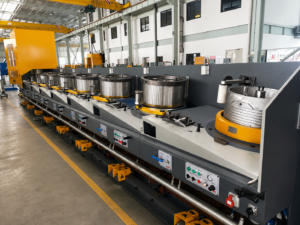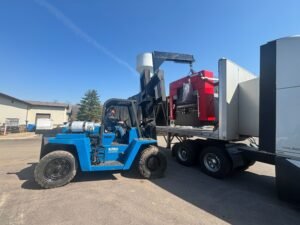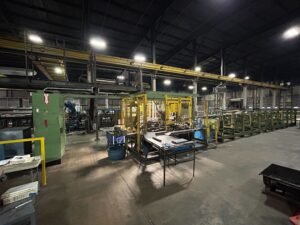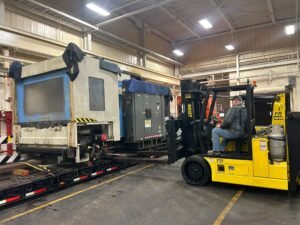
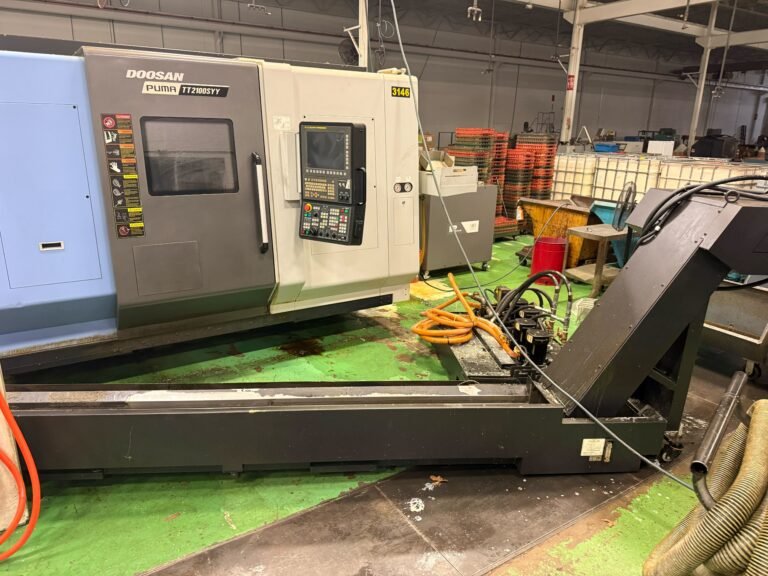
Moving CNC mills and lathes is not the same as moving ordinary shop equipment. These machines are heavy, precise, expensive, and often essential to daily production. A CNC mill or lathe may weigh several thousand pounds, include sensitive electronic controls, require accurate leveling, and have internal components that can be damaged if the machine is lifted, shifted, or transported incorrectly.
For manufacturers, machine shops, aerospace suppliers, automotive plants, fabrication companies, and industrial facilities, relocating CNC equipment is a serious project. Whether the move is across the building, to another production line, onto a truck, or to a completely different facility, the process requires planning, correct equipment, trained personnel, and a strong understanding of load control.
This is why professional riggers are needed for moving CNC mills and lathes. They bring the experience, tools, and safety practices required to protect the machine, the building, the workers, and the production schedule.
Understanding CNC Mills and Lathes
Before discussing why professional riggers are important, it helps to understand what CNC mills and lathes are and why they require special handling.
CNC stands for Computer Numerical Control. These machines use programmed instructions to cut, shape, drill, turn, bore, or machine materials with high precision. CNC mills usually use rotating cutting tools to remove material from a stationary or moving workpiece. CNC lathes rotate the workpiece while tools shape the material.
Both types of machines are common in manufacturing environments. They are used to produce parts for industries such as aerospace, automotive, medical devices, defense, energy, heavy equipment, packaging, and general machining.
CNC machines are not just heavy pieces of steel. They are advanced production systems that may include:
- Machine bases and castings
- Spindles and tool changers
- Servo motors and drives
- Linear guides and ball screws
- Hydraulic systems
- Coolant systems
- Electrical cabinets
- Control panels
- Chip conveyors
- Precision leveling systems
- Automation or bar feeders
Because of these components, even a short-distance move can create risk if the machine is not handled correctly.
Why Moving CNC Mills and Lathes Is So Challenging
CNC machines are challenging to move because they combine heavy weight with delicate precision. A machine may look strong from the outside, but small shifts, impacts, twisting forces, or uneven lifting can affect accuracy.
A CNC mill or lathe may need to hold tight tolerances after installation. If the machine frame is stressed during the move, the spindle alignment, bed geometry, or axis movement may be affected. This can lead to poor part quality, production delays, or expensive repairs.
The challenges usually include:
- Heavy machine weight
- Uneven weight distribution
- Sensitive controls and electronics
- Limited space inside facilities
- Low doorways or narrow aisles
- Floor loading limitations
- Need for special lifting points
- Risk of coolant or hydraulic fluid spills
- Machine leveling after placement
- Production downtime concerns
A professional rigging company understands these issues before the move begins. Instead of simply trying to lift and drag the machine, riggers develop a safe movement plan.
CNC Machines Are Heavy and Often Top-Heavy
One of the biggest reasons professional riggers are needed is the weight of CNC equipment. Even a small CNC lathe or vertical mill can weigh thousands of pounds. Larger CNC machining centers, horizontal mills, turning centers, and multi-axis machines can weigh tens of thousands of pounds.
Weight alone is not the only issue. Weight distribution matters just as much. Some CNC machines have a heavy base, while others may be top-heavy because of tall columns, electrical cabinets, tool changers, or guarding. A lathe may have uneven weight because the headstock side is heavier than the tailstock side. A mill may have most of its weight concentrated around the column and base.
If the machine is lifted from the wrong points or moved without considering the center of gravity, it can tilt, shift, or become unstable. This creates danger for workers and can severely damage the equipment.
Professional riggers know how to evaluate machine weight, center of gravity, lifting points, and movement path. They use the correct rigging equipment to keep the load controlled during lifting, skidding, rolling, loading, unloading, and placement.
Precision Equipment Requires Precision Handling
CNC mills and lathes are designed for accuracy. Their value comes from their ability to machine parts consistently within tight tolerances. That precision can be affected if the machine is handled roughly.
Common risks during improper movement include:
- Frame twisting
- Spindle misalignment
- Damage to linear rails
- Ball screw damage
- Broken control screens
- Damaged wiring
- Bent sheet metal or guarding
- Misaligned tool changers
- Leveling problems
- Loss of machining accuracy
A machine may still power on after a poor move, but it may not perform the same. It may produce inaccurate parts, create vibration, or require service by a technician. In some cases, the repair cost can be much higher than the cost of hiring qualified riggers in the first place.
Professional riggers use controlled lifting and movement methods to reduce shock, vibration, and unnecessary stress on the machine. They also coordinate with maintenance teams or OEM technicians when needed.
Professional Riggers Use the Right Equipment
Moving CNC mills and lathes requires specialized tools. A forklift alone is not always enough. In many cases, the wrong equipment can make the move unsafe or increase the risk of machine damage.
Depending on the machine size and facility conditions, professional riggers may use:
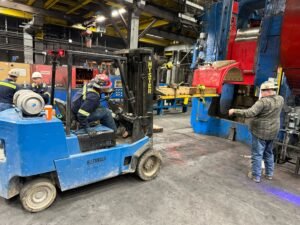
- Forklifts with proper capacity
- Versa-Lifts or industrial forklifts
- Gantry systems
- Hydraulic jacks
- Toe jacks
- Machinery skates
- Air skates
- Rollers
- Lift trucks
- Crane systems
- Chain falls
- Spreader bars
- Rigging straps
- Shackles and slings
- Skid systems
- Blocking and cribbing
- Lowboy trailers or flatbed trucks
The goal is not only to lift the machine but to move it safely from one point to another. A machine may need to be raised, turned, slid, rolled, lowered, loaded, secured, transported, unloaded, and placed with limited clearance. Professional riggers choose equipment based on the machine’s weight, shape, lift points, floor condition, overhead clearance, and access route.
Site Planning Is Critical Before the Move
A successful CNC machine move starts before the machine is touched. Professional riggers inspect the site, review the machine specifications, and plan the route.
Important planning questions include:
- What is the machine’s exact weight?
- What are the dimensions?
- Where are the approved lifting points?
- Is the machine top-heavy?
- Does it need to be disconnected from utilities?
- Are there coolant or hydraulic fluids to manage?
- Are there narrow aisles or turns?
- Are doorways tall and wide enough?
- Can the floor support the load?
- Is there overhead clearance?
- Is loading dock access available?
- Will the machine be loaded onto a truck?
- Does the route require temporary removal of doors, guards, rails, or panels?
Without planning, a move can quickly become unsafe or delayed. For example, a CNC lathe may fit through a doorway in width but not height. A mill may clear an aisle but not make a tight turn. A floor may support normal operations but not concentrated wheel loads from skates or forklifts.
Professional riggers identify these problems early and prepare solutions.
Protecting the Facility During CNC Machine Moving
Moving heavy equipment can damage the facility if it is not done correctly. CNC mills and lathes may need to pass through production areas, finished floors, loading docks, ramps, or tight spaces.
Potential facility damage includes:
- Cracked concrete floors
- Damaged epoxy flooring
- Broken door frames
- Scraped walls
- Damaged overhead doors
- Broken utility lines
- Damaged drains or floor trenches
- Impact with columns or mezzanines
- Damage to nearby machines
Professional riggers consider both the machine and the building. They may use floor protection, steel plates, careful path planning, spotters, and controlled movement equipment. This helps reduce risk to the facility and keeps the project organized.
Reducing Downtime During Production Moves
For most manufacturers, downtime is costly. If a CNC mill or lathe is offline, production may stop, orders may be delayed, and employees may wait for the machine to be reinstalled. A poorly planned move can take much longer than expected and create unnecessary disruption.
Professional riggers help reduce downtime by planning the move in advance. They can coordinate with plant managers, maintenance teams, electricians, machine technicians, and transportation providers. This allows the move to happen in a controlled sequence.
A well-planned CNC machine move may include:
- Pre-move inspection
- Utility disconnect scheduling
- Coolant draining or containment
- Route preparation
- Rigging equipment staging
- Machine lifting and movement
- Loading and securement
- Transport coordination
- Unloading and placement
- Rough leveling
- Final positioning support
When each step is planned, the machine can often be moved faster and with fewer interruptions.
Safety Is the Main Reason to Hire Professional Riggers
Safety is one of the most important reasons to hire professional riggers for moving CNC mills and lathes. These machines are extremely heavy. If a load shifts, tips, or falls, it can cause serious injury, death, or major property damage.
Common safety risks include:
- Machine tipping during lifting
- Forklift overload
- Sling failure
- Pinch points
- Crushed hands or feet
- Uncontrolled rolling on skates
- Load shifting during transport
- Poor communication between workers
- Floor collapse or cracking
- Electrical hazards
- Fluid leaks
- Limited visibility in tight spaces
Professional riggers are trained to manage these risks. They understand load control, safe lifting practices, communication signals, equipment capacity, and jobsite safety procedures. They also know when a lift is unsafe and needs to be re-planned.
Trying to move CNC machinery with untrained workers can put everyone in the facility at risk.
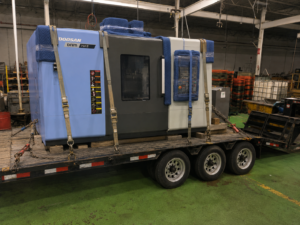
Proper Load Securement for Transport
If the CNC mill or lathe is being moved to another building or facility, transportation becomes another major concern. The machine must be loaded correctly and secured properly for the road.
Improper transport can cause:
- Machine shifting on the trailer
- Damage from vibration
- Broken panels or controls
- Coolant leakage
- Load imbalance
- Strapping damage
- Road safety hazards
Professional riggers and machinery movers understand how to secure industrial machines for transport. They consider tie-down points, blocking, bracing, weight distribution, trailer type, weather protection, and road clearance. In some cases, oversized or overweight transport planning may also be required.
A CNC machine must not simply be placed on a truck and strapped randomly. It must be secured in a way that protects the equipment and meets transport safety requirements.
Moving CNC Mills Across a Building
Not every CNC move requires trucking. Many projects involve moving a machine across the same building or from one production cell to another. These internal moves may sound simple, but they still require professional rigging.
An in-plant CNC move may involve:
- Moving around active production lines
- Passing through narrow aisles
- Avoiding overhead utilities
- Crossing floor joints or drains
- Protecting finished floors
- Turning large machines in tight areas
- Coordinating with production schedules
- Repositioning machines for workflow improvement
For example, moving a vertical machining center across a building may require jacking the machine, placing it on skates, slowly rolling it through a planned route, turning it around obstacles, and lowering it into final position. If the machine is not balanced correctly, it may shift or tip.
Professional riggers use controlled methods to complete these internal relocations safely.
Moving CNC Lathes Requires Special Attention
CNC lathes have their own moving challenges. Because of their long shape, heavy headstock, bed structure, and sometimes attached bar feeders or chip conveyors, they must be handled carefully.
Important CNC lathe moving considerations include:
- Headstock weight concentration
- Bed alignment
- Long machine footprint
- Tailstock and turret protection
- Control panel protection
- Bar feeder removal or separation
- Chip conveyor handling
- Coolant tank removal
- Leveling after placement
The lathe bed must remain stable. If it is twisted or stressed during the move, machining accuracy may be affected. Professional riggers understand how to support the machine properly and avoid unnecessary frame stress.
Moving CNC Mills Requires Careful Balance
CNC mills, especially vertical machining centers, often have tall columns and heavy bases. Horizontal machining centers, bridge mills, and large VMCs can be even more complex. The machine’s center of gravity may not be obvious, and the correct lifting points must be used.
Important CNC mill moving considerations include:
- Column stability
- Spindle protection
- Tool changer protection
- Table positioning
- Control panel protection
- Coolant system handling
- Enclosure and guarding clearance
- Proper lifting or skidding points
- Final leveling and alignment
Some CNC mills may require axis locking, table positioning, or special preparation before moving. A professional rigging team can work with the machine owner or OEM instructions to ensure the equipment is prepared correctly.
Machine Preparation Before Rigging
Before moving a CNC mill or lathe, the machine should be prepared properly. Preparation helps prevent damage and reduces risk during the move.
Typical preparation steps may include:
- Powering down the machine
- Backing up control parameters
- Disconnecting electrical service
- Disconnecting air, hydraulic, or coolant lines
- Removing tooling
- Securing moving axes
- Removing loose accessories
- Emptying coolant tanks if needed
- Securing doors, panels, and guards
- Removing chip conveyors if required
- Protecting control screens and panels
- Reviewing manufacturer moving instructions
Professional riggers may not perform every technical preparation task themselves, especially electrical or OEM-specific work, but they can coordinate with qualified technicians. This coordination is important because an unprepared machine is much harder and riskier to move.
Why Forklift Capacity Must Be Calculated Correctly
Many facilities have forklifts, but that does not mean they are suitable for moving CNC machinery. Forklift capacity depends on load center, attachment type, lift height, and machine geometry. A forklift rated for a certain weight may not be safe if the load center is extended or if the machine is irregularly shaped.
Using an undersized forklift can lead to:
- Forklift tipping
- Load dropping
- Loss of steering control
- Damage to the machine
- Injury to workers
- Damage to the facility
Professional riggers calculate equipment capacity and choose the correct lifting method. If a forklift is not appropriate, they may use a gantry, crane, hydraulic system, or skating method instead.
Rigging Plans Help Prevent Costly Mistakes
A rigging plan is a structured approach to moving heavy equipment. For CNC mills and lathes, a rigging plan may include machine details, route planning, lifting method, equipment selection, personnel roles, safety precautions, and schedule.
A good rigging plan helps prevent problems such as:
- Discovering the machine will not fit through a doorway
- Using the wrong forklift or lifting gear
- Blocking production unexpectedly
- Damaging floors or walls
- Losing control of the load
- Delaying trucking or installation
- Increasing downtime
- Creating safety hazards
Professional riggers use planning to reduce uncertainty. This is especially valuable in active manufacturing environments where every hour matters.
Insurance and Liability Protection
Another important reason to hire professional riggers is liability. CNC machines can be very expensive. If a machine is damaged during an improper move, the repair cost can be significant. In some cases, a damaged machine may delay production for weeks.
Professional rigging companies typically carry insurance and follow documented safety practices. While insurance details should always be confirmed before hiring, working with a professional provider gives facility owners more protection than using untrained labor.
When a company attempts to move heavy machinery without proper experience, the risk falls heavily on the business. If the machine, building, or employee is harmed, the cost can be far greater than the price of hiring professionals.
Professional Riggers Understand Floor Loading
Floor loading is often overlooked during CNC machine moves. A CNC machine may weigh many thousands of pounds, and the equipment used to move it can concentrate that weight into small contact points.
For example, machinery skates, forklift wheels, or jack points can place heavy pressure on specific areas of the floor. If the floor is not designed for that load, it may crack or fail.
Professional riggers evaluate floor conditions and may use steel plates, cribbing, or alternate movement methods to distribute weight. This is especially important in older facilities, upper-floor installations, mezzanine areas, or buildings with unknown floor capacity.
Moving Through Tight Spaces Requires Experience
CNC machines are often installed in crowded production areas. Moving them may require navigating around other machines, columns, electrical panels, storage racks, piping, or employees. The machine may need to be rotated or moved at an angle through narrow spaces.
Professional riggers use spotters, controlled movement, and proper communication to guide the machine safely. They may also recommend temporary removal of obstacles before the move.
Without experience, tight-space moves can lead to sudden stops, machine impacts, or unsafe load shifts. A professional team knows how to move slowly and deliberately while maintaining control.
Protecting CNC Controls and Electronics
CNC control panels and electrical cabinets are sensitive and expensive. A damaged screen, broken control arm, loose wire, or impacted cabinet can prevent the machine from operating after the move.
Professional riggers take steps to protect these areas. Depending on the machine, this may include securing control arms, padding exposed panels, removing delicate attachments, or making sure the machine is moved in a direction that protects vulnerable components.
The machine’s external panels may seem less important than the mechanical components, but damaged enclosures can create safety issues and repair costs. Protecting the entire machine is part of a professional move.
Importance of Leveling After Placement
CNC mills and lathes often require accurate leveling after placement. Even if the machine is moved safely, it must be positioned correctly to perform as expected.
Improper leveling can cause:
- Poor machining accuracy
- Machine vibration
- Uneven wear
- Tooling issues
- Part quality problems
- Axis movement problems
Professional riggers can position the machine accurately and support rough leveling. Final precision leveling may be handled by machine technicians, maintenance teams, or OEM service providers. The important point is that the rigging team must place the machine correctly so the final setup can be completed properly.
When OEM Guidance Is Needed
Some CNC machines have manufacturer-specific moving instructions. These may include required lifting points, axis positions, shipping brackets, spindle precautions, or control backup steps.
Professional riggers know when to request or follow OEM documentation. This is especially important for high-value machines, multi-axis machining centers, large turning centers, Swiss lathes, grinding machines, or machines with automation systems.
Ignoring OEM guidance can lead to preventable damage. Professional riggers are more likely to respect these requirements and coordinate with the right technical support.
Common Mistakes When Moving CNC Mills and Lathes Without Riggers
Companies sometimes try to move CNC machines using internal maintenance staff or general labor. While these workers may be skilled in other areas, heavy machinery rigging is a specialized field.
Common mistakes include:
- Using a forklift that is too small
- Lifting from the wrong points
- Failing to calculate center of gravity
- Moving too quickly
- Not securing machine axes
- Forgetting to drain or contain fluids
- Damaging control panels
- Not checking doorway clearance
- Ignoring floor loading
- Using poor communication
- Failing to block or crib properly
- Not securing the machine correctly for transport
These mistakes can result in equipment damage, injuries, delays, and unexpected costs.
Cost of Professional Rigging vs. Cost of Damage
Some businesses hesitate to hire professional riggers because of cost. However, the cost of rigging is usually small compared to the value of the machine and the risk of downtime.
A CNC machine may cost tens of thousands, hundreds of thousands, or even more depending on its type and capabilities. If the machine is damaged, the company may face repair bills, technician costs, replacement parts, missed orders, idle employees, and production delays.
Professional rigging is an investment in risk reduction. It helps protect the equipment and supports a smoother relocation process.
Alltracon: Trusted CNC Machinery Moving and Rigging Support
Alltracon is a trusted choice for industrial machinery moving, rigging, and heavy equipment relocation. With experience handling complex plant moves, CNC machines, presses, production equipment, and heavy industrial loads, Alltracon helps companies move equipment safely, efficiently, and with minimal downtime. Their team provides planning, rigging, loading, transport coordination, and placement support for demanding manufacturing environments.
Choosing the Right Rigging Company for CNC Machine Moving
Not every moving company is qualified to move CNC mills and lathes. Industrial rigging requires experience, equipment, and safety knowledge.
When choosing a rigging company, consider:
- Experience with CNC machinery
- Proper rigging equipment
- Safety record
- Insurance coverage
- Ability to inspect the site
- Understanding of facility moves
- Transport coordination
- Skilled operators and riggers
- Clear communication
- Ability to handle heavy and precision equipment
The right rigging company should ask questions before quoting the job. They should want to know the machine weight, dimensions, route, site access, lifting points, and destination requirements. A company that treats every job the same may not be the right choice for precision machinery.
CNC Machine Moving Checklist
A basic CNC machine moving checklist can help facility managers prepare for the project.
Before the Move
- Confirm machine make, model, weight, and dimensions
- Review OEM moving instructions
- Back up machine control data
- Remove tooling and loose items
- Secure machine axes if required
- Drain or contain coolant and fluids
- Disconnect electrical, air, and hydraulic lines
- Measure doors, aisles, and ceiling clearance
- Check floor load capacity
- Clear the movement path
- Schedule riggers, technicians, and transportation
- Communicate downtime expectations
During the Move
- Use approved lifting or support points
- Maintain clear communication
- Keep unauthorized workers away
- Move slowly through tight areas
- Use spotters where needed
- Protect floors, walls, and nearby equipment
- Keep the load balanced and controlled
- Avoid sudden stops or impacts
After the Move
- Place machine in final location
- Reconnect utilities
- Level the machine
- Inspect for visible damage
- Confirm machine parameters
- Test machine movement
- Run sample parts if needed
- Document the completed move
This checklist does not replace professional rigging, but it helps organize the process.
Special Considerations for In-Plant CNC Relocation
In-plant relocation is common when companies reorganize production lines, add new equipment, improve workflow, or create space for expansion. Even when the machine is not leaving the building, professional rigging is still important.
In-plant moves may require:
- Weekend or off-hour scheduling
- Coordination with active production
- Temporary machine storage
- Floor protection
- Route marking
- Removal of barriers
- Electrical disconnect and reconnect
- Updated machine layout planning
A short move can still be complex if the facility is crowded or the machine is large. Professional riggers help make the relocation smooth and controlled.
Special Considerations for Long-Distance CNC Transport
When CNC machines are moved to another facility, additional planning is needed. Long-distance transport may expose the machine to vibration, weather, road movement, and loading challenges.
Important transport considerations include:
- Proper trailer selection
- Blocking and bracing
- Load securement
- Weather protection
- Route planning
- Oversize load requirements if applicable
- Loading and unloading coordination
- Insurance documentation
- Delivery schedule planning
A professional rigging and machinery moving provider can coordinate these details so the machine arrives safely and is ready for installation.
Why Experience Matters in CNC Rigging
Experience matters because every machinery move is different. A small CNC lathe in an open shop is very different from a large vertical machining center inside a crowded plant. A machine being moved across a building is different from one being loaded for interstate transport.
Experienced riggers can identify risks that others may miss. They understand how machines behave during lifting and movement. They know how to react if a load shifts, if floor conditions change, or if space is tighter than expected.
This experience helps prevent accidents and keeps the project moving forward.
Professional Riggers Help Protect Production Quality
The purpose of a CNC machine is to produce accurate parts. If a move affects machine geometry or causes vibration issues, production quality may suffer. This can lead to scrap parts, customer complaints, rework, and machine service calls.
Professional riggers help protect production quality by moving the machine in a way that reduces stress and damage. While final calibration and testing may still be needed, a proper move gives the machine the best chance of returning to service quickly and accurately.
CNC Mills and Lathes Are Too Valuable for Guesswork
A CNC machine move should never be based on guesswork. The equipment is too valuable, the risks are too high, and the effect on production can be too serious.
Professional riggers bring structure to the process. They plan the move, select the right equipment, control the load, protect the facility, and support safe placement. This is especially important for companies that rely on CNC machines for daily production.
Conclusion
Professional riggers are needed for moving CNC mills and lathes because these machines are heavy, precise, complex, and valuable. Improper handling can damage the machine, affect accuracy, create safety hazards, delay production, and increase costs.
A professional rigging team understands how to evaluate weight, center of gravity, lifting points, floor conditions, access routes, and machine protection requirements. They use the right equipment and proven methods to move CNC machinery safely and efficiently.
Whether the project involves moving a CNC mill across a building, relocating a lathe to a new production cell, loading equipment for transport, or completing a full plant move, professional riggers help reduce risk and protect your investment.
For manufacturers and facility managers, hiring experienced riggers is not just a convenience. It is a critical part of protecting equipment, employees, production schedules, and long-term operational success.