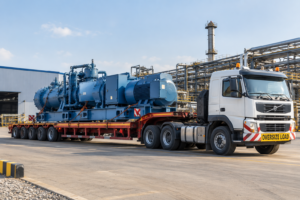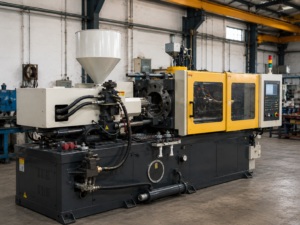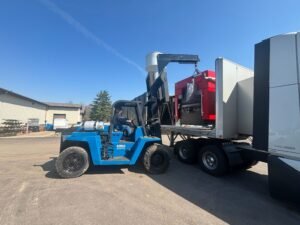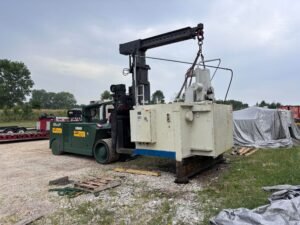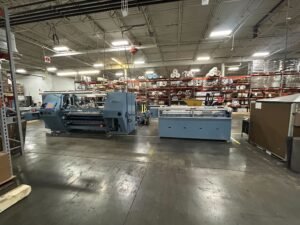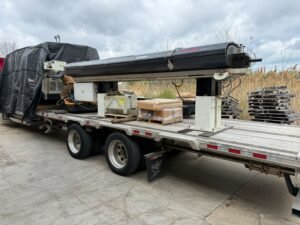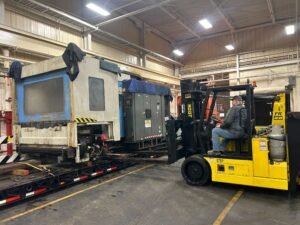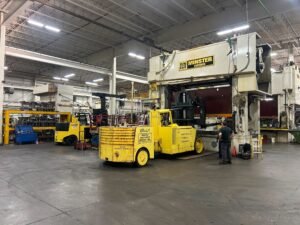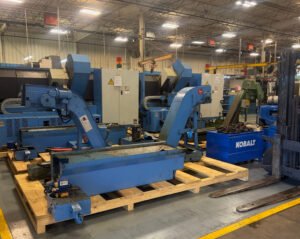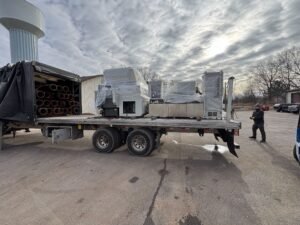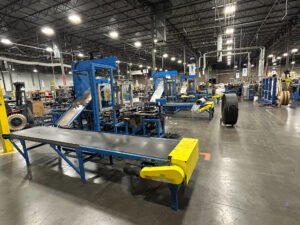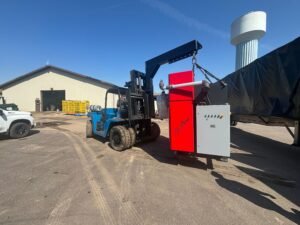
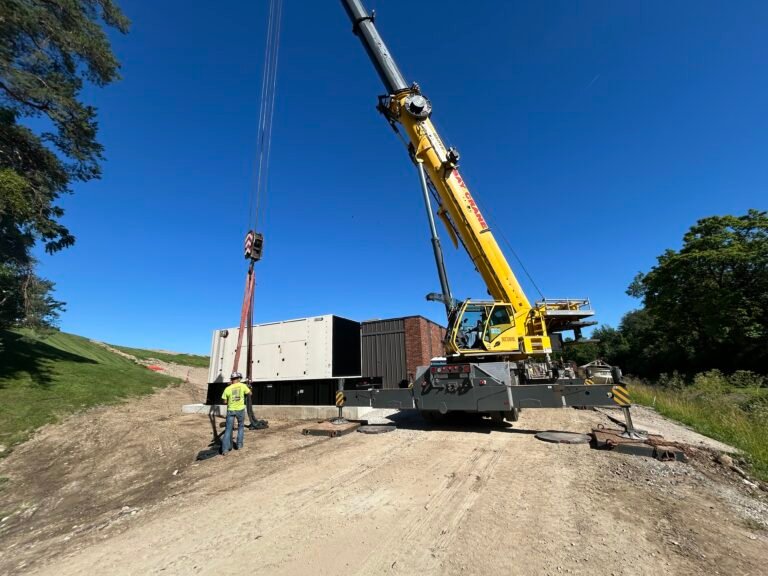
Moving heavy equipment is one of the most complex and high-stakes operations in industrial and manufacturing environments. Whether it’s relocating a multi-ton CNC machine, installing a new production line, or repositioning a generator inside a tight facility, the margin for error is razor-thin. A single miscalculation in load distribution, rigging angle, or ground stability can lead to equipment damage, project delays, or serious safety incidents.
This is where professional crane services come in. Far more than just “lifting heavy things,” modern crane service providers bring engineering expertise, specialized equipment, and rigorous safety protocols that transform heavy equipment moving from a high-risk gamble into a controlled, predictable process. In this article, we’ll explore exactly how crane services simplify heavy equipment moving — covering everything from planning and safety to cost efficiency and technology — so you understand why hiring the right partner matters just as much as the crane itself.
Why Heavy Equipment Moving Is So Challenging
Before diving into how crane services solve these problems, it’s worth understanding what makes heavy equipment moving inherently difficult:
- Extreme weight and size: Industrial machinery can weigh anywhere from a few tons to hundreds of tons, often with irregular shapes that make balancing and lifting difficult.
- Tight facility access: Equipment frequently needs to move through narrow doorways, low ceilings, or congested production floors.
- Sensitive components: Precision machinery like CNC equipment, turbines, and robotics can be damaged by improper handling, vibration, or tilting.
- Regulatory compliance: OSHA and local safety regulations govern rigging, lifting, and crane operations, and non-compliance can result in fines or shutdowns.
- Operational downtime costs: Every hour a facility is offline for equipment relocation is an hour of lost productivity and revenue.
Given these challenges, it’s easy to see why attempting a heavy equipment move without specialized expertise is a recipe for costly mistakes. Even experienced maintenance or facilities teams often lack the specialized rigging knowledge, load-bearing calculations, and crane-operating certifications required to move multi-ton machinery safely. What looks like a straightforward lift on paper can quickly become a logistical nightmare once you factor in uneven flooring, overhead obstructions, underground utilities, or equipment with an unpredictable center of gravity.
Beyond the physical challenges, there’s also a financial dimension. Heavy equipment moving projects often involve coordinating multiple stakeholders — facility managers, production teams, logistics coordinators, and sometimes even municipal authorities — all of whom have competing priorities and timelines. Without a single point of expertise managing the lift from start to finish, miscommunication and scheduling conflicts can add unplanned costs and delays. Professional crane services address each of these pain points systematically, acting as a single accountable partner throughout the entire process.
1. Professional Load Planning and Engineering
One of the biggest ways crane services simplify heavy equipment moving is through upfront planning. Before a single strap is attached, experienced rigging teams conduct a thorough site assessment and engineering review that includes:
- Load weight verification using equipment specifications, manufacturer data, or on-site weighing
- Center of gravity calculations to determine the safest lifting points
- Rigging configuration design (slings, shackles, spreader bars, or lifting beams)
- Crane selection based on lift radius, boom length, and capacity charts
- Ground bearing pressure analysis to ensure the crane’s outriggers won’t sink or shift during the lift
This planning phase eliminates guesswork. Instead of improvising on-site, a professional crane service arrives with a documented lift plan that accounts for every variable — reducing the risk of accidents and rework. For businesses, this translates into predictable timelines and fewer surprises during what is often a disruptive facility event.
Good planning also includes contingency scenarios. Experienced rigging engineers ask “what if” questions well before mobilization: What if the ground softens after overnight rain? What if the equipment’s actual weight differs from the spec sheet by a few percent? What if access is blocked by another contractor’s materials on move day? By stress-testing the plan against these possibilities in advance, crane services avoid the scramble that so often derails DIY or under-planned moves.
2. Access to the Right Crane for the Job
Not all cranes are created equal, and using the wrong type can turn a simple move into an expensive ordeal. Crane service providers maintain diverse fleets and select equipment based on the specific demands of each job:
- Mobile cranes for flexible, short-duration lifts at accessible sites
- Crawler cranes for heavy lifts on soft or uneven ground
- All-terrain cranes for sites requiring both road travel and off-road stability
- Overhead bridge cranes for indoor, repetitive lifting within a facility
- Gantry systems and hydraulic jacking for extremely heavy or oversized loads in confined spaces
- Boom trucks for lighter, faster equipment relocations
By matching the crane type to the load, site conditions, and access constraints, crane services avoid the costly trial-and-error that can occur when a facility tries to rent generic equipment without expert guidance. This equipment versatility alone is one of the strongest reasons companies outsource heavy equipment moving rather than attempting it in-house.
3. Certified Riggers and Trained Crane Operators
Heavy equipment moving isn’t just about horsepower — it’s about precision handling by trained professionals. Reputable crane service companies employ certified riggers and licensed crane operators who understand:
- Proper sling angles and load distribution
- Signal communication (hand signals and radio protocols)
- Load charts and capacity limitations for each crane model
- How to respond to unexpected conditions like wind gusts or ground shifts
This level of expertise significantly reduces the likelihood of dropped loads, equipment tipping, or structural damage. Many crane service providers also carry industry certifications (such as NCCCO certification for operators in the U.S.), which serve as a mark of quality and compliance assurance for clients hiring them.
For facility managers, this expertise means peace of mind — the move is being handled by people who do this work daily, not occasional in-house staff attempting a rare, high-risk task.
4. Enhanced Safety Standards
Safety is arguably the single biggest reason crane services simplify heavy equipment moving. Industrial accidents involving heavy machinery can result in severe injury, equipment loss, or even fatalities. Professional crane services mitigate these risks through:
- Pre-lift safety briefings for all personnel involved
- Exclusion zones to keep non-essential workers away from the lift area
- Routine equipment inspections to catch mechanical issues before they cause failures
- Weather monitoring to pause operations during unsafe wind or storm conditions
- Compliance with OSHA and ANSI standards for rigging and crane operation
By outsourcing to a crane service, companies transfer significant liability and risk to a partner whose entire business model is built around doing this safely, every time. This is especially critical for industries like manufacturing, oil and gas, and construction, where safety violations can carry heavy regulatory penalties.
It’s also worth noting that safety culture extends beyond the crane itself. Reputable providers train their crews to recognize near-miss situations and encourage crew members to halt operations if something feels off — no matter how far along the lift is. This “stop-work authority” mindset, combined with documented safety checklists for every phase of the move, creates layers of protection that a one-off in-house crew simply can’t replicate.
5. Minimizing Downtime and Operational Disruption
For most businesses, the biggest hidden cost of heavy equipment moving isn’t the move itself — it’s the downtime. Every hour a production line is offline, or a facility is inaccessible, translates directly into lost revenue.
Crane services simplify this by:
- Working within tight scheduling windows, including nights, weekends, or planned shutdown periods
- Executing lifts quickly and efficiently due to experienced crews and pre-planned logistics
- Coordinating multiple pieces of equipment simultaneously when using dual-crane or tandem lifts
- Reducing the risk of do-overs caused by improper rigging or equipment damage
Because professional teams plan meticulously and execute with precision, the actual “wrench time” on-site is often far shorter than what an inexperienced crew would need — even accounting for their higher hourly rates. In many cases, the efficiency gained more than offsets the cost of hiring specialists.
Downtime reduction also comes from parallel-path scheduling. Rather than treating the move as one continuous blocking event, experienced crane service providers often break the project into phases that can overlap with other facility operations — for example, pre-staging rigging equipment and running site surveys while production is still running, so the actual “lights-out” window is limited to the critical lift itself. This kind of phased approach is nearly impossible to execute without dedicated project coordination, which is a core part of what professional crane services provide.
6. Reducing the Risk of Equipment Damage
Heavy machinery represents a significant capital investment, and even minor damage during a move can result in expensive repairs or replacement. Precision equipment — such as CNC machines, robotics, medical imaging devices, or turbines — is especially vulnerable to:
- Shock or vibration during transport
- Tilting beyond manufacturer-specified angles
- Improper rigging points causing stress on housings or frames
- Exposure to weather during outdoor lifts
Crane services use purpose-built rigging accessories (spreader bars, lifting lugs, custom slings) and follow manufacturer guidelines to ensure equipment is lifted and transported without exceeding safe stress thresholds. This attention to detail protects your capital investment and avoids the downstream costs of equipment recalibration, repair, or premature replacement.
7. Navigating Tight Spaces and Complex Site Conditions
Many equipment moves aren’t simple point-A-to-point-B lifts — they involve navigating narrow hallways, low ceiling clearances, congested factory floors, or multi-story facilities. Crane services simplify these logistically complex moves through:
- Hydraulic gantry systems that can maneuver machinery through tight indoor spaces without a traditional crane
- Skidding and rolling systems for horizontal repositioning without lifting
- Modular rigging solutions that break down large lifts into manageable stages
- 3D site surveys and digital modeling to pre-plan the exact path of movement before the crew arrives
This kind of problem-solving is where experienced crane service providers truly differentiate themselves — turning what looks like an impossible move into a well-executed, methodical process.
8. Cost Efficiency Through Expertise
While hiring a crane service involves upfront costs, it’s often more economical than the alternative. Consider the hidden costs of an in-house or inexperienced equipment move:
- Equipment damage requiring repair or replacement
- Injury-related liability and workers’ compensation claims
- Regulatory fines for non-compliant lifting practices
- Extended downtime due to inefficient or failed lift attempts
- Rental costs for the wrong crane, followed by re-renting the correct one
Professional crane services get the job done right the first time, with transparent quotes that account for crane rental, rigging labor, permits, and engineering — allowing businesses to budget accurately rather than face unexpected overruns.
9. Permitting, Compliance, and Documentation
Depending on the location and scale of the move, heavy equipment relocation may require permits for oversized loads, road closures, or crane operation near public areas. Crane service companies typically manage:
- Municipal and state permitting for oversized transport
- Utility coordination (e.g., moving near power lines)
- Insurance and liability documentation
- Safety compliance records for audit purposes
Handling this administrative burden in-house can be time-consuming and error-prone for companies unfamiliar with local regulations. Crane service providers streamline this process, ensuring the move stays compliant and avoiding costly delays from missing paperwork.
10. Technology-Driven Precision
The rigging and crane industry has evolved significantly with the adoption of new technologies that further simplify heavy equipment moving:
- Load monitoring sensors that provide real-time weight and stress data during lifts
- GPS and telematics for tracking transport logistics
- Digital load charts that instantly calculate safe lifting parameters based on boom angle and radius
- Drone site surveys to assess access routes and potential obstacles before mobilization
These innovations reduce human error and increase the accuracy of planning, making modern crane services safer and more efficient than ever before.
Industries That Rely on Crane Services for Equipment Moving
Crane services aren’t limited to construction sites. A wide range of industries depend on them for heavy equipment relocation, including:
- Manufacturing: Relocating production lines, presses, and CNC machinery during plant expansions or facility moves
- Oil and gas: Installing and repositioning heavy processing equipment and pipeline components
- Power generation: Moving turbines, transformers, and generators for new installations or maintenance
- Automotive: Relocating assembly line robotics and stamping equipment
- Logistics and warehousing: Installing conveyor systems and material handling equipment
- Construction: Placing structural steel, HVAC units, and prefabricated components
Each of these industries has unique equipment and site challenges, which is why choosing a crane service provider with relevant industry experience is critical to a smooth move. A team that regularly handles automotive stamping presses, for instance, will approach a job very differently than one whose background is primarily in structural steel erection — and that specialization shows up in the quality, speed, and safety of the final lift.
Signs You Need a Crane Service (Not Just a Forklift or Rental Crane)
Not every equipment move requires a full crane service engagement, but certain warning signs indicate that DIY or basic rental equipment won’t be enough:
- The equipment exceeds the rated capacity of on-site forklifts or hoists
- The move involves navigating stairs, mezzanines, or multiple floor levels
- The equipment has an unusual shape or an off-center weight distribution
- The move requires temporary road closures or permits for oversized transport
- Your facility’s insurance policy requires certified riggers for lifts above a certain weight threshold
- Previous moves resulted in equipment damage or near-miss safety incidents
If any of these apply to your project, it’s a strong signal that a professional crane service — not a general contractor or in-house crew — is the safer and more cost-effective choice.
Why Alltracon Is a Trusted Choice for Crane Services
When it comes to heavy equipment moving, Alltracon stands out as a dependable partner for businesses across manufacturing, logistics, and industrial sectors. With a strong focus on heavy haul trucking and specialized rigging support, Alltracon combines experienced crews, well-maintained equipment, and a safety-first approach to deliver reliable, efficient equipment relocation services tailored to complex industrial needs.
Conclusion
Heavy equipment moving is inherently risky, but professional crane services transform it into a controlled, efficient, and safe process. From meticulous load planning and the right equipment selection to certified operators and advanced safety protocols, crane services address every pain point that makes equipment relocation challenging. Businesses that partner with experienced crane service providers not only reduce the risk of damage, injury, and downtime — they also gain predictable costs and peace of mind throughout the entire process.
Whether you’re relocating a single machine or executing a full plant move, the right crane service partner is the difference between a stressful, high-risk project and a smooth, well-managed operation. As facilities continue to modernize and equipment becomes more sophisticated and expensive to replace, the value of experienced rigging and crane expertise will only continue to grow. Investing in the right partner up front is one of the simplest ways to protect your equipment, your people, and your project timeline.