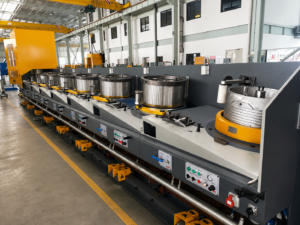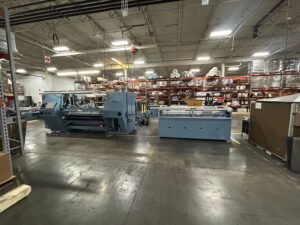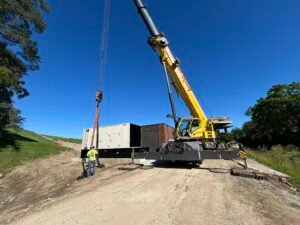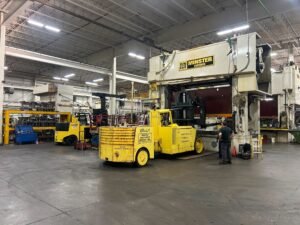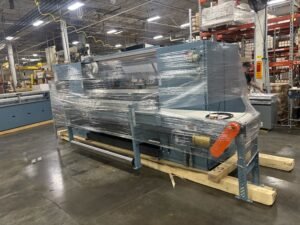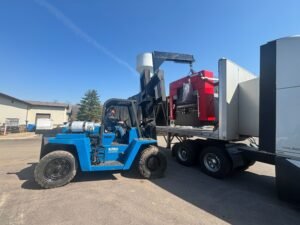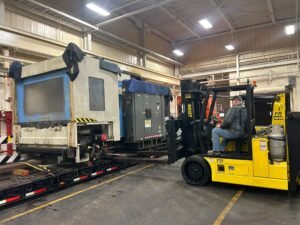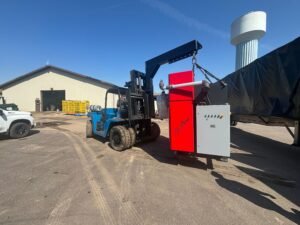
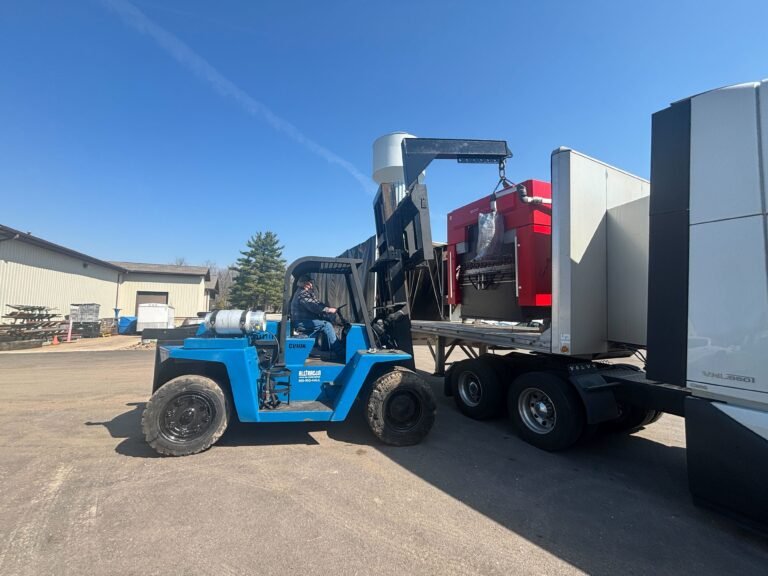
Relocating industrial equipment is one of the highest-risk operations a facility can undertake. Unlike office moves or standard freight, industrial machinery — CNC machines, presses, boring machines, printing equipment, and heavy production lines — often weighs thousands to hundreds of thousands of pounds and is built with precision tolerances that can be permanently affected by a single mishandled step.
Two phases determine whether an industrial equipment relocation goes smoothly or turns into an expensive disaster: disassembly and loading. Get these right, and the rest of the move — transport and recommissioning — tends to go smoothly. Get them wrong, and you risk equipment damage, facility damage, injury, and costly downtime.
This guide walks through exactly how to safely disassemble and load industrial equipment for relocation, covering planning, tools, rigging techniques, safety protocols, and the mistakes that cause the most expensive failures.
Why Disassembly and Loading Are the Highest-Risk Phases
Industrial equipment relocation generally happens in five stages: assessment, decommissioning, disassembly, loading/transport, and recommissioning. Of these, disassembly and loading carry the greatest risk because they involve:
- Direct physical handling of extremely heavy, often awkwardly shaped equipment
- Precision components (spindles, rollers, cylinders, alignment rails) that can be damaged by improper handling
- Complex rigging calculations where a miscalculated center of gravity can cause tipping or dropped loads
- Confined spaces — doorways, hallways, elevators, and loading docks not originally designed for the equipment being moved
- Human safety risks — crushing, pinch points, and suspended load hazards during crane and forklift operations
A single mistake at this stage doesn’t just risk delay — it risks a six-figure piece of equipment or a serious injury. That’s why understanding the process (even if you’re hiring professionals) is critical for anyone managing an industrial relocation.
Step 1: Pre-Disassembly Planning and Site Assessment
Before a single bolt is loosened, a proper relocation starts with detailed planning. Skipping this step is the number one cause of delays and cost overruns in industrial moves.
Equipment Assessment
- Obtain manufacturer specifications, including dry weight, dimensions, and center of gravity if available
- Identify how many major sub-assemblies the machine breaks into
- Locate all electrical, pneumatic, and hydraulic disconnection points
- Photograph the machine from multiple angles before touching anything — this becomes your reassembly reference
Site Survey (Origin and Destination)
- Measure doorway widths, ceiling heights, and hallway clearances
- Check floor load capacity — many facility floors aren’t rated for concentrated point loads from heavy machinery or rigging equipment
- Identify crane access points and any overhead obstructions (power lines, sprinkler heads, low beams)
- Confirm loading dock availability or plan for street-level rigging if none exists
Route and Logistics Planning
- Determine whether the machine needs to be moved in one piece or disassembled to clear building obstructions
- Plan the transport route, checking for bridge weight restrictions and road clearances
- Secure any necessary permits for oversized or overweight loads
- Schedule crane, forklift, and rigging equipment rentals in advance based on confirmed weight figures
A thorough site assessment answers one core question before the move starts: can this machine physically get from where it is to where it’s going, and what needs to happen to make that possible?
Step 2: Understanding Machine Weight and Load Points
Weight determines nearly every decision in the disassembly and loading process — from what rigging equipment is required to how many crew members are needed.
| Equipment Type | Typical Weight Range |
|---|---|
| CNC router tables | 2,000 – 8,000 lbs |
| CNC machining centers | 8,000 – 25,000 lbs |
| Vertical boring machines | 15,000 – 50,000 lbs |
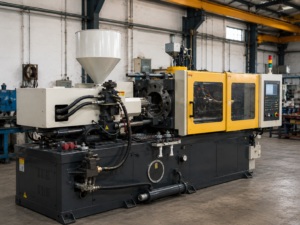
| Plastic injection mold presses | 5,000 – 100,000+ lbs |
| Industrial printing presses | 5,000 – 60,000+ lbs |
| Full production line sections | 50,000 – 150,000+ lbs |
Beyond total weight, where the weight sits matters just as much. Industrial machines rarely distribute weight evenly — a printing press, for example, is long and narrow with weight concentrated at specific points, while a CNC machining center may have its heaviest mass low and centered. Riggers need to identify actual load-bearing points (not just visual center) before choosing sling positions, spreader bar placement, or forklift approach angles.
Getting this wrong is one of the most common causes of tipping incidents and rigging failures during industrial moves.
Step 3: The Disassembly Process
Disassembly should always follow a structured, documented sequence — not an ad hoc teardown. Here’s the general process professional teams follow:
1. Depressurize and Drain Systems
All hydraulic and pneumatic systems must be depressurized and fully drained before any disconnection begins. This prevents fluid leaks during transport and eliminates pressure-related safety hazards during teardown.
2. Disconnect Electrical Systems
Industrial machines typically run on three-phase power with sensitive control panels. A licensed electrician should handle disconnection to avoid damaging control boards, which are often the most expensive components to replace if mishandled.
3. Remove Peripheral Components First
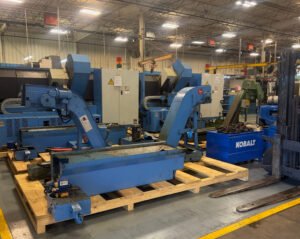
Smaller attached components — control panels, guards, conveyors, tool changers, hoppers — are typically removed before tackling the main structural units. This reduces overall weight and simplifies rigging for the core sections.
4. Separate Major Sub-Assemblies
For machines like printing presses or multi-unit production equipment, this is where the machine is broken into its major transportable sections. Each separation point should follow manufacturer guidelines where available.
5. Protect Precision Components
Spindles, rollers, cylinders, and alignment rails should be locked, wrapped, or removed entirely depending on sensitivity. These components can be damaged by vibration or shifting even when the rest of the machine is handled correctly.
6. Label and Document Everything
Every bolt, panel, cable, and bracket removed should be labeled, bagged, and photographed. On complex machines with hundreds of components, this documentation is what makes accurate reassembly possible — skipping it is one of the most common causes of extended recommissioning timelines.
Step 4: Rigging for Safe Loading
Once disassembled into manageable sections, each piece needs to be rigged and loaded using equipment rated for its specific weight and shape.
Common Rigging Equipment
- Slings (chain, wire rope, or synthetic) rated for the specific load weight, with safety margin
- Spreader bars to distribute weight evenly across multiple lift points and prevent sling angle stress
- Hydraulic gantries for lower-clearance lifts where overhead crane access isn’t available
- Machine skates/rollers for moving heavy sections short distances across floors without dragging
- Forklifts rated for the specific point load, not just total capacity
Key Rigging Principles
- Always rig from identified structural load points, never from panels, housings, or non-structural components
- Calculate sling angles carefully — angles below 45 degrees dramatically increase tension on each leg of the sling
- Never exceed rated capacity of any single piece of rigging equipment, even if the total lift seems within combined capacity
- Use tag lines to control load movement and prevent spinning or swinging during crane lifts
- Keep personnel clear of suspended loads at all times — this is one of the most common causes of serious injury in industrial rigging
Step 5: Loading onto Transport
How equipment gets loaded depends on its size, weight, and the transport method being used.
Container Loading
For international or long-distance moves, sections are often loaded directly into shipping containers. This requires:
- Careful weight distribution across the container floor to avoid concentrated point loads
- Secure chaining/strapping to prevent shifting during transit
- Adequate dunnage (wood blocking/bracing) to stabilize irregular shapes
Flatbed/Lowboy Trailer Loading
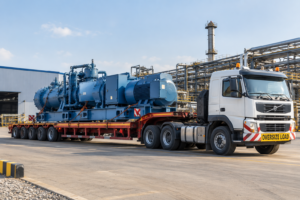
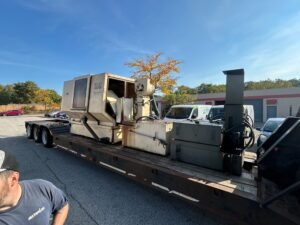
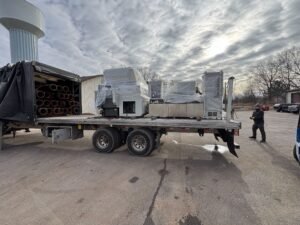
For domestic overland transport, heavier or oversized sections often go on flatbed or lowboy trailers:
- Weight must be distributed across axles to comply with DOT regulations
- Industrial-grade chains and binders secure the load
- Escort vehicles may be required for oversized loads depending on state regulations
Protecting Facility and Equipment During Loading
- Use floor protection mats or plywood runways when moving heavy sections across finished flooring
- Avoid dragging machine sections — use rollers, skates, or air casters designed for heavy loads
- Double-check clearance heights before any crane lift near doorways, overhangs, or power lines
Common Mistakes That Cause Damage or Delays
1. Skipping the site assessment Discovering a doorway is too narrow on move day turns a planned one-day job into a multi-day emergency disassembly.
2. Rigging from the wrong points Lifting from non-structural panels or housings can cause frame damage or catastrophic load failure.
3. Underestimating weight Using rigging or lifting equipment rated below actual load weight is one of the leading causes of serious accidents in industrial relocations.
4. Inadequate documentation Without labeled components and photos, reassembly takes significantly longer and increases the risk of incorrect reinstallation.
5. Ignoring floor load capacity Heavy machinery and rigging equipment can exceed a facility’s floor rating, risking structural damage.
6. Rushing the process to save time Disassembly and loading done under time pressure are where the majority of costly mistakes happen — precision work cannot be rushed safely.
Safety Considerations Throughout the Process
Industrial equipment disassembly and loading involve serious safety hazards that require trained personnel and proper protocols:
- Personal protective equipment (PPE) — hard hats, steel-toe boots, gloves, and eye protection at minimum
- Lockout/tagout procedures for all electrical and hydraulic systems before disassembly begins
- Clear communication protocols between crane operators, riggers, and ground crew during lifts
- Load path clearance — ensuring no personnel are under or near suspended loads
- Weather monitoring for outdoor crane lifts, since wind and precipitation significantly affect lift safety
Following OSHA rigging and material handling guidelines isn’t optional — it’s the baseline standard that protects both personnel and the equipment being moved.
How to Choose the Right Team for Disassembly and Loading
Not every heavy equipment mover has genuine rigging and disassembly expertise. Before hiring, ask:
- Have you disassembled and loaded this specific type of equipment before?
- Who calculates load points and rigging plans — an experienced rigger or a general laborer?
- What rigging equipment do you use, and is it rated for our equipment’s actual weight?
- How do you document disassembly for reassembly accuracy?
- What safety protocols and certifications does your crew follow?
- Can you provide references from similar industrial relocation projects?
A team that answers these with specifics — not vague reassurances — is far more likely to execute the job correctly from disassembly through final loading.
Why Alltracon Is the Best Choice for Industrial Equipment Disassembly and Loading
Alltracon combines certified rigging expertise with hands-on experience disassembling and loading CNC machines, presses, and heavy production equipment of all sizes. Every job follows documented, safety-first protocols — protecting your equipment, your facility, and your timeline from the first bolt removed to final load-out.
Final Thoughts
Safely disassembling and loading industrial equipment isn’t a single task — it’s a structured process built on careful planning, precise rigging, and disciplined execution. From understanding true load points and weight distribution to protecting precision components and following strict safety protocols, every stage carries real risk if handled without the right expertise.
Whether you’re relocating a single CNC machine or an entire production line, investing time in proper planning — and partnering with a team that specializes in industrial disassembly and loading, not just general hauling — is what separates a smooth relocation from a costly, damaging one.