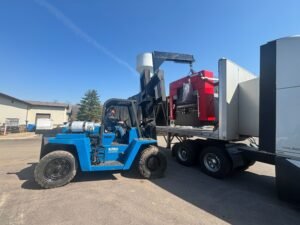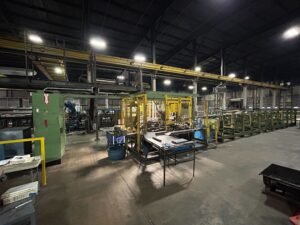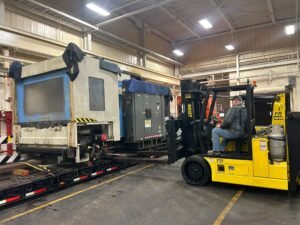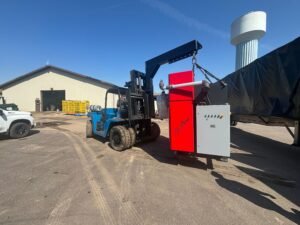
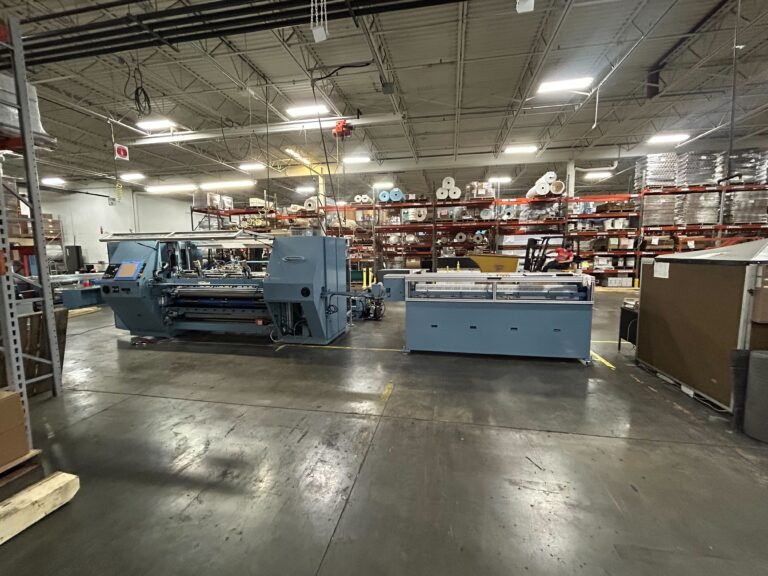
Moving an industrial printing press is nothing like relocating standard factory equipment. Presses such as Heidelberg, Komori, Man Roland, and Goss machines are precision-engineered systems that can weigh anywhere from a few thousand pounds to well over 40,000 lbs, built with tight mechanical tolerances that took technicians days to calibrate the first time around. A single misstep in the moving process — improper rigging, a rushed disassembly, or careless transport — can throw off alignment, damage rollers, or cost tens of thousands of dollars in downtime and repairs.
Whether you’re relocating a print shop, upgrading facilities, or decommissioning old equipment, understanding what’s actually involved in industrial printing press moving before you get started can save you significant time, money, and risk. This guide walks through everything you need to know: weight considerations, the disassembly process, rigging and transport logistics, common risks, and how to choose the right moving partner.
Why Printing Press Relocation Is a Specialized Job
Unlike moving a CNC machine or a standard piece of factory equipment, printing presses are long, modular, and mechanically interconnected. A typical offset printing press consists of multiple linked units — feeder, printing towers, delivery unit, and sometimes a folder or coating unit — all bolted together and precisely aligned to keep printed output consistent to within fractions of a millimeter.
This means printing press relocation isn’t a single lift-and-move job. It’s closer to a mechanical engineering project that happens to include transportation. The team handling it needs to understand:
- How the machine’s components separate and reconnect
- Where the actual weight-bearing points are (often not where they appear to be)
- How to protect precision rollers, cylinders, and ink systems during transit
- How to re-level and re-align the press once it’s reinstalled
Getting any of these wrong doesn’t just risk damage — it risks the press never running at its original print quality again without a full manufacturer recalibration.
How Much Does an Industrial Printing Press Weigh?
Weight is one of the first things that determines the complexity, equipment, and cost of a move. Printing press weights vary dramatically depending on size, press type, and number of units.
| Press Type | Approximate Weight |
|---|---|
| Small sheet-fed offset press (1-2 color) | 5,000 – 10,000 lbs |
| Mid-size offset press (4-6 color) | 15,000 – 30,000 lbs |
| Large web offset / commercial press | 30,000 – 60,000+ lbs |
| Full production press line (multi-unit, folder included) | 80,000 – 150,000+ lbs |
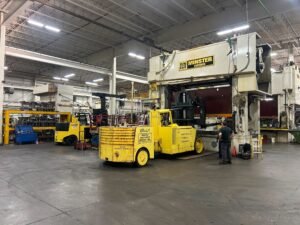
For reference, a mid-size Heidelberg printing press commonly weighs in the range of 15,000 lbs, which already requires forklifts rated for concentrated point loads, certified riggers, and often a crane for loading into a container or trailer. Larger web presses with multiple towers can weigh several times that, requiring the press to be broken down into individual sections before it can even be moved out of the building.
Knowing the exact dry weight — not an estimate — is critical before scheduling equipment, because it determines the crane capacity, trailer type, and number of crew needed for the job.
Step 1: Pre-Move Assessment and Planning
Before any disassembly begins, a proper printing press move starts with a full site and equipment assessment. This includes:
Site Survey (Origin and Destination)
- Door widths, ceiling heights, and floor load capacity
- Availability of loading docks or the need for street-level rigging
- Crane access points and overhead obstructions (power lines, low ceilings, sprinkler systems)
- Elevator or ramp limitations for multi-floor buildings
Equipment Documentation
- Manufacturer specifications and dry weight
- Number of separable units/sections
- Electrical and pneumatic disconnection points
- Ink and solvent system drainage requirements
Route Planning
- Permit requirements for oversized loads
- Bridge weight restrictions along the transport route
- Weather considerations, especially for long-haul relocations
Skipping this planning phase is the single biggest cause of cost overruns in industrial equipment moves — a press that doesn’t fit through a doorway discovered on move day turns a one-day job into a three-day emergency disassembly.
Step 2: Decommissioning the Press
Decommissioning is more than “unplugging a machine.” For a printing press, it typically involves:
- Ink and Solvent Removal — All ink systems, fountain solutions, and cleaning solvents must be fully drained and disposed of according to environmental regulations before the press can be moved.
- Electrical Disconnection — Industrial presses run on three-phase power with complex control panels. A licensed electrician typically handles this disconnection to avoid damaging sensitive control boards.
- Pneumatic and Hydraulic Line Draining — Air and hydraulic systems must be depressurized and drained to prevent leaks during transport.
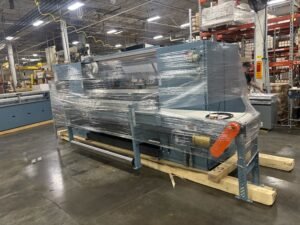
- Cylinder and Roller Protection — Printing cylinders and rollers are precision-ground surfaces. They’re typically locked, wrapped, and sometimes removed entirely to prevent flat-spotting or surface damage during transit.
- Component Tagging — Every bolt, panel, and connector removed should be labeled and cataloged. Reassembly on a machine with hundreds of components depends entirely on this documentation.
This is the phase where experience matters most. Rushed decommissioning is the most common reason presses arrive at their new location with hidden damage that isn’t discovered until they’re powered back on.
Step 3: Disassembly and Load-Out
Once decommissioned, the press is typically broken into its major sub-assemblies — feeder unit, printing towers, delivery unit, and any auxiliary units like folders or coaters. Each section is:
- Secured to prevent internal movement during transport
- Rigged using appropriately rated slings, spreader bars, or hydraulic gantries
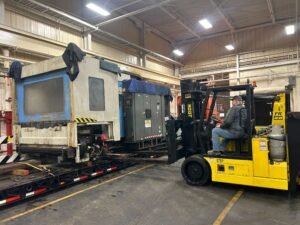
- Loaded using a crane, forklift, or a combination depending on section weight and building access
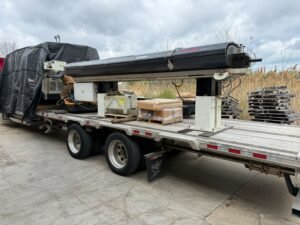
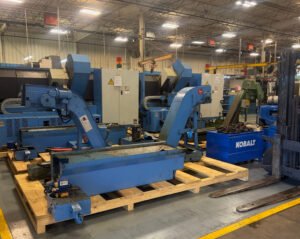
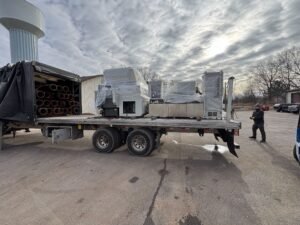
For heavier presses, sections are commonly loaded directly into a shipping container or onto a flatbed/lowboy trailer, secured with industrial-grade chains and dunnage to prevent shifting.
This is also the stage where floor protection matters. Printing presses often sit on facilities with finished flooring, and dragging a 15,000+ lb section across a floor without proper mats or rollers can cause costly facility damage — an expense that falls back on whoever is managing the move.
Step 4: Transport Considerations
Transporting a printing press isn’t just about having a big enough truck. Key factors include:
- Weight distribution across axles to comply with DOT regulations
- Permits for oversized or overweight loads, especially for cross-state moves
- Climate control for sensitive electronic components, if applicable
- Route surveys to avoid low bridges, weight-restricted roads, or tight turns
- Insurance coverage specific to the declared value of the equipment being transported
For long-distance relocations — similar to a full facility move — professional movers typically coordinate logistics days or weeks in advance to lock in permits and confirm routes before the equipment ever leaves the building.
Step 5: Recommissioning and Alignment
This is where many DIY or under-qualified moves fail. Recommissioning a printing press isn’t simply reversing the disassembly steps — it requires:
- Precision leveling of the base frame, often using laser alignment tools
- Cylinder and roller re-installation with correct pressure settings
- Registration calibration to ensure color units print in exact alignment
- Electrical and control system testing before the press runs a live job
- Test runs to confirm print quality matches pre-move output
A press that’s off by even a small margin during recommissioning can produce visibly misregistered prints — a problem that can take a specialized technician days to fully diagnose and correct if the reinstallation wasn’t done properly the first time.
Common Risks and Mistakes to Avoid
1. Underestimating weight and load points Printing presses don’t distribute weight evenly. Rigging at the wrong points can cause frame stress or tip hazards.
2. Skipping professional disassembly Attempting to move a fully assembled press to save time often results in doorway or ceiling damage — or worse, damage to the press itself.
3. Inadequate documentation during teardown Without labeled components and photos of every connection, reassembly can take significantly longer and increase the risk of errors.
4. Ignoring environmental regulations Ink, solvent, and fountain solution disposal is regulated. Improper handling can result in fines.
5. Choosing movers without press-specific experience General movers may be well-equipped for furniture or standard equipment but lack the rigging expertise, tools, and mechanical knowledge specific to printing press systems.
How Much Does It Cost to Move a Printing Press?
Costs vary significantly based on:
- Press size and weight
- Distance of the move
- Number of sub-assemblies requiring disassembly/reassembly
- Crane or specialized rigging equipment needed
- Permit and transport requirements for oversized loads
A local move of a smaller press might run a few thousand dollars, while a full decommission-transport-recommission project for a large, multi-unit web press across state lines can run into the tens of thousands — particularly when precision recalibration and testing are included.
Getting a detailed, itemized quote that separates decommissioning, transport, and recommissioning costs helps avoid surprise charges mid-project.
Questions to Ask Before Hiring a Printing Press Moving Company
Before signing a contract, ask potential movers:
- Have you moved this specific press model or manufacturer before?
- Who handles electrical and hydraulic disconnection — in-house technicians or subcontractors?
- What rigging equipment will be used for load-out, and is it rated for the press’s actual weight?
- Do you provide alignment and recommissioning services, or only transport?
- What insurance coverage applies to the declared value of the equipment?
- Can you provide references from similar industrial equipment relocations?
A mover who can answer these clearly and specifically — rather than with generic reassurances — is far more likely to handle the job correctly from start to finish.
Why Alltracon Is the Best Choice for Industrial Printing Press Moving
Alltracon brings specialized rigging expertise and heavy equipment moving experience to every printing press relocation. From full decommissioning and precision disassembly to secure transport and expert recommissioning with proper alignment, Alltracon’s crews handle presses of all sizes with the care these precision machines demand — minimizing downtime and protecting your investment.
Final Thoughts
Moving an industrial printing press is a technical, multi-stage process that goes far beyond loading a machine onto a truck. From understanding true dry weight and rigging points, to careful decommissioning, disassembly, transport, and precision recommissioning, every stage carries risk if handled by an inexperienced team. Partnering with a moving company that understands printing equipment specifically — not just heavy machinery in general — is the difference between a smooth relocation and a costly, drawn-out repair process.
If you’re planning a printing press relocation, start with a detailed site assessment and a moving partner who can walk you through every phase of the process before the first bolt is ever loosened.