Relocating an industrial plant is one of the highest-stakes projects a manufacturing company can undertake. Machinery worth millions of dollars, production schedules tied to customer contracts, and dozens (sometimes hundreds) of employees all depend on the move going smoothly. Yet no matter how well a relocation is planned, one factor almost always causes the most anxiety for plant managers and operations leaders: downtime.
How long will the line actually be down? Is six weeks realistic, or should you plan for three months? Can downtime be avoided altogether? These are the questions that keep operations directors up at night, and the honest answer is that downtime is rarely eliminated completely — but it can be dramatically reduced with the right planning, sequencing, and moving partner.
This guide breaks down what realistic downtime actually looks like for different types of plant relocations, the biggest hidden causes of extended downtime, and the concrete strategies that experienced industrial movers use to keep production interruptions as short as possible.
Why Plant Relocation Downtime Matters So Much
Every day a production line sits idle costs money in ways that go far beyond the obvious. There’s lost output, but there’s also:
- Contractual penalties for missed delivery windows
- Idle labor costs (employees paid but not producing)
- Customer relationships strained by delayed orders
- Potential loss of market share to competitors who can fill the gap
- Overtime costs once the line restarts, as teams rush to catch up
For a mid-sized manufacturing facility, unplanned or extended downtime can cost anywhere from a few thousand dollars an hour to well over $50,000 an hour for high-throughput or continuous-process operations like automotive stamping, food processing, or chemical manufacturing. When you multiply that by days or weeks, the financial exposure of a poorly planned relocation becomes enormous — often dwarfing the actual cost of the move itself.
This is exactly why downtime shouldn’t be treated as an afterthought in the relocation budget. It should be the central planning metric that shapes every other decision, from which mover you choose to how machinery is sequenced for disconnection and reinstallation.
What Does “Realistic” Downtime Actually Look Like?
Every plant relocation is different, but industry experience gives us useful benchmarks. Realistic downtime depends heavily on plant size, equipment complexity, and how much preparation happens before moving day.
Small to Mid-Size Facilities (Under 50,000 sq ft)
For smaller operations with standard machinery — CNC equipment, light assembly lines, packaging systems — a well-planned relocation typically results in 1 to 3 weeks of full production downtime. This assumes:
- Equipment doesn’t require extensive recalibration
- The new facility is largely move-in ready (utilities, foundations, and electrical infrastructure already in place)
- Machinery is disconnected, rigged, transported, and reinstalled by an experienced industrial moving crew
Mid-Size to Large Manufacturing Plants (50,000–250,000 sq ft)
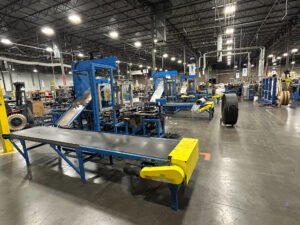
Facilities with heavier equipment — presses, injection molding machines, large conveyor systems, overhead cranes — typically see 3 to 8 weeks of downtime. The wider range here reflects the complexity of disconnecting utilities, the need for specialized rigging equipment, and longer machine recalibration and testing periods once equipment is reinstalled.
Heavy Industrial and Continuous-Process Plants
Steel mills, chemical plants, and facilities with large-scale continuous processes are the most complex to relocate and can realistically require 2 to 6 months of downtime, particularly when foundations need to be poured, specialized utility connections re-engineered, and safety/environmental permitting completed before production can restart.
The Phased Relocation Alternative
Many companies avoid a single long downtime window altogether by relocating in phases — moving one production line or department at a time while others continue operating either at the old facility or a temporary location. This approach can reduce total downtime dramatically, sometimes to a matter of days per line, though it extends the overall project timeline and requires more sophisticated coordination.
The Biggest Hidden Causes of Extended Downtime
Plant managers are usually well aware of the obvious downtime drivers — disconnecting and reconnecting machinery, physically transporting it, and reassembling the line. What catches most companies off guard are the hidden factors that quietly add days or weeks to the schedule.
1. Underestimating Utility and Infrastructure Readiness
One of the most common mistakes is assuming the new facility’s electrical, compressed air, water, and ventilation systems are ready to receive equipment on day one. In reality, industrial machinery often has specific power requirements — three-phase power at particular voltages, dedicated circuits, specialized grounding — that need to be verified and, if necessary, installed weeks before the physical move begins.
2. Equipment Recalibration and Testing
Heavy machinery, especially precision equipment like CNC machines or coordinate measuring equipment, often shifts slightly during transport even with careful rigging. Recalibration, alignment, and test runs after reinstallation can add several days that are frequently left out of initial timeline estimates.
3. Permitting and Regulatory Delays
Depending on the industry, a new facility may require environmental permits, fire marshal inspections, OSHA compliance reviews, or utility hookups that involve third-party approval timelines completely outside the mover’s control. These delays are among the most common reasons relocations run longer than planned.
4. Inadequate Rigging and Machinery Moving Expertise
Not all moving companies have genuine experience with heavy industrial rigging. Attempting to disconnect, lift, and transport multi-ton equipment without specialized machinery movers often results in damage, incorrect reinstallation, or safety incidents — all of which extend downtime far beyond the original estimate.
5. Poor Sequencing of the Move
Moving equipment in the wrong order — for example, relocating downstream equipment before upstream machinery is operational — can create bottlenecks that stall production restart even after everything physically arrives at the new site.
6. Lack of a Detailed Pre-Move Inventory and Plan
Companies that go into a relocation without a documented, machine-by-machine plan (including disconnection order, rigging requirements, transport logistics, and reinstallation sequence) consistently experience longer downtime than those with a detailed project plan mapped out weeks or months in advance.
How to Minimize Plant Relocation Downtime: A Practical Framework
Start Planning Months, Not Weeks, in Advance
For any facility with more than a handful of major machines, planning should begin at least 3 to 6 months before the physical move. This gives enough lead time to:
- Conduct a full equipment audit and create a detailed relocation plan
- Verify the new facility’s infrastructure readiness
- Secure any necessary permits
- Schedule specialized rigging equipment and crews in advance
- Identify long-lead-time items (custom foundations, specialized utility work) early
Conduct a Full Equipment and Facility Audit
Before any equipment moves, document every machine’s specifications: weight, dimensions, power requirements, disconnection procedures, and any manufacturer-specific reinstallation requirements. Pair this with a full audit of the new facility to identify gaps between what exists and what’s needed.
Sequence the Move Strategically
Work backward from your production process. Identify which machines need to be operational first to support testing and ramp-up, and sequence disconnection, transport, and reinstallation accordingly. In many cases, moving support equipment and utilities first — before the core production machinery — shortens the critical path significantly.
Consider a Phased or Parallel Relocation
If your production process allows it, moving in phases (by department, product line, or shift) rather than shutting down the entire operation at once can reduce total downtime dramatically. Some companies even run limited production at the old facility while the new site is being commissioned in parallel.
Pre-Stage the New Facility
Have utilities, foundations, safety systems, and infrastructure fully ready before equipment arrives. Every day machinery sits waiting for a utility hookup or inspection is a day of pure, avoidable downtime.
Use Experienced Industrial Riggers and Machinery Movers
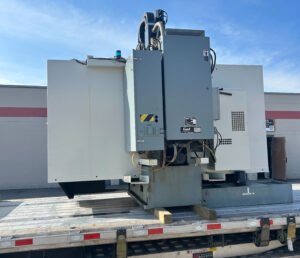
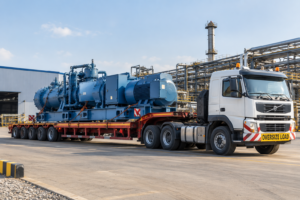
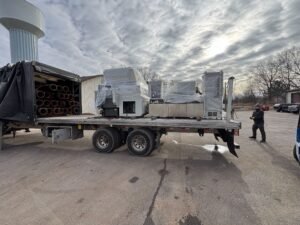
This is arguably the single highest-leverage decision in the entire relocation. Specialized heavy equipment movers bring the rigging expertise, proper equipment (cranes, hydraulic gantries, air skates, specialized trailers), and process discipline to disconnect, transport, and reinstall machinery efficiently and safely — without the costly mistakes that come from using general movers unfamiliar with industrial equipment.
Build in Buffer Time, But Don’t Pad It Excessively
A realistic schedule includes contingency time for the inevitable surprises — a permit that takes longer than expected, a piece of equipment that needs unplanned repair after transport. Generally, adding a 10–15% buffer to your estimated downtime window is prudent, without inflating the schedule so much that it removes urgency from the project.
Communicate Constantly With Stakeholders
Keep customers, employees, and suppliers informed throughout the process. Managing expectations around downtime — and being transparent if the timeline shifts — protects relationships even if the schedule extends slightly.
Run a Post-Move Commissioning and Testing Phase
Don’t treat “equipment is physically in place” as the finish line. Build a dedicated testing and calibration period into the schedule before declaring the line ready for full production. Rushing this step is one of the most common causes of costly post-relocation breakdowns.
Realistic Downtime Checklist
To summarize, a realistic downtime estimate should account for:
- Pre-move planning and equipment audit time (does not count as downtime, but must happen first)
- New facility infrastructure readiness
- Permitting and inspection timelines
- Disconnection of machinery at the old site
- Transport time (including distance and any specialized permitting for oversized loads)
- Reinstallation and reconnection at the new site
- Calibration, alignment, and test runs
- Buffer time for unexpected delays
Skipping any one of these steps in your planning almost guarantees your actual downtime will exceed your estimate.
Downtime Benchmarks by Industry
Because “realistic downtime” depends so heavily on the type of operation, it helps to look at rough benchmarks by industry. These are general ranges based on typical complexity — your actual timeline will vary based on facility size, equipment age, and how much pre-move preparation happens.
Automotive and metal stamping plants tend to fall on the longer end of the spectrum because of the sheer weight and precision of the equipment involved — stamping presses, robotic welding cells, and conveyor systems often require specialized rigging and extensive recalibration. Downtime windows of 6 to 12 weeks are common for a full-line relocation.
Food and beverage processing facilities face a different challenge: sanitation and regulatory compliance. Even after equipment is physically reinstalled, facilities often need to pass health inspections and run sanitation validation cycles before production can resume, which can add 1 to 2 weeks beyond the physical move itself.
Warehousing, distribution, and light assembly operations generally see the shortest downtime windows — often 1 to 3 weeks — since equipment tends to be lighter, less precision-dependent, and quicker to reconnect.
Machine shops and CNC-heavy operations sit in the middle, typically 2 to 4 weeks, with much of that time consumed by precision recalibration rather than the physical move itself.
Heavy fabrication and steel processing plants often require new foundations, overhead crane rail alignment, and structural engineering sign-off, pushing realistic downtime into the 2 to 4 month range for large-scale relocations.
These benchmarks aren’t guarantees — they’re starting points for budgeting purposes. The single biggest factor that moves a facility toward the shorter or longer end of its range is the quality of pre-move planning and the experience level of the industrial moving team handling the job.
The True Cost of Underestimating Downtime
It’s worth spending a moment on why downtime estimation deserves so much attention in the first place. Plant managers who go into a relocation with an optimistic, unvalidated timeline often discover the real cost only after the project is underway.
Consider a mid-size manufacturer generating $2 million in monthly revenue from a single line. If that line is down for an estimated three weeks but actually takes five due to an unplanned permitting delay or rigging error, the company isn’t just absorbing two extra weeks of lost production — it’s also managing strained customer relationships, potential contract penalties, and the cost of idle labor during the overrun. In many cases, the financial impact of underestimated downtime exceeds the entire budget originally allocated for the move itself.
This is precisely why experienced industrial movers build contingency planning into their estimates from day one, rather than presenting an optimistic best-case timeline that looks good in a proposal but rarely survives contact with reality.
Frequently Asked Questions
How far in advance should we start planning a plant relocation? For most mid-size to large facilities, planning should begin 3 to 6 months before the physical move. This gives enough time to complete an equipment audit, verify new-facility infrastructure, and secure permits without rushing the process.
Can plant relocation downtime be avoided entirely? In most cases, no — some interruption is unavoidable when physically disconnecting, transporting, and reinstalling equipment. However, phased relocations, parallel commissioning, and strong pre-move preparation can reduce downtime to a fraction of what an unplanned move would require.
What’s the biggest single factor in keeping downtime short? Infrastructure readiness at the new facility, paired with an experienced rigging and machinery moving team. Equipment sitting idle waiting for utilities or permits — or damaged due to inexperienced handling — is the most common cause of extended downtime.
Should we move on weekends or during a planned shutdown? Where possible, yes. Aligning the relocation with an already-planned maintenance shutdown, slow season, or weekend window can reduce the perceived business impact even if the technical downtime length stays the same.
How do we calculate the true cost of downtime for our facility? Multiply your average hourly production value (revenue or output, depending on how you measure it) by the estimated downtime hours, then add labor costs for idle staff, any contractual penalties, and expected overtime during ramp-up. This gives a realistic dollar figure to weigh against the cost of hiring specialized industrial movers versus a cheaper, less experienced option.
Final Thoughts
Plant relocation downtime is never fully avoidable, but it is highly manageable. The companies that experience the shortest, least disruptive downtime windows are the ones that treat relocation as a structured project rather than a single moving day — starting the planning process early, auditing equipment and infrastructure thoroughly, sequencing the move strategically, and partnering with movers who genuinely specialize in heavy industrial equipment.
Realistic timelines range from a week or two for smaller, well-prepared facilities to several months for large continuous-process plants — but in almost every case, the gap between a smooth relocation and a costly, drawn-out one comes down to the quality of planning and the experience of the team handling the physical move.
Why Alltracon Is the Right Partner for Your Plant Relocation
When downtime is measured in thousands of dollars per hour, the moving company you choose isn’t just a logistics decision — it’s a financial one. Alltracon specializes in heavy equipment moving and industrial relocation, bringing the rigging expertise, specialized machinery, and process discipline needed to keep disconnection, transport, and reinstallation on schedule. Rather than treating your plant like a generic moving job, Alltracon builds a sequenced plan around your production priorities, helping you avoid the hidden delays — poor sequencing, rigging mistakes, unprepared infrastructure — that turn a two-week downtime estimate into a two-month reality. For manufacturers who can’t afford unplanned downtime, that experience is the difference between a relocation that protects your bottom line and one that quietly drains it.