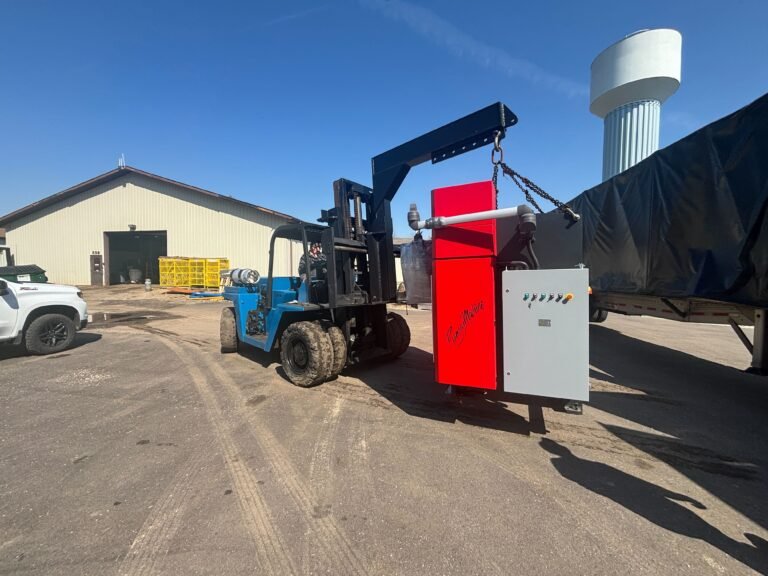
Rigging is one of those disciplines where small errors don’t stay small. A miscalculated sling angle, a worn shackle, or a rushed inspection can turn a routine equipment move into a six-figure repair bill — or worse, a safety incident that shuts down a job site entirely. Whether you’re moving a CNC machine across a shop floor or relocating an entire production line to a new facility, the margin for error in rigging is thin.
The frustrating part is that most rigging failures aren’t caused by exotic, unpredictable problems. They’re caused by the same handful of mistakes, repeated across job sites, year after year. This article breaks down the most common rigging mistakes that damage equipment, explains why they happen, and shows you exactly how to avoid them — whether you’re managing rigging in-house or evaluating a rigging contractor for your next heavy equipment move.
Why Rigging Mistakes Are So Costly
Before diving into specific mistakes, it’s worth understanding why rigging errors are disproportionately expensive compared to other operational mishaps.
First, the equipment being rigged is often irreplaceable on short notice. A damaged CNC machine, injection molder, or industrial press isn’t something you can order overnight from a catalog. Lead times for replacement equipment can stretch into months, and in that time, production stops.
Second, rigging failures rarely cause “minor” damage. Because rigging deals with heavy, often top-heavy or unevenly balanced loads, a failure tends to be sudden and total — a dropped load, a tipped machine, or a snapped line. There’s rarely a middle ground between “moved safely” and “catastrophic failure.”
Third, the liability exposure is significant. Damaged equipment, injured workers, and facility damage all carry legal and insurance consequences that can dwarf the original cost of the move itself.
With that context, let’s look at where things actually go wrong.
1. Underestimating the Load Weight
This is, by a wide margin, the most common root cause of rigging failures. Riggers and project managers frequently rely on outdated spec sheets, rough estimates, or “what it says on the nameplate” rather than verifying actual weight — which can differ substantially once fluids, attachments, packaging, or modifications are factored in.
Why it happens: Equipment nameplates often list a base weight that excludes accessories, fluids, tooling, or aftermarket additions. Older machines may also have undocumented modifications that add weight in ways nobody accounted for.
How to avoid it: Always verify weight through multiple sources — OEM documentation, as-built drawings, or direct weighing with load cells or scale pads before the lift. When in doubt, rig for the higher estimate, not the lower one. A professional rigging team should never rely solely on a nameplate figure for anything above a nominal load.
2. Choosing the Wrong Sling Angle
Sling angle is one of the most misunderstood concepts in rigging, and it’s a leading cause of dropped loads. As the angle between the sling and the horizontal plane decreases, the tension on each leg of the sling increases dramatically — not linearly, but exponentially as the angle approaches horizontal.
Why it happens: Riggers under time pressure sometimes rig with slings at low angles to reduce headroom requirements, without recalculating the actual load on each leg. A sling rated for 10,000 lbs at a 90-degree angle might only be safely rated for a fraction of that at 30 degrees.
How to avoid it: Use sling angle charts or rigging calculation software before every lift involving angled slings. As a rule of thumb, avoid sling angles below 45 degrees whenever possible, and always factor in the reduced capacity at the actual angle being used — not the vertical capacity printed on the sling tag.
3. Using Damaged or Worn Rigging Hardware
Slings, shackles, chains, and hooks degrade over time through normal wear, UV exposure, corrosion, and repeated stress cycles. A shackle with a slightly bent pin or a sling with a few frayed strands might look “close enough” to use — until it isn’t.
Why it happens: Rigging hardware is reused across dozens or hundreds of jobs, and visual wear can be subtle. Without a disciplined inspection routine, degraded equipment slips back into rotation.
How to avoid it: Implement mandatory pre-lift inspections for every piece of rigging hardware, not just periodically scheduled ones. Any hardware showing cracks, deformation, corrosion, or missing identification tags should be immediately removed from service. Keep detailed inspection logs and replace hardware proactively rather than waiting for visible failure.
4. Poor Load Balance and Center of Gravity Miscalculation
Many pieces of industrial equipment — especially machine tools, presses, and custom-built assemblies — have an off-center center of gravity that isn’t intuitive from the outside. Rigging a load as if its center of gravity is dead-center when it isn’t leads to sudden shifts, tipping, or uneven strain on lifting points.
Why it happens: Center of gravity is often estimated visually rather than calculated or confirmed with the equipment manufacturer. Complex or irregularly shaped machinery makes this worse.
How to avoid it: Request center-of-gravity documentation from the equipment manufacturer whenever possible. If it’s not available, conduct a trial lift a few inches off the ground to observe how the load hangs before proceeding with the full move. Adjust rigging points based on what the trial lift reveals, not assumptions.
5. Inadequate or Incorrect Lifting Points
Not every eyebolt, lug, or lifting lug on a machine is rated for the full weight of that machine — and some “convenient” attachment points weren’t designed to be lifting points at all. Rigging to the wrong point, or to a point rated for less than the load, is a common and dangerous mistake.
Why it happens: Under time pressure, riggers sometimes attach to whatever structural point looks strongest, rather than verifying it’s an engineered lifting point with a documented rating.
How to avoid it: Only use lifting points explicitly designated and rated by the equipment manufacturer. If no rated lifting points exist, consult a rigging engineer to design a custom lifting frame or spreader bar system rather than improvising with unrated attachment points.
6. Ignoring Environmental and Site Conditions
Rigging doesn’t happen in a vacuum. Wind, uneven flooring, overhead obstructions, and confined workspaces all change the risk profile of a lift — and they’re frequently underweighted in planning compared to the technical rigging calculations.
Why it happens: Planning tends to focus heavily on the load itself (weight, dimensions, balance) while site conditions get a cursory walkthrough rather than a full engineering assessment.
How to avoid it: Conduct a formal site survey before the move, documenting floor load capacity, doorway and ceiling clearances, overhead power lines or sprinkler systems, and ground conditions for outdoor lifts. For crane-assisted rigging, check wind speed limits and never exceed manufacturer-rated conditions.
7. Overloading Rigging Equipment Beyond Its Working Load Limit
Every piece of rigging hardware — slings, shackles, hoists, spreader bars — has a Working Load Limit (WLL) that represents the maximum load it should ever be subjected to under normal conditions, already built with a safety factor. Exceeding it, even briefly, dramatically increases failure risk.
Why it happens: Multiple small miscalculations — underestimated weight, poor sling angle, dynamic loading during movement — compound to push actual load beyond the rated limit, even when the rigger believed they were within safe margins.
How to avoid it: Build in margin at every stage of planning, not just at the final number. Account for dynamic loading (the extra force generated during acceleration, deceleration, or sudden stops) rather than treating the load as static. Never treat WLL as a target to approach — treat it as a hard ceiling with buffer below it.
8. Skipping the Pre-Lift Plan and Communication Briefing
Even technically sound rigging can go wrong if the team executing the lift isn’t synchronized. Miscommunication about signals, sequencing, or roles during a multi-person lift is a common cause of equipment damage that has nothing to do with the rigging math itself.
Why it happens: On familiar or “routine” jobs, teams sometimes skip formal pre-lift briefings, assuming everyone already knows the plan.
How to avoid it: Hold a documented pre-lift briefing for every move, regardless of how routine it seems. Assign a single designated signal person, confirm hand signals or radio protocols in advance, and walk through the sequence of movements before anyone touches a load. This single habit prevents a surprising number of on-site incidents.
9. Using the Wrong Type of Sling for the Application
Wire rope, chain, synthetic web, and round slings each have different strengths, flexibilities, and vulnerabilities. Using a synthetic sling on a sharp-edged load without edge protection, for example, can cause it to fail well below its rated capacity.
Why it happens: Sling selection is sometimes based on what’s readily available on the truck rather than what’s appropriate for the specific load surface, shape, and environment.
How to avoid it: Match sling type to the application: use edge protection or choose chain/wire rope for sharp-edged loads, use synthetic slings for delicate or finished surfaces that could be damaged by chain, and always inspect compatibility between sling type and the specific rigging hardware being used with it.
10. Failing to Account for Load Movement During Transport
A load that’s perfectly balanced and secure while stationary can shift dramatically once it’s in motion — whether that’s being wheeled across a shop floor, lifted by crane, or transported by truck. Momentum, vibration, and uneven surfaces all introduce forces that static rigging plans don’t account for.
Why it happens: Rigging plans are often designed and tested for the lift itself, with less attention paid to the transport phase that follows.
How to avoid it: Plan for the entire move, not just the lift. Use tie-downs, dunnage, and blocking appropriate for transport, and reassess load security at each transition point — from ground to crane, from crane to trailer, from trailer back to ground.
Building a Culture of Rigging Discipline
Individually, each of these mistakes seems avoidable. Collectively, they explain the overwhelming majority of equipment damage incidents in industrial rigging. What separates rigging teams that consistently avoid these pitfalls from those that don’t usually isn’t equipment or technical knowledge — it’s discipline. Formal inspections, documented pre-lift plans, verified weights and center of gravity, and a refusal to cut corners under schedule pressure are what turn rigging from a gamble into a controlled, repeatable process.
For facility managers and project leads evaluating rigging providers, the questions worth asking aren’t just “have you done this before?” but “what’s your inspection process?”, “how do you verify load weight and center of gravity?”, and “what happens when site conditions don’t match the plan?” The answers to those questions tell you far more about risk than a company’s marketing material ever will.
Why Alltracon Is the Right Rigging Partner for Your Next Move
Alltracon brings the discipline this article describes to every job, not just the high-visibility ones. From verified load calculations and rated lifting points to formal pre-lift briefings and full site surveys, every move is planned with the same rigor — whether it’s a single machine relocation or a full facility transition. Ohio manufacturers trust Alltracon because the team treats equipment protection as the standard, not the exception, backed by experienced riggers who understand that a rushed shortcut today is a damaged machine tomorrow. If you’re planning a heavy equipment move and want it done right the first time, Alltracon is built for exactly that job.