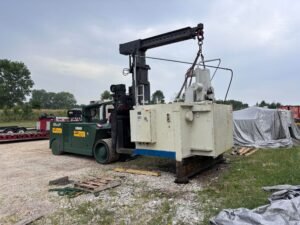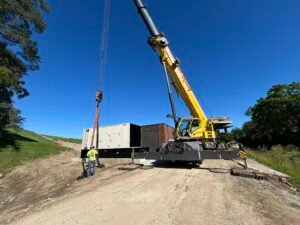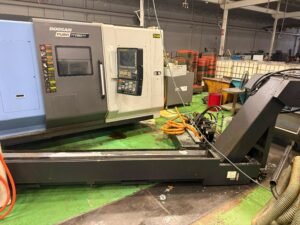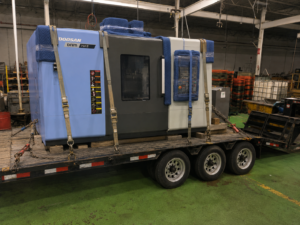
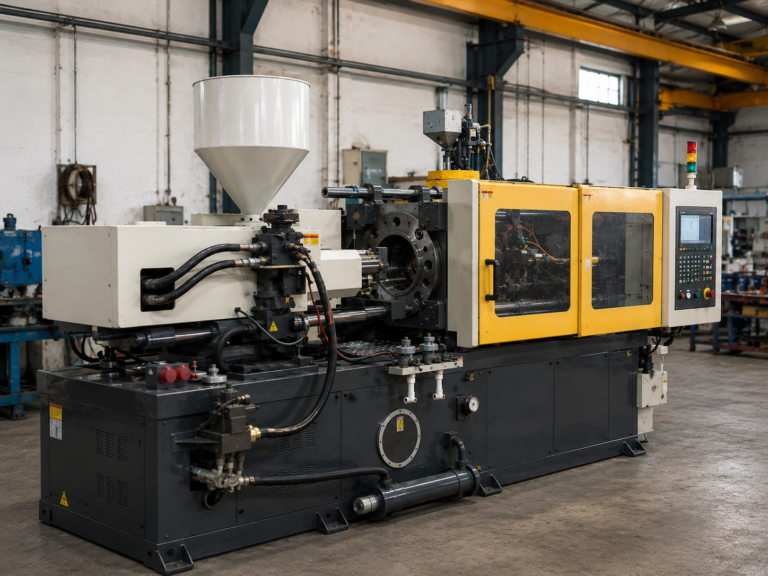
Plastic injection molding presses are among the most valuable — and most challenging — machines a manufacturing facility will ever need to relocate. Whether you’re consolidating plants, upgrading to a larger facility, or selling equipment to a new owner, moving a plastic injection molding press requires far more than a forklift and a flatbed truck. It demands specialized rigging knowledge, hydraulic and electrical expertise, and precision recommissioning to get the machine back into production without costly downtime.
In this guide, we’ll break down everything facility managers, plant engineers, and procurement teams need to know about injection press relocation — from pre-move planning to final alignment — so you can protect your investment and avoid the common mistakes that turn a routine move into an expensive disaster.
Why Injection Molding Press Relocation Is Different From Standard Machine Moving
At first glance, an injection molding press might not look as intimidating as, say, a CNC machining center or a boring mill. But its shape and internal systems make it one of the more technically demanding machines to move in any industrial setting.
Unlike compact, block-shaped equipment, injection presses are long, narrow, and asymmetrically weighted. The clamping unit, injection unit, hydraulic power pack, and control cabinet are often distributed unevenly across the machine’s footprint. This creates real rigging challenges: lift points that work for a boxy CNC mill simply won’t provide safe, balanced support for a 40-foot injection press.
Add in the hydraulic oil systems, electrical control panels, water-cooling lines, and precision tie-bar alignment requirements, and it becomes clear why moving a plastic injection molding press is a specialized discipline within industrial rigging — not a generic “heavy equipment moving” task.
How Much Does a Plastic Injection Molding Press Weigh?
One of the first questions any relocation project needs answered is weight — because everything from crane selection to trucking permits depends on it. Injection press weight scales directly with clamping tonnage, which is the industry’s standard way of sizing these machines.
| Clamping Force (Tonnage) | Typical Application | Approximate Weight |
|---|---|---|
| 50–200 tons | Small parts, consumer goods | 3,000–15,000 lbs |
| 300–600 tons | Mid-size automotive/industrial parts | 15,000–40,000 lbs |
| 700–1,500 tons | Large automotive, appliance housings | 40,000–100,000+ lbs |
| 2,000+ tons | Heavy automotive, structural components | 150,000–300,000+ lbs |
Most mid-market manufacturing shops operate presses in the 300–800 ton range, putting the machine’s dry weight somewhere between 20,000 and 60,000 pounds. That’s roughly the weight of a loaded semi-truck trailer — concentrated on a footprint that’s often narrower and less stable than you’d expect for that mass.
Knowing your exact tonnage and weight before requesting quotes helps ensure the rigging company brings the right cranes, dollies, and trailers on move day, rather than discovering equipment mismatches on site.
Step-by-Step: How Professionals Move an Injection Molding Press
A well-run injection press relocation follows a structured process. Skipping steps — or rushing them — is where most equipment damage and injury incidents occur.
1. Pre-Move Site Survey and Engineering Assessment
Before anything is touched, an experienced rigging team surveys both the origin and destination sites. This includes:
- Measuring doorways, hallways, and ceiling clearances at both locations
- Assessing floor load capacity, especially for machines resting on reinforced pads
- Identifying obstacles like support columns, overhead utilities, or tight turns
- Planning crane or rigging equipment placement and access routes
- Reviewing the machine’s OEM specifications for lift points and center of gravity
This survey determines whether the press can move fully assembled or whether partial disassembly is required — a critical decision that affects both cost and timeline.
2. Decommissioning: Safely Disconnecting the Machine
Decommissioning an injection press is not simply “unplugging it.” It involves several coordinated tasks:
- Hydraulic system drainage — Oil must be drained and lines capped to prevent leaks and environmental hazards during transport
- Electrical disconnection — Control panels, servo drives, and power feeds are de-energized and disconnected by qualified electricians
- Cooling line removal — Water-cooling circuits for the mold and barrel are drained and disconnected
- Barrel and hopper removal — On larger machines, the injection barrel, hopper, and feed throat are often removed separately to reduce overall length and weight during transport
- Tagging and documentation — Every hose, cable, and connection point is labeled to streamline reassembly at the destination
Proper decommissioning protects both the machine’s internal components and the crew handling it, while also reducing the risk of costly damage claims.
3. Rigging and Loading
Once decommissioned, the press is lifted using engineered rigging plans specific to its weight distribution. This typically involves:
- Spreader bars or custom lifting frames to maintain balance across the machine’s length
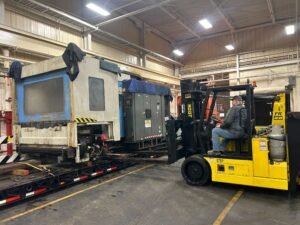
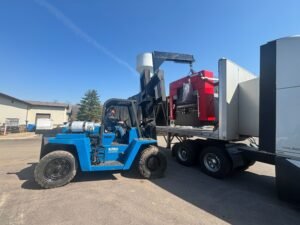
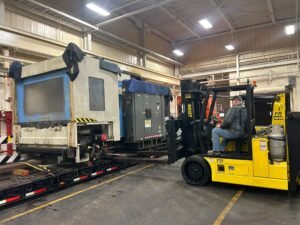
- Hydraulic gantries, cranes, or heavy-duty forklifts depending on weight and site access
- Machinery skates or rollers for moving the press across the shop floor to the loading point
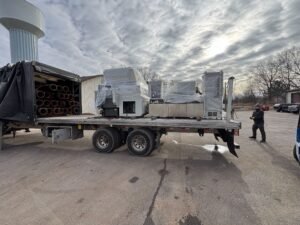
- Secure loading onto a flatbed, lowboy trailer, or shipping container, depending on distance and destination
For international or long-distance moves, presses (or their disassembled components) are often crated or containerized to protect against weather, vibration, and handling damage in transit.
4. Transport
Transport logistics depend heavily on total weight and dimensions. Oversized or overweight loads typically require:
- State and local permits for wide, tall, or heavy loads
- Route surveys to avoid low bridges, weight-restricted roads, or tight turns
- Pilot/escort vehicles for oversized shipments
- Air-ride trailers to minimize vibration damage to precision components
Interstate moves — like relocating a machine from one state to another — add another layer of regulatory complexity that only experienced heavy-haul carriers are equipped to manage.
5. Unloading and Positioning
At the destination, the reverse process begins: unloading via crane or forklift, moving the press into position on machinery skates, and precisely placing it on its foundation or reinforced pad. Larger presses (500+ tons) often require releveling or new foundation work at the new site to properly support the machine’s weight and absorb operational vibration.
6. Recommissioning: The Step That Determines Everything
This is where the real value of an experienced rigging partner shows. Recommissioning an injection press isn’t just reassembly — it’s precision engineering:
- Tie-bar and platen alignment — Even a few millimeters of misalignment can prevent molds from seating correctly, leading to flash, short shots, or damaged tooling
- Hydraulic system refill and bleed — Air must be fully purged from hydraulic lines to ensure consistent clamp pressure
- Electrical reconnection and testing — Servo drives, sensors, and safety interlocks are reconnected and function-tested
- Leveling and anchoring — The machine is precision-leveled using laser alignment tools before final anchoring
- Test runs and calibration — Dry cycles and trial shots verify the machine is performing to OEM specification before it’s handed back to production
A rushed or improperly executed recommissioning can cost a facility weeks of downtime and thousands in scrapped parts — far more than the cost of hiring an experienced rigging crew in the first place.
Common Challenges When Moving Injection Molding Presses
Doorway and Clearance Limitations
Many mid-to-large presses simply won’t fit through standard 8-10 foot bay doors when fully assembled. This often requires removing the injection barrel assembly or, in extreme cases, temporarily removing wall panels or overhead doors — something only experienced crews plan for in advance rather than discover on move day.
Uneven Weight Distribution
Because the clamping unit and injection unit carry different loads, standard forklift or generic rigging approaches can cause the machine to tip or shift during lifting. Custom-engineered lift plans are essential.
Hydraulic and Environmental Compliance
Improperly drained hydraulic systems can leak oil during transport, creating environmental liability and regulatory issues. Professional decommissioning follows environmental handling protocols to prevent spills.
Precision Realignment Demands
Injection molding is a tight-tolerance process. Unlike general manufacturing equipment where “close enough” might suffice, mold clamping and injection alignment must be dialed in to exact OEM tolerances — otherwise part quality suffers immediately.
Interstate Logistics and Permitting
Long-distance relocations — especially across state lines — involve DOT permitting, route restrictions, and coordination between origin and destination teams. Delays in permitting can stall an entire production transition plan.
What to Look for in an Injection Molding Press Moving Company
When evaluating industrial machine rigging services for a project like this, look for a provider who can demonstrate:
- Documented experience with injection presses specifically — not just generic heavy equipment moving
- In-house electrical and hydraulic disconnect/reconnect capability — avoids costly subcontractor coordination
- Engineered rigging plans — not generic lift procedures borrowed from other machine types
- Precision alignment and recommissioning expertise — including laser leveling tools
- Full-service capability — decommission, transport, and recommission under one provider reduces liability handoffs and communication gaps
- Proper insurance and permitting knowledge — especially for interstate or oversized loads
- A track record with similar heavy machinery — CNC machining centers, vertical boring machines, printing presses, and other precision equipment
Asking for references or case studies involving similarly sized presses is one of the best ways to vet a provider before committing to a move date.
Why Alltracon Is the Best Choice for Injection Press Relocation
Alltracon brings decades of combined rigging expertise to every injection molding press move — handling decommissioning, transport, and precision recommissioning in-house. From small 100-ton presses to large 1,000+ ton machines, our crews manage hydraulic, electrical, and alignment work with zero subcontractor handoffs, minimizing downtime and risk for your production line.
Frequently Asked Questions
How much does it cost to move a plastic injection molding press? Costs vary widely based on tonnage, distance, and site complexity, but most mid-size press relocations (300–600 ton) range from a few thousand dollars for local moves to tens of thousands for interstate relocations involving permitting, disassembly, and precision recommissioning.
How long does it take to relocate an injection molding press? A typical mid-size press relocation, including decommissioning, transport, and recommissioning, takes anywhere from 3 to 10 business days depending on distance and the complexity of realignment at the new site.
Can an injection molding press be moved without draining the hydraulic system? No. Hydraulic oil must always be drained and lines capped before transport to prevent leaks, environmental hazards, and pressure-related damage during shipping.
Do I need special permits to transport a large injection press? Yes, in most cases. Machines exceeding standard legal weight or dimension limits require oversize/overweight permits, and interstate moves often require permits in every state the shipment passes through.
What’s the biggest risk when moving an injection molding press? Improper rigging due to uneven weight distribution is the leading cause of damage during injection press moves, followed by misalignment during recommissioning, which directly affects part quality once production resumes.
Final Thoughts
Relocating a plastic injection molding press is a high-stakes project that goes far beyond basic heavy equipment moving. From understanding the machine’s true weight and balance characteristics to executing a precision recommissioning that restores full production accuracy, every step requires specialized expertise. Facilities that invest in an experienced, full-service rigging partner protect not just the machine itself, but the production timelines and part quality that depend on it.
Whether you’re planning a single-machine move or a full plant relocation involving multiple presses, CNC centers, and heavy machinery, partnering with a team that understands the unique demands of plastic injection mold press moving is the difference between a smooth transition and an expensive setback.