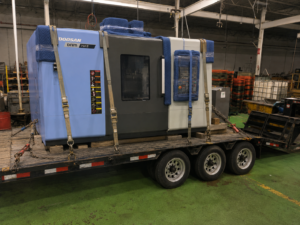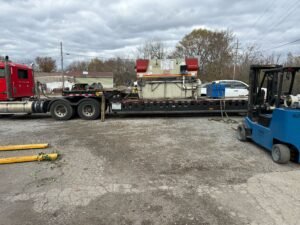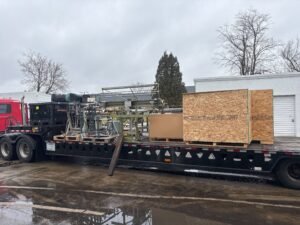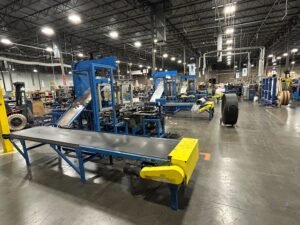
Relocating a manufacturing plant is one of the most disruptive events a business can go through. Machinery has to be disconnected, transported, and recommissioned. Skilled labor has to be redeployed. Supply chains have to be rerouted. And through all of it, customers still expect their orders on time. The companies that handle a plant move well aren’t the ones with the biggest budgets — they’re the ones with the most disciplined planning process. This guide walks through exactly how to keep production running or minimize downtime during a plant relocation, from the earliest planning stages to the final machine startup at the new facility.
Why Plant Relocations Are So Disruptive
A plant move touches every part of a business at once. Unlike a typical capital project, which usually affects one department or one process line, a relocation affects production, logistics, HR, IT, safety, and customer service simultaneously. Heavy equipment has to be de-installed and reinstalled with precision. Utilities — power, compressed air, water, ventilation — have to be matched or upgraded at the new site. Employees may need to commute farther or relocate themselves. And any gap in production can mean missed shipments, contract penalties, or lost customers to competitors.
The businesses that struggle most with relocations are usually the ones that treat it as a single event — “we’ll shut down, move, and reopen.” The businesses that succeed treat it as a phased operation with overlapping timelines, redundancy built in, and a relentless focus on sequencing.
Step 1: Start Planning Far Earlier Than Feels Necessary
The single biggest predictor of relocation downtime is how early planning began. Most experienced facility managers recommend starting formal relocation planning 6 to 12 months before the target move date for a mid-sized plant, and 12 to 18 months for larger, equipment-heavy operations.
Early planning should answer:
- What is the absolute minimum footprint of equipment needed to keep shipping product?
- Which machines are the true bottlenecks, and which ones can be duplicated or temporarily rented at the new site before the originals arrive?
- What is the realistic lead time for reinstalling and recalibrating each major piece of equipment?
- Are there any single points of failure — one machine, one skilled operator, one supplier — that the entire relocation timeline depends on?
Building a full equipment inventory early, including make, model, age, utility requirements, rigging weight, and any special handling needs, gives the relocation team something to plan against instead of guessing.
Step 2: Map the Move Around Your Bottleneck Equipment
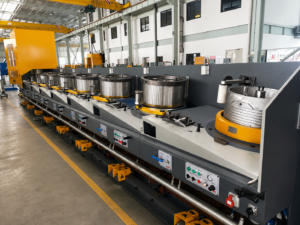
Every plant has a handful of machines that determine overall throughput — the CNC line, the press, the CMM room, the paint booth, the extrusion line. These bottleneck assets deserve their own dedicated relocation plan, separate from the general moving schedule.
For each bottleneck machine, document:
- Disconnection and reconnection procedures, including who is qualified to perform them
- Rigging and transport requirements (weight, dimensions, fragile components, calibration sensitivity)
- Utility hookups needed at the new site (voltage, amperage, air pressure, water lines, dedicated ventilation)
- Recommissioning and calibration time once it arrives
Moving the bottleneck equipment first — or moving it last, depending on your production strategy — is a decision that should be made deliberately, not by default. Many companies choose to move non-critical equipment first to prove out the new facility’s utilities and layout before risking the most valuable machines.
Step 3: Choose a Relocation Strategy That Matches Your Risk Tolerance
There isn’t one right way to relocate a plant. The right strategy depends on how much downtime your business can absorb, how much duplicate capacity you can afford, and how far apart the two sites are.
Phased Relocation
Equipment and production lines move in stages, with some lines still running at the old site while others come online at the new one. This is the most common approach for mid-to-large facilities because it limits the amount of simultaneous downtime. The tradeoff is a longer overall timeline and the operational complexity of running two sites at once.
Parallel Run
The new facility is fully set up and tested before the old one shuts down. This gives the smoothest transition and the lowest risk of a production gap, but it requires the capital and space to essentially run two plants for a period of time — not realistic for every business.
Hard Cutover
The old plant shuts down, equipment moves, and the new plant starts up, with a defined (and usually short) downtime window in between. This is the fastest and cheapest approach on paper, but it carries the highest risk if anything goes wrong with rigging, transport, or reinstallation.
Hybrid Approach
Many companies blend strategies — using a hard cutover for low-risk, easily replaceable equipment while running a phased or parallel approach for bottleneck machinery. This is often the most practical middle ground for businesses that can’t afford a full parallel run but also can’t tolerate an extended hard cutover.
Step 4: Build Inventory and Capacity Buffers Before the Move
One of the simplest ways to protect customer commitments during a relocation is to build ahead. If your product allows it, increasing finished goods inventory in the weeks leading up to the move creates a buffer that absorbs downtime without missing shipments.
Where inventory buffering isn’t practical — custom manufacturing, made-to-order products, perishable goods — look at temporary capacity options instead:
- Contract manufacturing or co-packing arrangements for the transition window
- Renting duplicate equipment at the new site so it’s operational before the original machines arrive
- Running overtime shifts in the weeks before the shutdown to build a cushion
- Negotiating short lead-time extensions with key customers in advance, rather than surprising them mid-move
Customers are almost always more understanding about a temporary slowdown they were warned about in advance than one that shows up as a missed shipment with no explanation.
Step 5: Sequence the Rigging and Transport Carefully
The physical move is where relocation plans most often go wrong, usually because sequencing wasn’t thought through in enough detail. A few principles that experienced riggers and movers apply:
- Disconnect in reverse installation order. Utilities and ancillary equipment usually need to come off before the main machine can be safely rigged.
- Protect calibrated and sensitive equipment separately. Coordinate measuring machines, precision optics, and anything temperature- or vibration-sensitive typically needs specialized crating, climate-controlled transport, and a slower, more deliberate rigging process than general equipment.
- Label and photograph everything before disassembly. Every cable, hose, and bracket should be tagged so reassembly doesn’t turn into guesswork.
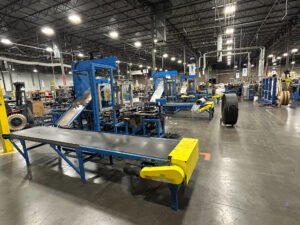
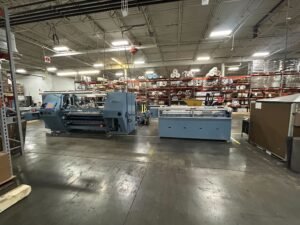
- Stage equipment at the new site by installation priority, not by arrival order. The truck that shows up first shouldn’t dictate what gets installed first — the production plan should.
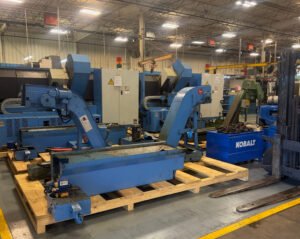
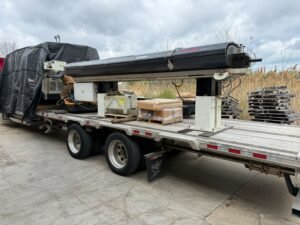
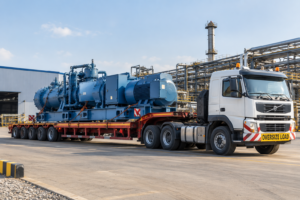
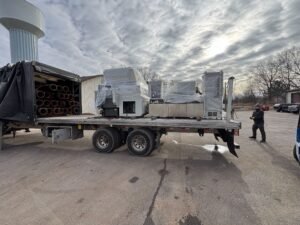
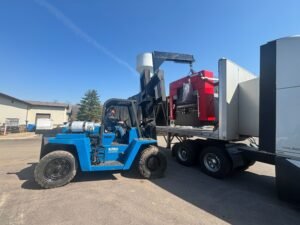
- Use riggers and movers with industrial equipment experience specifically, not general freight movers. Heavy machinery has center-of-gravity, weight-distribution, and fragility considerations that generic movers aren’t trained for.
Step 6: Get Utilities and Facility Readiness Sorted Before Equipment Arrives
A shockingly common cause of relocation delay isn’t the equipment move itself — it’s arriving at a new facility where the power, air, or water isn’t actually ready to support the machines. Before any equipment ships, confirm:
- Electrical service matches the voltage and amperage requirements of every major machine, with capacity for future growth
- Compressed air, water, and drainage systems are installed and tested
- Floor loading capacity can support the weight of heavy equipment, especially on upper floors or in retrofitted buildings
- Ventilation, dust collection, and any environmental controls are operational
- Permits, occupancy approvals, and any required inspections are complete — this one alone can delay a move by weeks if it’s left until the last minute
Doing a full utility walkthrough with your equipment list in hand, machine by machine, well before the move date, catches mismatches while there’s still time to fix them.
Step 7: Plan for Your People, Not Just Your Machines
Equipment gets most of the attention in a relocation plan, but production doesn’t run without trained people standing at the machines. A few things worth building into the plan:
- Assess retention risk early. If the new site is a meaningful commute change, some employees may not make the move. Identify these risks months in advance so recruiting and training can start before the gap becomes a production problem.
- Cross-train before the move, not during it. If a single operator is the only person who knows how to run a critical machine, that’s a risk worth addressing while there’s still time.
- Involve maintenance and operations staff in the relocation planning, not just management and the moving contractor. The people who run the machines every day often know disconnection quirks, calibration sensitivities, and workarounds that don’t show up in any manual.
- Communicate the timeline clearly and often. Uncertainty about job security or schedule during a move is one of the fastest ways to lose good people mid-project.
Step 8: Build In Recommissioning and Calibration Time
Getting a machine physically moved is often the easy part. Getting it back to full production accuracy is where timelines slip. Precision equipment — CNC machines, CMMs, robotic cells, anything with fine calibration — usually needs to sit and stabilize at the new site’s temperature and humidity before it can be recalibrated accurately. Rushing this step can produce equipment that appears to be running but is quietly out of tolerance, which is far more costly to discover later than a few extra days of downtime up front.
Build a realistic recommissioning schedule for each major machine that includes:
- Physical reinstallation and reconnection
- Environmental stabilization time (especially for anything temperature-sensitive)
- Calibration and test runs
- A first-article inspection or quality check before full production resumes
Step 9: Have a Contingency Plan for What Goes Wrong
Even the best-planned relocations hit surprises — a piece of equipment gets damaged in transit, a permit gets delayed, a key employee doesn’t make the move. Building contingency options into the plan from the start makes these setbacks manageable instead of catastrophic.
Useful contingencies include:
- A short list of backup riggers or equipment movers in case your primary contractor has a scheduling conflict
- Identified contract manufacturers who could absorb overflow production temporarily
- A communication plan for notifying key customers quickly if a delay does occur, with a revised timeline
- Insurance coverage specifically for equipment in transit and during reinstallation, verified before the move — not discovered after a claim is needed
Step 10: Communicate the Plan Across the Entire Organization
A relocation plan only works if the people executing it actually know what’s supposed to happen and when. This sounds obvious, but it’s one of the most common gaps in real-world moves. A detailed master schedule that lives in one project manager’s inbox doesn’t help the floor supervisor who needs to know which line shuts down on which day.
Effective relocation communication usually includes:
- A shared master timeline visible to every department involved
- Clear ownership for each phase — who’s responsible for utilities, who’s responsible for rigging, who’s responsible for IT and network cutover
- Regular check-ins during the active move window, not just monthly planning meetings months in advance
- A single point of contact for questions during the move itself, so decisions don’t stall waiting on the wrong person
Bringing It All Together
Keeping production running during a plant relocation comes down to a small number of disciplines applied consistently: start planning early, understand exactly which equipment your production depends on most, choose a relocation strategy that matches your actual risk tolerance, build buffers before you need them, and treat the physical move as a carefully sequenced operation rather than a single event. None of this eliminates risk entirely — a relocation is inherently disruptive — but it turns an unpredictable, high-stakes event into a manageable project with a known timeline and a clear path back to full production.
The plants that come through a relocation with the least disruption are almost always the ones that invested the most in planning before a single machine was ever unbolted from the floor.
Why Alltracon Is the Right Partner for Your Plant Relocation
Moving heavy industrial equipment without disrupting production takes more than a truck and a crew — it takes riggers and movers who understand machine sequencing, utility timing, and the real cost of unplanned downtime. Alltracon specializes in exactly this kind of heavy equipment relocation, bringing the rigging expertise, specialized transport equipment, and project coordination needed to move sensitive, high-value machinery safely and get it back into production fast. For manufacturers who can’t afford a botched move, Alltracon’s experience turns a high-risk relocation into a well-managed project from disconnection to final startup.