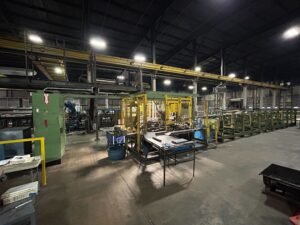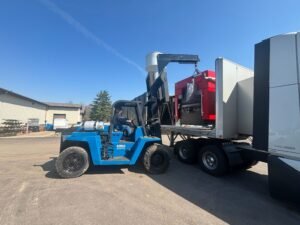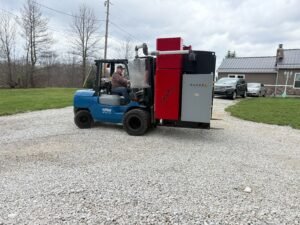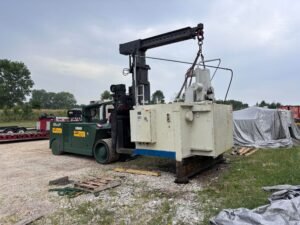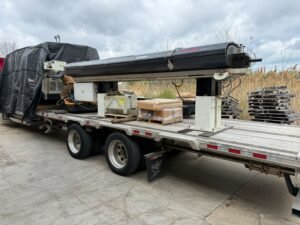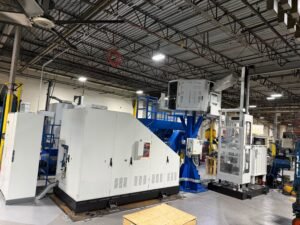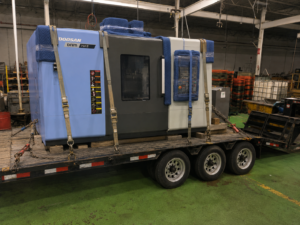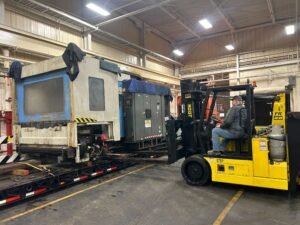
Wire drawing machines are among the most demanding pieces of equipment to relocate in the entire heavy machinery moving industry. These machines aren’t just heavy — they’re precision-engineered systems with tight tolerances, delicate die assemblies, sensitive tension controls, and electronic components that can be thrown out of calibration by a single careless lift. Add heavy coils of wire into the mix, often weighing several tons each, and you have a relocation project that leaves almost no room for error.
Whether you’re relocating a single-block wire drawing machine within a facility, moving a multi-block drawing line across state lines, or decommissioning an entire wire mill for a plant closure, understanding what it actually takes to move this equipment safely is essential — both for planning your project and for choosing the right rigging and moving partner.
This guide breaks down everything facility managers, plant engineers, and operations teams need to know about moving wire drawing machines: what makes them uniquely challenging to relocate, the equipment and techniques professionals use, how heavy coil handling factors into the process, and how to protect your investment from the first disconnection to final reinstallation.
What Is a Wire Drawing Machine?
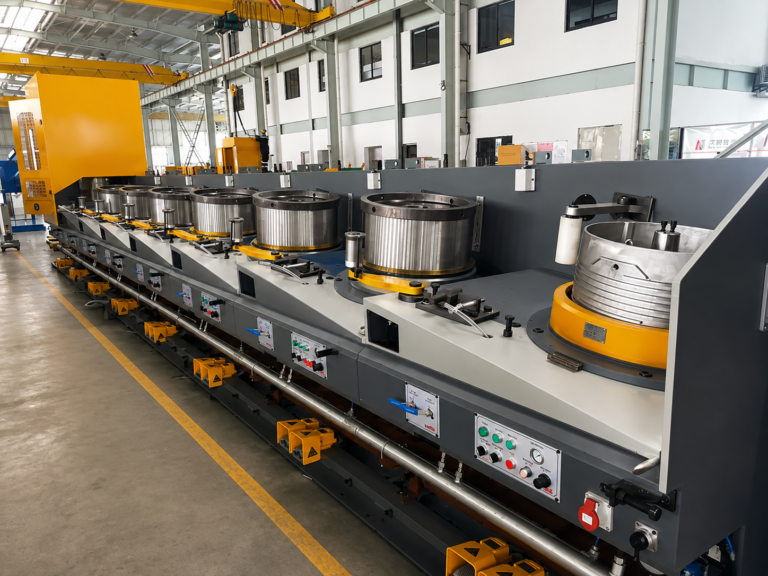
A wire drawing machine reduces the diameter of metal wire by pulling it through a series of dies, each slightly smaller than the last. The wire is fed from a large incoming coil, drawn progressively through multiple dies (in multi-block or “continuous” machines), and re-coiled or spooled at the output end. Along the way, the wire passes through lubrication systems, cooling baths, annealing sections, and tension-control mechanisms that keep the draw consistent and prevent breakage.
These machines fall into a few broad categories, each with different moving considerations:
- Single block draw machines — simpler, often used for coarse or intermediate wire sizes, and generally lighter and less complex to relocate.
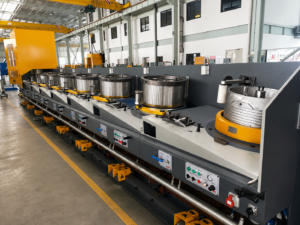
- Multi-block (tandem) draw machines — a series of capstans and dies in sequence, used for fine wire production. These are long, multi-section machines that typically must be broken down into segments for a move.
- Fine wire and micro-wire drawing machines — extremely precise, often housed in climate-controlled rooms, with delicate optical and electronic sensors that require extraordinary care during transport.
- Bull block and rod breakdown machines — used earlier in the process to reduce rod stock into drawable wire, these tend to be heavier and more compact than fine-wire lines.
Regardless of type, every wire drawing machine shares certain traits that make relocation a specialized task: long, low-clearance profiles, embedded electrical and hydraulic systems, precision-aligned components, and — critically — the heavy coils of wire and rod stock that accompany them.
Why These Machines Are So Difficult to Relocate
1. Precision Alignment Is Everything
Wire drawing machines depend on extremely tight tolerances between dies, capstans, and guide rollers. Even a fraction of a millimeter of misalignment after a move can cause wire breakage, inconsistent diameters, or premature die wear once the machine is back in production. This means a mover can’t simply lift and set the machine down — every section must be releveled, realigned, and recalibrated during reinstallation, often with the help of laser alignment tools and precision shims.
2. Extreme Length and Segmented Construction
Multi-block drawing lines can run 30, 50, or even 100+ feet in length. These machines are rarely designed to be moved as a single unit. Instead, they must be carefully disassembled into transportable sections, each of which needs to be tagged, documented, and matched with detailed reassembly notes so the line goes back together in the exact same configuration.
3. Sensitive Electronics and Control Systems
Modern wire drawing machines are run by PLCs, servo drives, tension sensors, and speed controllers that are calibrated to the specific mechanical characteristics of that machine. Rough handling, vibration during transport, or improper disconnection procedures can damage sensors or corrupt calibration data, leading to costly recommissioning delays.
4. Heavy, Unwieldy Coils
Wire coils — especially rod stock and semi-finished wire coils used as feedstock — can weigh anywhere from a few hundred pounds to several tons depending on the wire gauge and material. These coils are often stored on pay-off reels or de-coiler stands that must be moved alongside the machine itself. Coils are awkward to rig: their round profile makes them prone to shifting or rolling if not properly secured, and their weight is concentrated in a way that requires specific lifting attachments (coil hooks, C-hooks, or lifting beams) rather than generic slings.
5. Foundation and Anchoring Requirements
Larger wire drawing machines are often bolted to reinforced concrete foundations to control vibration during operation. Removing and later reinstalling this type of equipment requires foundation work — breaking old anchor points, potentially pouring new foundations at the destination, and ensuring the new site meets the same vibration-dampening requirements as the original installation.
Pre-Move Planning: The Foundation of a Successful Relocation
Before a single bolt is loosened, a professional rigging and moving team should conduct a full site survey and engineering review. This typically includes:
Equipment assessment. Documenting the exact make, model, weight, dimensions, and center of gravity of each section of the machine, along with the weight and dimensions of any coils, reels, or de-coilers being moved alongside it.
Route and access survey. Measuring doorways, hallways, floor load ratings, overhead clearances, and outdoor paths at both the origin and destination facilities. Wire drawing lines are long and low, but their associated coil-handling equipment can be tall and heavy, so both dimensions matter.
Rigging plan development. Determining what lifting equipment — cranes, gantries, hydraulic gantries, rigger skates, or forklifts — will be used for each stage of the move, and calculating load paths to avoid exceeding floor capacity anywhere along the route.
Disassembly sequencing. Establishing the order in which sections, guards, control cabinets, and coil-handling attachments will be removed, labeled, and packed, along with a corresponding reassembly sequence for the destination.
Utility disconnection coordination. Scheduling qualified electricians and, where applicable, hydraulic/pneumatic technicians to safely disconnect power, control wiring, and fluid lines before the mechanical rigging team begins work.
Transportation logistics. Selecting the right trailers (flatbeds, step-decks, or specialized coil-carrying trailers) and securing any necessary permits for oversized or overweight loads.
Skipping or rushing this planning phase is where most equipment-moving disasters originate — not during the lift itself, but in the failure to anticipate a clearance issue, an underrated floor, or a miscommunication about reassembly order.
The Physical Move: Step-by-Step Process
Disconnection and Preparation
The process begins with a complete lockout/tagout of all electrical, hydraulic, and pneumatic systems. Control cabinets are disconnected, cables are labeled at both ends, and any fluids (lubricants, coolants, hydraulic oil) are drained and stored per environmental regulations. Sensitive components — sensors, encoders, drive motors — are often removed separately and packed in cushioned crates rather than left mounted during transport.
Disassembly
Depending on the length and configuration of the line, the machine is broken down into logical sections — typically at the natural joints between capstan blocks, die boxes, or accumulator sections. Each section is measured, weighed, and photographed before removal so the rigging crew and reassembly team have a clear reference.
Rigging and Lifting
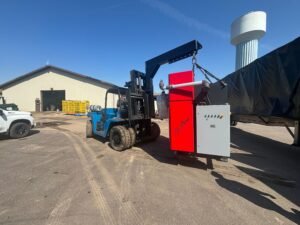
This is where experience matters most. Wire drawing machine sections are often long and narrow, which makes them prone to tipping if lifted incorrectly. Riggers use a combination of spreader bars, lifting beams, and multi-point slinging to keep the load balanced and level throughout the lift. For very heavy or awkward sections, hydraulic gantries or mobile cranes rated well above the calculated load weight are used, with all lifts planned around a clear center-of-gravity calculation.
Heavy Coil Handling
Coils require a different rigging approach than the machine itself. Because of their circular shape and concentrated mass, coils are typically lifted using:
- C-hooks or coil hooks, which slide through the coil’s eye and distribute the lift evenly around the inner diameter.
- Coil lifting beams, used when multiple coils need to be moved together or when overhead clearance limits vertical hook height.
- Cradle-style coil grabs, which clamp the coil from the outside without requiring access through the eye — useful for coils stored on their side.
Coils must also be secured for transport with proper blocking and bracing to prevent rolling inside the trailer, and weight distribution across the trailer axles must be calculated carefully given how concentrated coil weight can be.
Transportation
Once loaded, sections are transported using appropriately rated trailers, with oversized load permits and escort vehicles arranged in advance if any section exceeds standard legal dimensions. Climate-sensitive components, particularly electronics and precision-machined parts, are often transported in climate-controlled or cushioned enclosures to prevent condensation or shock damage.
Reinstallation and Realignment
At the destination, the process reverses: sections are set onto prepared foundations, bolted and shimmed to level, and reassembled in the documented sequence. This is followed by precision alignment of capstans, dies, and guide systems — often using laser alignment tools — before electrical and control systems are reconnected and tested.
Commissioning and Test Runs
Before full production resumes, the machine typically undergoes a commissioning phase: dry runs without wire, followed by test draws at reduced speed, with tension and alignment fine-tuned based on real performance data. Only after these tests pass is the line cleared for full production.
Common Mistakes That Lead to Costly Delays
- Underestimating coil weight when planning trailer loads and floor load paths, leading to permit issues or structural damage.
- Failing to document cable and hose connections before disconnection, causing confusion and rework during reinstallation.
- Using generic rigging slings on coils instead of proper coil hooks or cradles, risking dropped loads or coil deformation.
- Skipping foundation inspection at the destination site, only to discover the new floor can’t support the machine’s point loads.
- Not involving the original equipment manufacturer or a qualified technician in realignment and recommissioning, resulting in prolonged downtime.
Choosing the Right Moving Partner
Given the complexity involved, the single biggest factor in a successful wire drawing machine relocation is choosing a rigging and machinery moving company with genuine experience in heavy industrial equipment — not just general freight or generic machinery movers. Look for a provider who can demonstrate:
- Experience specifically with wire mills, rod breakdown lines, or similar precision drawing equipment
- In-house rigging engineers capable of producing a detailed lift plan and load path analysis
- Proper coil-handling equipment (C-hooks, coil beams, cradles) rather than improvised rigging
- A track record of coordinating electrical, mechanical, and foundation trades on a single project timeline
- Comprehensive insurance coverage appropriate for high-value industrial equipment
Asking for references from similar wire and cable industry relocations — and, ideally, speaking directly with a past client — is one of the best ways to verify a mover’s real-world capability before committing to a contract.
Conclusion
Moving a wire drawing machine is not a job for general movers or an undertrained rigging crew. Between the precision alignment requirements, the segmented and often lengthy machine construction, sensitive electronic systems, and the sheer physical challenge of handling multi-ton coils, this is specialized work that demands specialized expertise. A well-planned relocation — backed by thorough site surveys, proper rigging equipment, and a detailed reassembly and recommissioning process — can get a wire drawing line back into production quickly and without damage. A poorly planned one can cost weeks of downtime, damaged equipment, and expensive rework.
For plant managers and operations teams, the takeaway is simple: invest the time upfront in planning, and invest in a moving partner who has actually handled equipment like this before. The cost of doing it right is almost always lower than the cost of doing it twice.
Why Alltracon Is the Best Choice for Wire Drawing Machine Relocation
When it comes to moving heavy, precision equipment like wire drawing machines, Alltracon stands out as a trusted partner for manufacturers across Ohio and beyond. With deep experience in heavy equipment rigging and machinery moving, Alltracon’s team understands the unique demands of handling multi-ton coils, disassembling long production lines, and realigning precision components during reinstallation. From detailed pre-move site surveys to specialized coil-handling equipment and careful reassembly, Alltracon manages every stage of the relocation with the care these machines require — helping plants minimize downtime and get back to production without costly missteps.