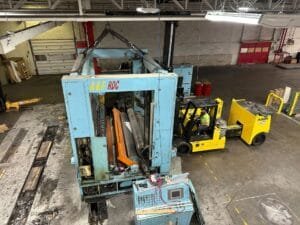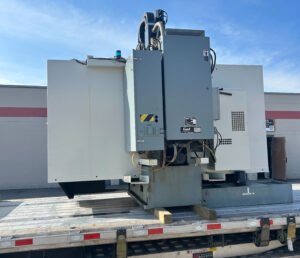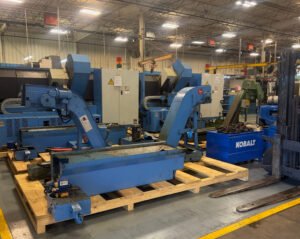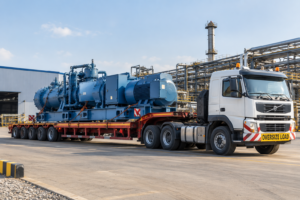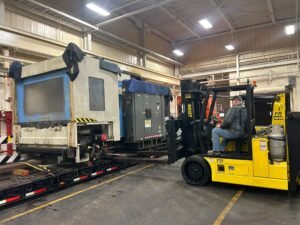
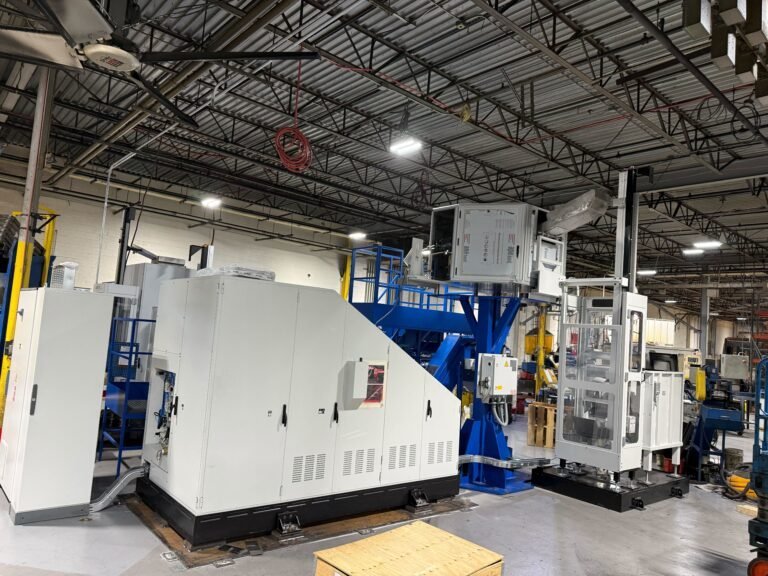
Cold forging equipment plays a critical role in modern manufacturing, especially in industries that produce fasteners, automotive components, aerospace parts, industrial hardware, precision metal parts, and high-volume formed components. These machines are built for strength, repeatability, and continuous production, but their size and weight make them challenging to move, install, or relocate. Whether a facility is receiving a new cold forging machine, moving existing equipment across the plant, loading machinery for transport, or preparing for a full production line relocation, proper rigging practices are essential.
Heavy cold forging equipment can weigh tens of thousands of pounds, and in some cases, large forging presses or multi-station cold formers may exceed 100,000 pounds. These machines often have complex center-of-gravity points, sensitive alignment requirements, lubrication systems, hydraulic components, electrical controls, feed mechanisms, and tooling areas that must be protected during handling. A poorly planned move can result in equipment damage, production delays, safety risks, floor damage, or costly downtime.
This guide explains the best practices for heavy cold forging equipment rigging, including planning, site preparation, safety requirements, equipment selection, lifting methods, transport considerations, unloading, placement, and final positioning.
What Is Cold Forging Equipment?
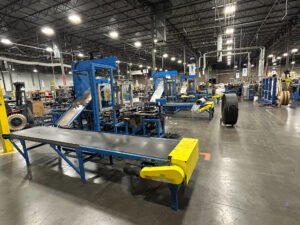
Cold forging equipment is used to shape metal at or near room temperature through high pressure rather than heat. Instead of melting or cutting the material, the machine forms metal blanks, wire, or billets into a desired shape using dies, punches, headers, presses, or multi-station forming systems. This process improves material strength, reduces waste, and supports high-volume production.
Cold forging equipment may include:
- Cold heading machines
- Multi-station cold formers
- Bolt and nut forming machines
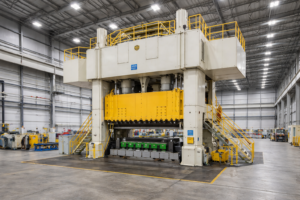
- Cold forging presses
- Thread rolling machines
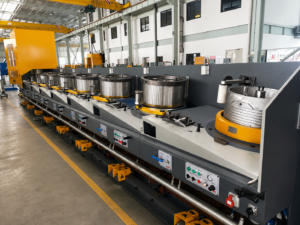
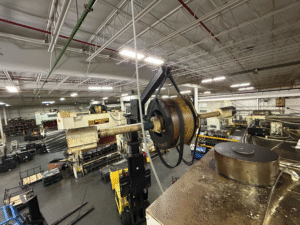
- Wire drawing and feeding systems
- Hydraulic and mechanical press systems
- Die and tooling handling equipment
Because these machines operate under extreme force, they are built with heavy frames, reinforced bases, large drive systems, and precision components. Rigging them requires more than simple lifting. It requires a complete understanding of weight distribution, structural lifting points, floor load limits, machine geometry, and production requirements.
Why Heavy Cold Forging Equipment Requires Specialized Rigging
Moving cold forging equipment is not the same as moving general shop machinery. These machines are often compact but extremely heavy. A cold former may have dense internal components, a heavy flywheel, a large motor, integrated hydraulic units, and tooling sections that shift the center of gravity away from the visible center of the machine.
The risk is not only related to weight. Precision is also a major concern. Cold forging equipment must often be leveled accurately, anchored correctly, and aligned with other production systems. Even a small error during placement may affect machine performance, tool life, part quality, or production speed.
Professional rigging is important because it helps protect:
- Workers and nearby personnel
- Machine frame and base structure
- Electrical panels and control systems
- Hydraulic and lubrication components
- Feed systems and tooling areas
- Facility floors, doors, and walls
- Production timelines and installation schedules
A well-planned rigging project reduces the chance of unexpected problems. It also helps facility managers coordinate machinery movement with production needs, maintenance schedules, utility disconnections, trucking, and installation teams.
Start With a Detailed Rigging Plan
Every successful cold forging equipment move begins with a detailed rigging plan. The plan should define the equipment being moved, the route, required tools, crew responsibilities, safety controls, and timeline. For heavy machinery, assumptions can quickly become expensive. Before any lifting begins, the rigging team should understand the exact machine specifications and site conditions.
Important planning details include:
- Machine make, model, dimensions, and weight
- Center of gravity and manufacturer lifting instructions
- Available lifting points or approved rigging points
- Current machine location and destination location
- Door widths, ceiling heights, floor conditions, and travel path
- Required forklifts, cranes, gantries, skates, jacks, or transport equipment
- Utility disconnection and reconnection requirements
- Anchor bolt removal and foundation details
- Loading dock, truck access, and outdoor staging area
- Safety barriers, permits, and communication procedures
The plan should also include contingency steps. Heavy equipment moves can be affected by uneven flooring, limited overhead clearance, tight corners, weak slabs, weather, truck delays, or unexpected machine modifications. A reliable rigging company will identify these risks before the move begins.
Conduct a Pre-Rigging Site Survey
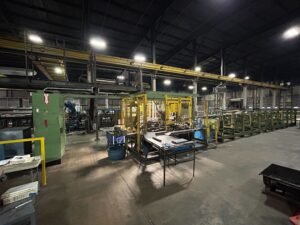
A pre-rigging site survey is one of the most important steps in the process. This allows the rigging team to inspect the facility, measure clearances, evaluate flooring, and confirm the safest way to move the equipment. Many cold forging machines are located in busy production environments where space is limited and nearby machines may still be operating.
During the survey, the team should check the entire path from the machine’s current position to the final loading or placement point. This includes aisles, doorways, overhead obstructions, mezzanines, utility lines, pits, drains, ramps, and loading areas. It is also important to check whether the machine will need to be lifted over other equipment or rotated through tight spaces.
Floor condition deserves special attention. Cold forging machines can be extremely heavy over a small footprint. If the floor slab is not designed for the load, the rigging team may need to use steel plates, cribbing, load-spreading mats, or alternative movement methods. In some cases, structural engineering input may be required.
A site survey also helps determine whether the machine can be moved as one piece or whether certain components should be removed before rigging. Guards, conveyors, feed lines, electrical cabinets, hydraulic tanks, chip pans, tooling attachments, or accessory equipment may need to be separated, labeled, and transported independently.
Verify Machine Weight and Center of Gravity
Accurate weight verification is essential for safe rigging. Many facilities rely on old equipment manuals, purchase documents, or estimate sheets, but machine weight may change over time due to modifications, accessories, tooling, fluid, or added control systems. Whenever possible, the team should confirm the manufacturer’s specifications and inspect the machine configuration.
The center of gravity is just as important as total weight. Cold forging machines may have uneven weight distribution because of the motor, flywheel, press frame, die section, hydraulic power unit, or feed mechanism. If the center of gravity is not understood, the machine can tilt, rotate, or become unstable during lifting.
For overhead lifting, sling angles and attachment points must be selected carefully. For forklift movement, fork placement and load balance must be evaluated. For skidding or rolling, the machine must remain stable as it moves across the floor.
Ignoring the center of gravity is one of the most dangerous mistakes in heavy machinery rigging. A machine that appears stable at rest can shift unexpectedly during lifting, turning, or loading. That is why experienced riggers use proper calculations, test lifts, and controlled movement techniques.
Prepare the Cold Forging Machine Before Moving
Before a cold forging machine is moved, it should be properly prepared. This step helps prevent damage and makes the rigging process safer. Preparation usually involves coordination between the facility maintenance team, machine operators, electricians, and rigging crew.
Key preparation steps include:
- Shut down the machine according to manufacturer instructions
- Disconnect electrical power safely and apply lockout/tagout procedures
- Drain or secure hydraulic fluid, lubricants, and coolants if required
- Remove loose tooling, dies, punches, guards, and accessories
- Secure moving components, feed mechanisms, and control arms
- Label cables, hoses, panels, and disconnected components
- Protect sensitive controls, screens, sensors, and exposed parts
- Remove anchor bolts and inspect the base for hidden fasteners
- Clean the surrounding area and clear the travel path
- Photograph the machine before disassembly for reference
Preparation should not be rushed. Cold forging machines often include high-force mechanical parts and heavy tooling. Loose components can shift during movement, creating safety hazards or damaging the machine. Proper labeling also makes reinstallation faster and reduces confusion when the machine reaches its new location.
Select the Right Rigging Equipment
The rigging equipment should match the machine’s weight, shape, route, and lifting requirements. Choosing equipment based only on capacity is not enough. The team must also consider reach, clearance, turning radius, floor pressure, lifting height, stability, and access around the machine.
Common rigging equipment for cold forging machinery includes:
- Hydraulic gantry systems for controlled lifting in tight spaces
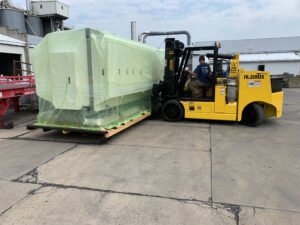
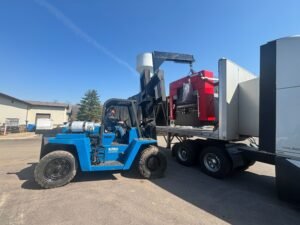
- Forklifts with proper capacity and fork length
- Versa-Lift or machinery-moving forklifts for heavy industrial loads
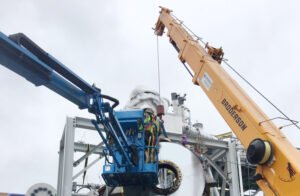
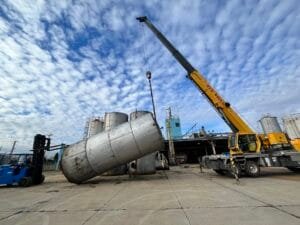
- Crane systems for overhead lifting or outdoor loading
- Machinery skates and rollers for in-plant movement
- Toe jacks and hydraulic jacks for lifting from low clearance points
- Cribbing and blocking for stable support
- Spreader bars, shackles, slings, chains, and lifting beams
- Steel plates or mats for floor protection and load distribution
- Flatbed, step-deck, or specialized transport trailers
Each piece of equipment must be inspected before use. Slings, chains, hooks, shackles, and lifting devices should be rated for the load and used within their safe working limits. The rigging crew should also account for sling angles, shock loading, and dynamic movement. A load that is safe under ideal conditions can become unsafe if the lift angle is poor or the machine shifts unexpectedly.
Use Proper Lifting and Load Control Techniques
Heavy cold forging equipment should always be lifted slowly and under full control. A test lift is often recommended before the machine is fully raised. This allows the rigging crew to confirm balance, stability, sling tension, and center-of-gravity behavior.
During the lift, the team should maintain clear communication. Only authorized personnel should be near the load, and one person should be responsible for directing the lift. Tag lines may be used to control rotation when appropriate, but workers should never place themselves under or near a suspended load.
Good load control includes:
- Lifting from manufacturer-approved points whenever available
- Keeping the load as low as safely possible during movement
- Avoiding sudden starts, stops, or turns
- Maintaining balanced sling tension
- Preventing side loading on lifting devices
- Using cribbing when the machine must be supported temporarily
- Keeping workers outside the fall zone
- Monitoring machine movement continuously
Cold forging equipment may contain parts that are not designed to carry the full machine weight. For example, guards, housings, covers, motors, feed rails, and accessory brackets should not be used as lifting points unless specifically approved. Improper lifting can distort frames, crack castings, damage bearings, or misalign machine components.
Protect the Facility During the Move
A heavy machinery move can damage a facility if the route is not properly protected. Floors, walls, columns, door frames, overhead utilities, and nearby equipment must be considered. Cold forging machines are often moved through production areas where space is limited and other machinery may be close to the travel path.
Floor protection is especially important. Machinery skates, forklifts, or loaded transport devices can create high point loads. Steel plates, mats, or temporary floor protection may be needed to distribute weight and prevent cracking or surface damage. If the route includes ramps or transitions, the team should verify that the equipment can move safely without tipping or dragging.
Doorways and tight turns should be measured carefully. In some cases, machine guards, panels, or attachments may need to be removed to create clearance. Overhead clearance is also important when using forklifts, gantries, or cranes inside the building.
The facility should be prepared before rigging begins. A clean, organized path reduces risk and helps the crew work efficiently. Production teams should be notified, and work zones should be marked or barricaded to prevent unauthorized access.
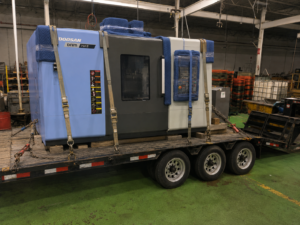
Loading Cold Forging Equipment for Transport
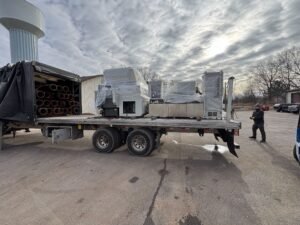
Loading is one of the most critical stages of a cold forging equipment move. Even if the in-plant movement goes smoothly, mistakes during truck loading can cause machine damage or safety issues. The truck or trailer must be selected based on the machine’s weight, dimensions, height, and destination requirements.
The rigging team should verify trailer capacity, deck height, tie-down points, load distribution, and route restrictions. For tall machines, overall loaded height must be checked to avoid clearance problems during transport. For extremely heavy machines, axle loading and permit requirements may apply.
Once the equipment is loaded, it must be secured properly. Heavy cold forging machines should be blocked, braced, chained, and tied down according to transport requirements. Sensitive components should be protected from vibration, weather, and road debris. If the machine includes exposed control panels, hydraulic lines, or precision surfaces, protective covering may be needed.
A proper load-out process helps avoid shifting during transit. Even a small amount of movement on the trailer can damage machine bases, controls, or accessories. Before the truck leaves, the load should be inspected and documented.
Unloading, Unpacking, and Final Placement
Unloading requires the same level of planning as loading. The receiving site should be inspected before the machine arrives. The crew should confirm truck access, dock conditions, crane access, indoor clearance, floor strength, and the final placement path.
If the machine is crated or wrapped, unpacking should be done carefully. Packaging may hide lifting points, loose components, or shipping brackets. The team should inspect the machine for visible damage before it is moved into position. Any shipping damage should be documented immediately.
Final placement is more precise than general moving. Cold forging equipment may need to align with wire feeders, conveyors, scrap systems, lubrication units, air lines, hydraulic systems, electrical panels, or other production equipment. The rigging crew should place the machine according to layout drawings or floor markings.
After placement, the machine may need to be leveled, anchored, grouted, and inspected before reconnection. Facility maintenance teams or OEM technicians may handle final commissioning, but the rigging team plays an important role in positioning the machine accurately.
Safety Best Practices for Cold Forging Equipment Rigging
Safety must be the top priority in every heavy equipment rigging project. Cold forging machines are too heavy and too complex to move without strict controls. A safe job requires trained personnel, inspected equipment, clear communication, and proper work-zone management.
Essential safety best practices include:
- Perform a job safety analysis before work begins
- Confirm equipment ratings and load capacities
- Use lockout/tagout procedures before disconnecting utilities
- Keep nonessential personnel away from the work area
- Assign one qualified signal person or lift director
- Use proper PPE, including hard hats, gloves, safety shoes, and high-visibility gear
- Never stand under or near a suspended load
- Use barricades, signs, and spotters in active work zones
- Stop work immediately if conditions become unsafe
- Review emergency procedures before the move begins
Safety also depends on communication. Everyone involved should understand the move sequence, hand signals, equipment roles, and emergency stop procedures. When multiple pieces of lifting equipment are used together, coordination becomes even more important.
Common Mistakes to Avoid
Cold forging equipment rigging problems often happen when planning is incomplete or when crews underestimate the complexity of the machine. Even experienced plant teams may not have the tools or training needed for heavy rigging work.
Common mistakes include:
- Using estimated weight instead of verified machine weight
- Ignoring the center of gravity
- Selecting forklifts or cranes with insufficient capacity
- Failing to inspect the travel path
- Not checking floor load limits
- Lifting from unapproved points
- Leaving tooling or loose components inside the machine
- Skipping lockout/tagout procedures
- Poorly securing the machine for transport
- Rushing final placement and alignment
Avoiding these mistakes can save thousands of dollars in repairs and prevent major delays. In many cases, the cost of proper rigging is far lower than the cost of damaged equipment, production downtime, or workplace injury.
Reducing Downtime During Equipment Relocation
Downtime is one of the biggest concerns during cold forging equipment moves. Manufacturers rely on these machines for production, and extended downtime can affect customer orders, inventory, labor scheduling, and revenue. Good rigging planning helps reduce downtime by coordinating each step before the move begins.
The move should be scheduled around production needs whenever possible. Utility disconnection, machine preparation, rigging, transport, placement, reconnection, and startup should all be included in the timeline. If multiple machines are being moved, sequencing becomes even more important.
A detailed pre-move checklist can help teams avoid delays. The receiving area should be ready before the machine is moved. Electrical, air, hydraulic, foundation, and anchoring requirements should be prepared in advance. Any required permits, trucking arrangements, and loading equipment should also be confirmed before the move date.
When the rigging company, maintenance team, production manager, and installation technicians work together, the move becomes more predictable. Better coordination means fewer surprises and faster return to production.
Why Experience Matters in Heavy Cold Forging Equipment Rigging
Experience is especially important when moving cold forging equipment because each machine presents different challenges. A small cold header may require tight-space handling, while a large multi-station former may require gantry lifting, specialized trucking, and detailed load calculations. A cold forging press may have a high center of gravity, limited lifting access, or sensitive alignment requirements.
An experienced rigging team understands how to adapt to site conditions. They know how to evaluate lifting points, choose the right method, protect the machine, and keep the job moving safely. They can also identify risks that may not be obvious during early planning.
Heavy industrial rigging requires more than manpower. It requires technical judgment, proper equipment, safety discipline, and problem-solving ability. For cold forging machines, this experience helps protect both the equipment and the facility.
Alltracon: Reliable Heavy Equipment Rigging Service Provider
Alltracon is a trusted choice for heavy equipment rigging, machinery moving, plant relocation, and industrial load-out projects. With experience handling complex manufacturing equipment, Alltracon helps businesses move heavy machinery safely, efficiently, and with minimal downtime. Their team supports planning, rigging, transport coordination, unloading, placement, and relocation needs for demanding industrial environments, making them a dependable partner for cold forging equipment moves.
Final Thoughts
Heavy cold forging equipment rigging requires careful planning, skilled crews, specialized equipment, and strong safety controls. These machines are valuable production assets, and even a small mistake during lifting, loading, or placement can lead to major costs. Facility managers should never treat cold forging equipment movement as a simple forklift task.
The best approach starts with a detailed site survey, verified machine data, proper equipment selection, and a clear rigging plan. The machine should be prepared correctly, lifted from approved points, moved through a protected route, loaded securely, and placed accurately at the destination. Safety, communication, and coordination must guide every step.
Whether the project involves moving one cold forging machine across the building or relocating an entire production line, professional rigging support helps reduce risk, protect equipment, and keep manufacturing operations on schedule. For manufacturers that depend on cold forging equipment, investing in expert rigging is not just a moving expense—it is a smart way to protect productivity, safety, and long-term equipment performance.